Researchers at MSK have developed a new computational approach to better understand why #Tcells, the immune system’s primary cancer-fighting cells, respond differently to immunotherapies.
Led by computational oncologists @bengrbm and @SohrabShah, the team created a statistical model called TCRi that links a T cell’s unique receptor sequence to its biological behavior, helping reveal how these cells recognize and react to cancer.
By analyzing more than 167,000 T cells from patients treated with checkpoint inhibitor immunotherapies, the researchers aimed to uncover how a T cell’s genetic identity influences its activity and how those behaviors change during treatment, potentially improving the ability to predict which patients will benefit from immunotherapy.
“This approach produces a standardized measurement that lets us compare results across different studies and clinical trials,” Dr. Greenbaum says. “We have a way to learn from this data what a meaningful T cell response to an immunotherapy looks like — or doesn’t.”
Learn more about this research: bit.ly/48yVscR
✨ Excited to share new work in @NatureGenet, with next-door neighbor @SohrabShah! Our labs – led by @nceglia; @GreedyApple; Zach Sethna; and @elhanati_yuval - applied information theory and probabilistic modeling to the question of how T cell dynamics changes in response to immunotherapy, particularly coupling between a T cell's T cell receptor (TCR) and its phenotypic state.
T cell responses are critical to cancer immunotherapies. Their behavior is often strongly influenced by their TCR, which directly engages with antigens presented on the cell surface. How clonal the sequenced TCR repertoire is in a dataset has been used to understand response – TCRs that recognize an antigen multiply – but its often a noisy measure, and we wanted to extend this logic to single-cell data in an eqiposed way. Information theory offers a solution.
The specific question of how information is propagated between the TCR and its phenotypic state also becomes a general way to probe genotype-phenotype mapping. The mutual information between receptor and state - that is how much knowing about one tells you information about the other - and how that changes can then be used to probe therapeutic response. Given data sparsity this becomes a problem in probabilistic inference – which was addressed here via a cool hierarchical Bayesian framework led by @GreedyApple & @nceglia.
A flux in phenotype and stronger mutual information post-treatment was associated with response to immunotherapy. In non-responders, therapy did not improve poor communication between TCR and phenotype. Hence information dynamics can be used to measure response.
We are already collectively using this approach across many, many projects. We use variants to analyze vaccine data with @TheVinodLab at the Olayan Center for Cancer Vaccines @MSKCancerCenter, in multiple projects with @break_cancer, throughout the Halvorsen Center @CompOncMSK, and elsewhere. It was a lot of fun and we hope you enjoy! Code link included! 👇 👇 👇
nature.com/articles/s41588-0…
Understanding which antigens are targetable in a tumor forms the basis for personalized immunotherarapies, which just got a big boost from the recent announcement by @moderna_tx at @myESMO.
We are excited to share a timely perspective on this topic with @TheVinodLab & Zach Sethna the Olayan Center for Cancer Vaccines @MSKCancerCenter out now in @Cancer_Cell. We discuss the theoretical basis of neoantigen quality, which alterations in a tumor the immune system targets, within the theory of what is nonself. This topic has been one of discussion for us for over a decade.
Several paradoxes emerge, in particular, that viruses inhabit spaces close to self. So the immune system likely surveils close to self antigens, like we see in cancer, in order to fight viruses which exert strong evolutionary pressure (shout out to @JonAvramLevine & @andimscience). A model which captures one can therefore inform the other.
Lots of work to do! Enjoy the work below 👇👇👇
sciencedirect.com/science/ar…
PS - If you like science of this sort and are looking for a postdoc consider our Theory Group effort at @MSKCancerCenter: careers.mskcc.org/vacancies/…
1. @bengrbm + I been working for sometime on these basic rules in the “Neoantigen Quality Model”
Model defined by a (minimal) Quality function
(simplified below, more details + theory in paper here authors.elsevier.com/a/1n%7E…)
Quality = if an NA is
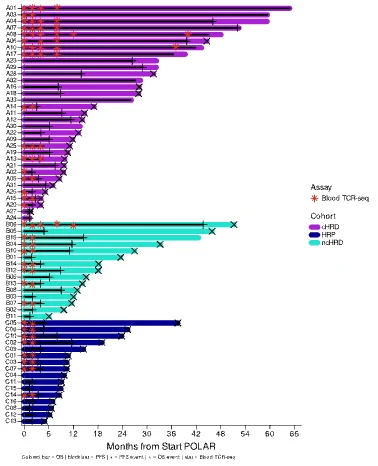
Years of work distilled into one lesson. Finding expanded T cells was not enough. We had to trace the same clonotypes from blood into tumor, localize them spatially and ask what they recognized. Deeply grateful for the mentorship, trust and extraordinary team that made this possible!
Great collaboration with @CentralParkWMD@MarcHilmi@EileenMOReilly@ciacobu@schoenfeld_j@MckerrowWilson & an incredible team 👇👇👇
biorxiv.org/content/10.64898…
The broader immunologic point from this work is the distinction between systemic activation and tissue-effective immunity. Neoantigen recognition by specific T-cell receptor, clonal expansion and spatial context all matter and the tumor ecosystem can determine whether a T-cell response becomes effective. From studies like this we will learning more about the fundamental rules of T-cell engagement in cancer and how to translate for precision immunotherapies, such as cancer vaccines, to help more patients.
@MSKCancerCenter
Meet GUIbo! 🦠📈
Built in our lab by @edoltl01 & fuzue.tech to make microbial growth screens way easier.
QC, fitting, clustering & ML analysis in the browser - no code. And if you want code, you can export your analyses as Julia scripts!
tinyurl.com/mr29526b
Huge news in personalized cancer vaccine space this morning.*
* awaiting full release of data.
Moderna and Merck say mRNA cancer vaccine succeeded in late-stage melanoma trial
statnews.com/2026/08/19/mrna…@Perlmutter_CC@JaniceM10
A lot of computational work in cancer immunology is devoted to predicting which antigens the adaptive immune system recognizes. These are critical questions for understanding how the adaptive immune system can kill cancer cells or how to design precision immunotherapies. Far less well quantified are what specific nucleic acids the innate immune system recognizes, and whether they are drivers of tumor initiation, evolution, and progression.
In our In Focus piece in @CD_AACR, @sunsiyu1, formerly in our lab @MSKCancerCenter and now at @UR_Med, and I propose evolutionary models for the role “viral mimicry”, the sequence specific sensing of self-nucleic acids by the innate immune system, plays in cancer.
The piece was inspired by our team’s paper on pancreatic cancer in @ImmunityCP with @davetingmgh and parallel work by colleagues @CharlesIshak, @decarvalho_lab and collaborators in @CD_AACR in ovarian cancer. Both papers look at the role of mimicry by transposable elements, how it can drive cancer evolution, and how that is tolerized as tumors evolve.
We propose a role for specific set of viral mimics in initiation stemming from a “molecular echo” of cell intrinsic amplification of innate immunity in the germline. Such signals can alter the fitness of driver events, which then, as a trade-off, enables tolerance of a wider range of immunostimulatory nucleic acids, promoting broad chronic signaling.
This picture is consistent with the work in both publications, and related theoretical work. Moreover, the virus-like patterns displayed, and the innate receptors that can recognize them can be learned and quantified. We saw this for the first time over a decade ago, but given new computational tools there is a lot of work still to come.
As a bonus we were fortunate to have our work published with a comprehensive review of transposable elements in cancer by our TE friends @ChiappinelliLab and @KathleenHBurns.
We hope you enjoy our take on growing field! 👇👇👇
aacrjournals.org/cancerdisco…
Excited to announce a new scientific initiative here at MSK, led by @bengrbm -- the Theory Group. As a part of this initiative, we're hiring fellows. Job description below and link at the end. 1/n
We are hiring for a new pilot initiative at @MSKCancerCenter – The Theory Group. The Group is centered around tumor-immune interactions and the notion that, in our post-AI moment, theoretical approaches from physics, math, quantitative ecology and computer science can unlock fundamental questions with major translational impact. We are hiring Fellows for this effort.
Drawing inspiration from groups like the Theoretical Division at Bell Labs, the idea is that by working with the amazing translational and basic research investigators around cancer and the immune system, real advances can be made that would not occur anywhere else. I am convinced we are at that moment here.
TLDR – if you are a postdoc with a background above who has worked with biological data and wishes to apply for this fellowship, please check out the link below. There will be organized chalk talks, but independent research will be valued.
msk.wd108.myworkdayjobs.com/…