
Thanks for coming by @cleoabram!

Watch the HUGE* If True episode on @neuralink's new tech and the future of brain chips here: youtu.be/Vna0hkq7U1g?si=nJVE…
 Open web. Clear feed.

Creating a general-purpose, high-bandwidth interface to the brain
Thanks for coming by @cleoabram!
Watch the HUGE* If True episode on @neuralink's new tech and the future of brain chips here: youtu.be/Vna0hkq7U1g?si=nJVE…
Neuralink devices are investigational and have not been approved by the FDA or other regulatory authorities. These videos feature voluntary clinical trial participants sharing their personal experiences, which may not reflect all participants or future outcomes.
If you’re interested in learning more about the hackathon experience, check out our blog: neuralink.com/updates/72-hou…

The hackathon is over, but we’re just getting started. The list of things we want to improve and build continues to grow. We need exceptional engineers across machine learning, software, and many other disciplines to help shape this technology that will transform human interaction and advance human agency in an era of AI. If this resonates, visit neuralink.com/careers

5. Phone call integration Voice calls are an essential part of daily life. We integrated Bloom with iPhone calling so BCI speech is injected directly into the call’s mic stream, giving the other person clear, consistent audio. We also tested optional greetings to play at the beginning of calls (e.g., “this call is from someone using an assistive communication device”).
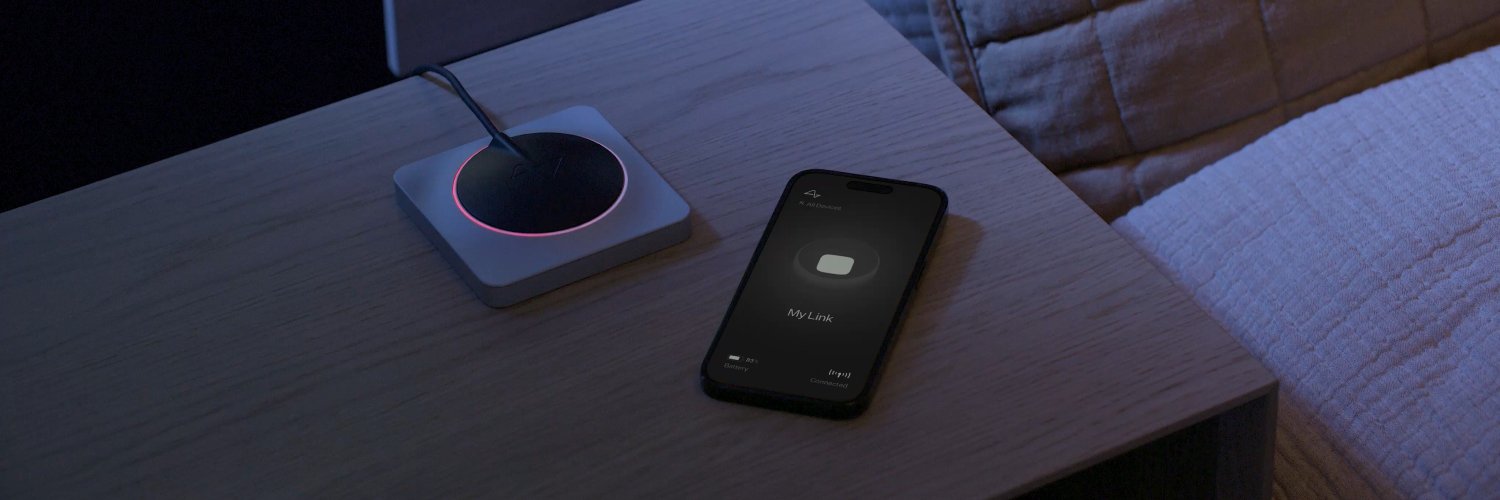
4. Mobile app for speech Over the last few months, we’ve put significant effort into building Bloom: a mobile app to make speech BCI more accessible. The hackathon gave us an opportunity to see the real-world user experience and identify ways it could be improved.
3. Computer use agent We prototyped a feature to enable users to trigger a Grok agent by thinking of saying “Hey Neuralink” along with a desired task. This is an early illustration of how increasing the bandwidth of communication between the brain and computers could help close the gap between thought and action.
2. Real-time visualizations One of the technical challenges with brain-computer interfaces (BCIs) is figuring out what intended or imagined actions produce the strongest neural activity to improve decoding model performance. We configured a variety of visualizations designed to give our participants real-time feedback on the intensity and distribution of signals detected by our implant.
1. Voice activity detection To remove the need for pressing a button to start and stop recording of speech intention, we created a system for automatically detecting when a user is and isn’t trying to speak. This is a big step towards making communication for those with speech impairment completely hands-free.
Our engineers recently visited one of our speech restoration study participants for a 72-hour hackathon. The goal: rapidly prototype as many features as possible to enhance the experience of using Neuralink to communicate with thought. Here are some of the things we built 🧵
Dr. Nader Pouratian is the principal investigator for the VOICE study (NCT07224256), an early feasibility study of Neuralink’s precise robotically implanted brain-computer interface for communication restoration. Visit our trials page to learn more about the study and join our Patient Registry: neuralink.com/trials/speech-… Neuralink devices are investigational and have not been approved by the FDA or other regulatory authorities.

Presented today at the 2026 Annual NEALS Meeting by Dr. Nader Pouratian. Full abstract: onlinelibrary.wiley.com/doi/…

Early Neuralink speech restoration data: We are enabling speech to text and voice at conversational rates in participants with ALS. One participant achieved 75 WPM at 5.8% WER on a 125k-word vocabulary in their first week.
Our clinical trial participants have now used their Neuralink implants for over 50,000 hours, building one of the largest datasets of intracortical neural activity ever. We used it to pretrain a foundation model for BCI: self-supervised neural encoders that turn noisy, drifting spikes into stable representations. Some initial results: • Decoders that keep working for weeks instead of days. For some users, calibration dropped from 10 min/day to 10 min/week • Teleporting cursors that jump straight to the intended target • A new cursor-control record of 11.32 bits per second (exceeding the performance of most able-bodied people) We’re just getting started. Future directions include pooling data across participants, one-shot (or zero-shot) calibration, and an API for the motor cortex. Read more: neuralink.com/updates/pretra…

Neuralink devices are investigational and have not been approved by the FDA or other regulatory authorities. This video features voluntary clinical trial participants sharing their personal experiences, which may not reflect all participants or future outcomes.
Through the VOICE trial, Terry is using his Neuralink implant to help fine-tune a brain-to-voice interface for himself and others who can’t speak. He trained the algorithm first by miming speech as best he could, then by simply thinking the words and hearing them come out in his own natural voice. Powered by Grok Voice from @spacexai