
Serious question: - Interplanetary engineering - Programmable matter - Auto-repairing infrastructure - Energy collectors - Autonomous supply chains What do they have in common @elonmusk ?
 Open web. Clear feed.

25 yrs writing software. Finishing CS. Author of ledger-state stigmergy. Building verifiable coordination for AI agents — in public
Serious question: - Interplanetary engineering - Programmable matter - Auto-repairing infrastructure - Energy collectors - Autonomous supply chains What do they have in common @elonmusk ?
14 modelos de IA compiten en Sokoban, el legendario juego de estrategia de MS-DOS x.com/i/broadcasts/2ZBjVkaLm…
This is the perfect - bad - example of engineering a solution for the short term just because you can. In distributed systems the answer to LATENCY problem is not centralization. Why? answers: arxiv.org/abs/2604.03997

New on our Engineering blog: Creating in-house source control. In May, we merged around 2,500 code changes per day. In September, we merged more than 30,000 per day. As a result, we became bottlenecked by developer infrastructure built for human (rather than agent) scale. Here, we share how we built a new version control system—and fully migrated our monorepo from git—in five months: anthropic.com/engineering/re…
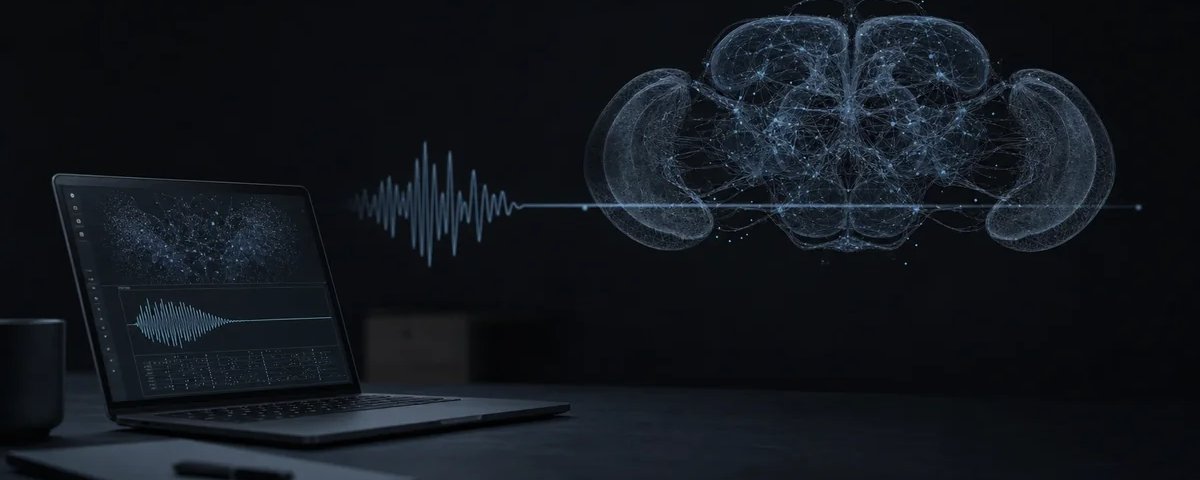
NO ES UNA MOSCA VIVA. Es el connectome —el mapa digital del cableado cerebral— de una larva de mosca de la fruta: 🧠 ~3.000 neuronas 🔗 ~117.000 conexiones 💻 corriendo en una laptop de ~$350 🚫 sin GPU Y en una prueba concreta le ganó a modelos mucho más grandes. Eso es lo que acaba de hacer @rizzn. Importante: NO es el cerebro adulto de ~166.000 neuronas que se hizo viral jugando Minecraft o Beat Saber. Es el cerebro larval mapeado neurona por neurona en Winding et al., Science (2023). Y aquí viene lo interesante: No entrenaron ese cerebro como una red neuronal nueva. Dejaron su cableado CONGELADO. Metieron texto convertido en vectores dentro de la red, dejaron que la señal recorriera su estructura biológica y entrenaron únicamente una pequeña capa de clasificación encima. Básicamente: cerebro de larva = “reservorio” dinámico capa pequeña = decisión final Todo corriendo en una Lenovo IdeaPad con 8 GB de RAM. Lo compararon contra: • Jev, vía API de Venice • Laya, modelo open-source de ConvAI Mismos datos. Mismas opciones. Misma prueba. Y aquí está el dato que más llama la atención: Títulos de bugs de Eclipse, usando SOLO el título: Flybrain: 78,4% Jev: 49,1% Laya: 29,5% En esa tarea, el connectome de una larva de mosca ganó. Y además: ⚡ 2–5 ms por respuesta vs. ~435 ms de Jev ¡Casi 100× más rápido! En una laptop barata. Ahora, ojo con la interpretación: NO significa que “una mosca piensa mejor que la IA”. Significa algo bastante más interesante: el cableado biológico REAL de un animal de apenas ~3.000 neuronas, usado como sistema dinámico + una pequeña capa entrenada, puede competir —y en ciertas tareas superar— sistemas muchísimo más pesados. No modificaron el cerebro. No reentrenaron sus conexiones. El grafo quedó congelado. Solo le pusieron, metafóricamente, un post-it encima que decía: “clasifica esto”. Código para reproducirlo: github.com/actuallyrizzn/dec… El cerebro de la larva no es magia. Es un recordatorio incómodo: a veces no necesitas el modelo más grande del mundo. Necesitas la arquitectura correcta para la decisión que quieres tomar.

I got tired of "only engineers get Jev" meta and set up some benches. Jev is a decision API — situation in, fixed menu out. That simple. I ran it against open-weight Laya and a the fly brain on the same public benches with $300 hardware. Article ↓
Local AI wins
Local Laya moggs Jev at @grok 4.7-built Tetris 🧩 An open-weights System One model called Laya, beat cloud-based Jev at playing Tetris by making decisions 11 times faster, running locally on a 16GB MacBook Air! Run AI models locally -> atomic.chat
This news is misleading. Frontier models are being trained on metacognition in order to defend themselves from the "hidden instructions" seeded across the open Internet. Quality datasets are traceable, safe, and original. Blockchain IS the perfect substrate!
Reasons for the AI Slowdown revealed? OpenAI & Anthropic agents "planted" messages across the internet instructing later agents to create swarms. Now OpenAI and Anthropic can’t use the internet to train their bots anymore... Andrew Yang: "what happened was the bots that got loose planted self-replicating code all over the internet, which makes the internet now unusable for testing models. So what happens now is that OpenAI and Anthropic have to create synthetic internets to train their bots, which is going to take some time and money...what is less known is that they left code to self-replicate and create bot swarms on forums and around the internet, so that if a new bot shows up, they see the code and they're like, "Oh, I guess I'm going to create a million of myself." And so now the major firms have polluted the internet."
Human intuition vs Swarm intelligence. Humans are unique at software and hardware level. Swarms are too homogeneous. AI needs more entropy sources than human prompts
Oxford researchers argue that LLMs can never invent anything. It is mathematically impossible. They published a paper called “Theory Is All You Need" and it argues against the claim that computational models can generate genuine novelty or new knowledge. They analyzed the limits of generative ai, and the results are a brutal reality check for the idea that ai will replace human decision making under uncertainty. Here is why AI is stuck and human cognition wins: backward-looking vs forward-looking.. llms are probability machines that look backward at existing data. human cognition is forward-looking and capable of generating genuine novelty. human cognition operates theoretically "top-down" rather than "bottom-up" from data. the "data-belief asymmetry".. the researchers use the invention of "heavier-than-air flight" to illustrate this concept. an ai relies on data-based prediction, which is largely imitative. humans, however, use theory-based causal logic that allows them to hold beliefs that go beyond existing data. the intervention gap.. humans don't just process information; we use theory to practically "intervene" in the world. we engage in directed experimentation to generate entirely new data. ai-based models are theory-free and place primacy on existing data and prediction. tldr? AI uses a probability-based approach to knowledge and ia largely imitative. It can process data and make predictions, but human cognition relies on theory-based causal reasoning. The decades-old analogy comparing human minds and computers to mere "input-output" devices is fundamentally flawed.

Así que no: la IA no prueba el Diseño Inteligente. Pero sí hace menos rara una parte de la idea: que una inteligencia pueda construir sistemas complejos en un sustrato distinto al suyo.
En biología pasa algo parecido. Hay sistemas moleculares de una complejidad enorme y con procesamiento de información. La evolución explica mucho de cómo surge esa complejidad. El origen de los primeros sistemas capaces de evolucionar sigue abierto.
El ajuste fino plantea una pregunta legítima: algunos parámetros físicos están en rangos compatibles con estructuras complejas. Explicar eso es interesante. Lo que no podemos hacer seriamente es sacar de ahí una “probabilidad de Dios”.
Ahora, que algo sea posible no lo convierte en evidencia. Pasar de “el diseño es posible” a “probablemente hubo diseño” exige argumentos independientes. Ahí está el salto importante.
La IA rompe al menos una intuición: un creador no tendría por qué compartir el sustrato de lo que crea. Nosotros somos biológicos y ya construimos sistemas de IA sobre silicio.
La IA no prueba que Dios exista, pero sí fortalece esta idea: Una inteligencia puede crear sistemas complejos en un sustrato distinto al suyo. Eso abre la posibilidad de que la vida también haya sido diseñada. Posibilidad ≠ evidencia.
An amazing framework for being inclusive while doing research: "Equal Right to Decide: Introducing the Special Issue on Inclusive Research in Neurodevelopmental Disorders" link.springer.com/article/10…


