Not all after-school activities are equally good for teenagers. Gao and colleagues @ECNUER studied 11 types across 16 cities. Art clubs and volunteering boost social skills, but joining a school newspaper might actually backfire.


We are the first open-access Chinese education research journal in English, publishing impactful and cutting-edge education research in China and the world.

Not all after-school activities are equally good for teenagers. Gao and colleagues @ECNUER studied 11 types across 16 cities. Art clubs and volunteering boost social skills, but joining a school newspaper might actually backfire.


Dizon @HKUniversity et al. introduce the Metacognitive Laziness Scale, from a most-read article. It measures learners handing goal-setting, monitoring and reflection to AI. It links more to disaffection than engagement, a practical check for responsible AI use in education.


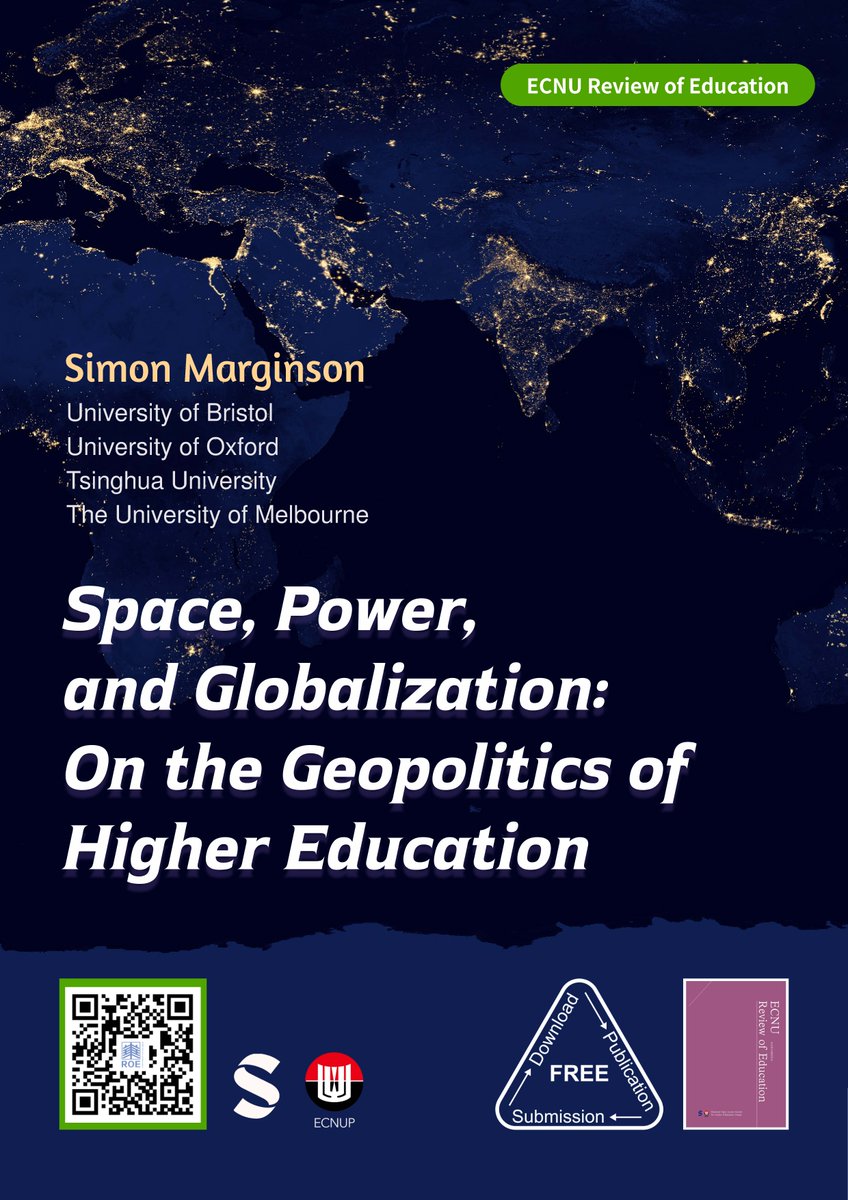
Universities became far more connected after 1990. In this most-cited article, Simon Marginson @UniofOxford @BristolUni traces how that openness is now under pressure, as global power shifts and political resistance to cross-border ties reshape higher education.


Chen and Lin @ZJU_China unpack China's double reduction policy in this most-cited article. They trace its origins, values and measures. Early signs are positive. But lasting balance and quality still depend on changing high-stakes exams and wider social pressures.


Yang @ECNUER et al. tested ChatGPT-4 on critical thinking, core competency and China's 2022 teacher certificate exams. This most-cited study found strong scores but weaker creativity, showing promise for lesson planning, self-study, classroom interaction and assignment checking.


Xiao et al.’s top-cited review examines 16 studies on ChatGPT in EFL writing @penn_state @HongKongPolyU @UnivOfKansas. ChatGPT offers fast feedback, but overreliance, plagiarism and cultural fit remain concerns. Critical thinking and information literacy training still matter.


What exactly makes a teacher "globally competent"? A review of 44 studies finds this research is heavily Western-centric @AdamPoo51515340. It highlights a gap between humanistic ideals and market-driven practices, and calls for broader perspectives in global teacher education.


Does using generative AI for homework create an "effort debt"? When AI does the hard work, students may pass the test but miss deep learning. This research explores the hidden cost of skipping the struggle and how it impacts long-term mastery @DoshishaUniv_PR @HKUniversity.


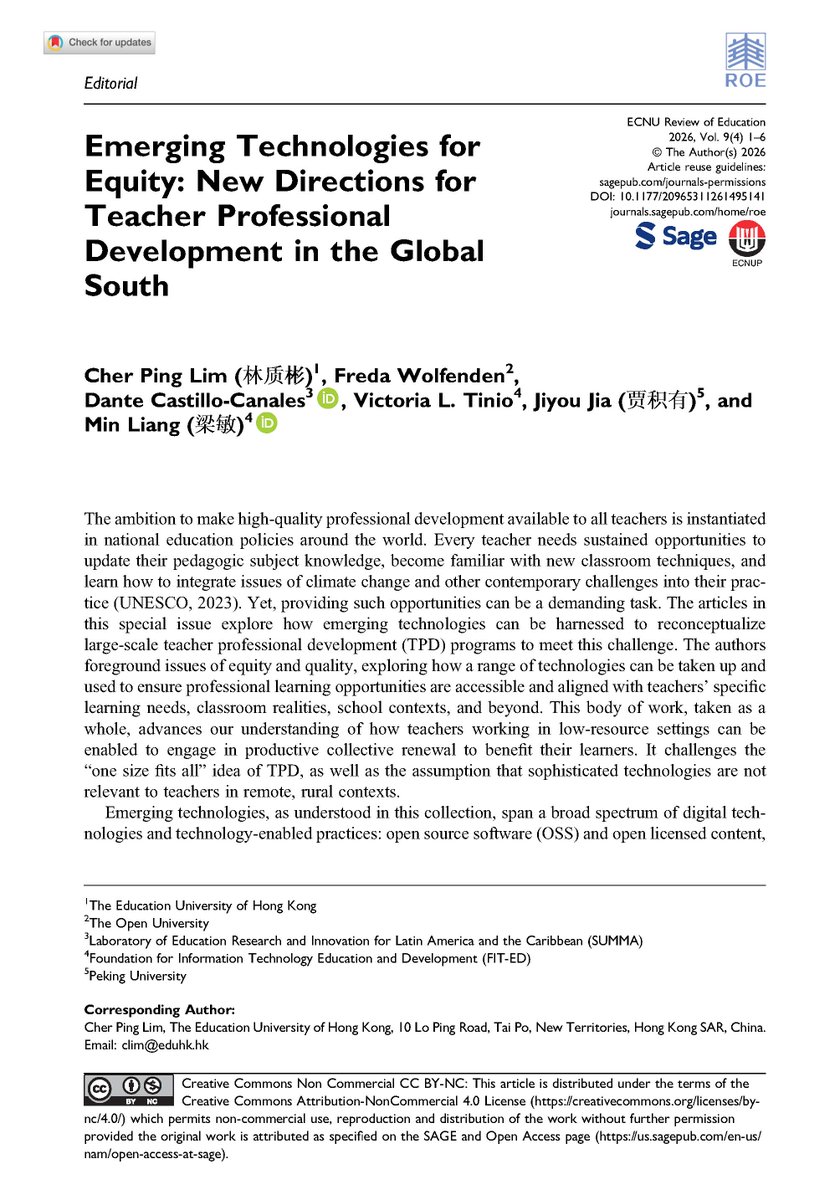
Can tech really fix teacher training in low-resource regions? This special issue explores real cases across the Global South. It shows how emerging tools can widen access while staying responsive to teachers, local needs, and real-world constraints.


Can children’s storybooks help reshape how children see nature? Japan’s elementary textbooks use animistic tales to teach interdependence over human superiority @hku_education. Long-term opinion data also suggest a broader societal shift toward being more "attuned to nature."


Can technology make large-scale teacher development more equitable? Cher Ping Lim @FEHD_EdUHK and colleagues examine emerging tools in low-resource regions, arguing that access alone is not enough. Training must fit local realities while managing the real risks of new tech.


Can virtual exchange partnerships last? Enkhtur and colleagues studied a Japanese university's online programs with four Chinese partners @osaka_univ_e. Strong online support and clear communication helped. Commitment from both sides mattered most.


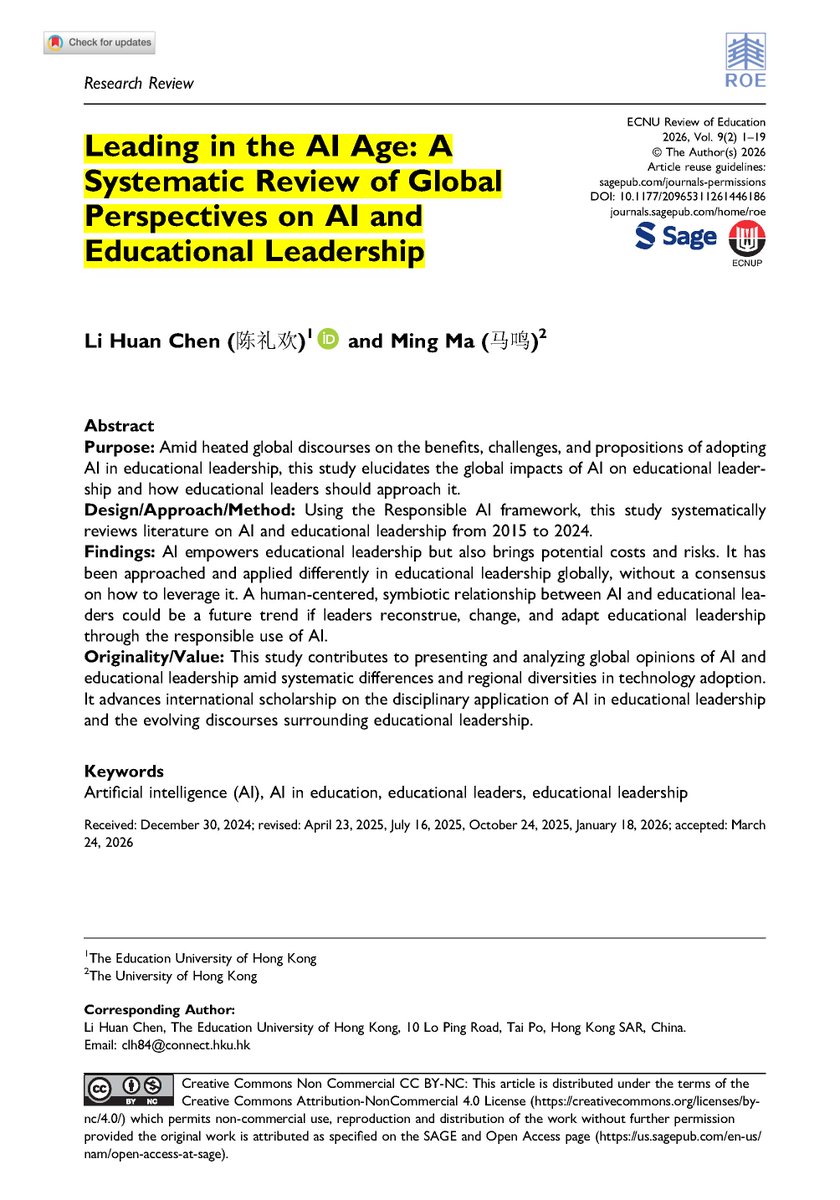
AI is reshaping educational leadership, not just teaching. Chen and Ma's review of global research from 2015 to 2024 finds empowerment alongside costs and risks. National approaches vary without clear consensus. They argue for a responsible, human-centered partnership with AI.


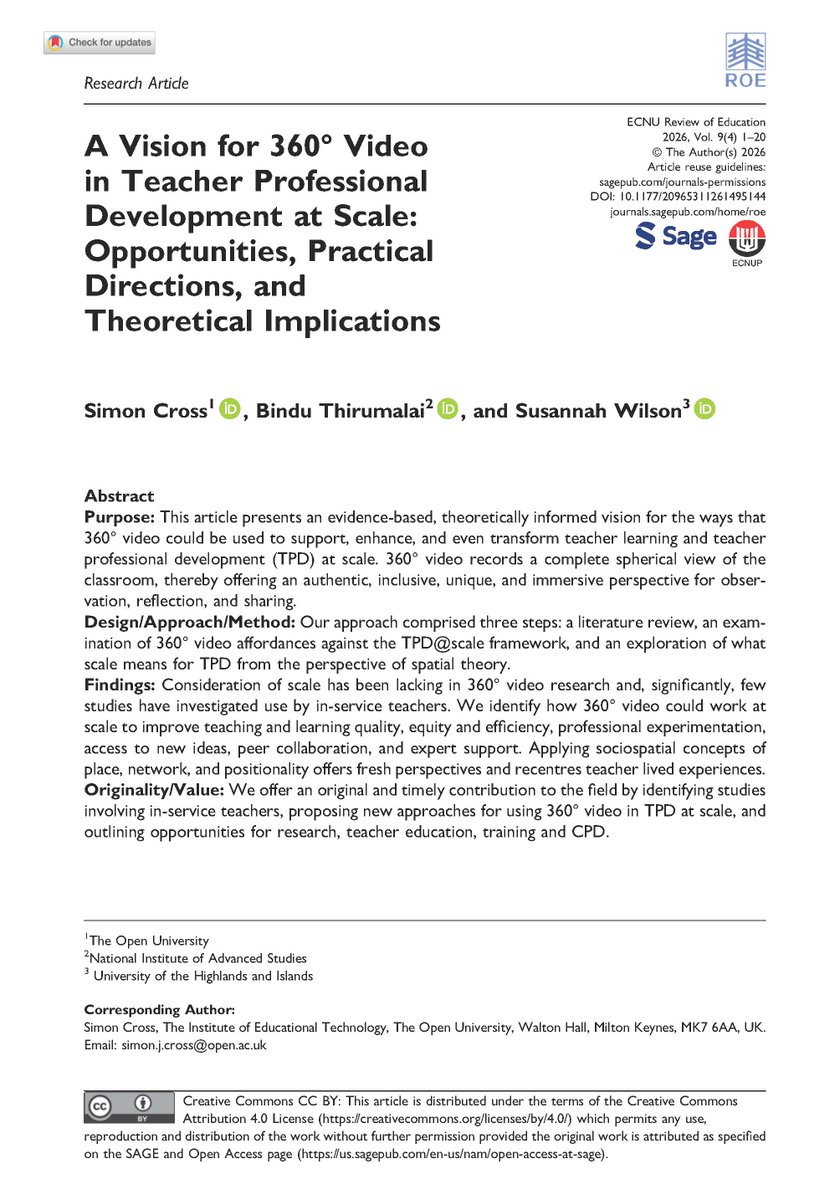
A classroom filmed in every direction lets teachers observe and reflect without being there. @BinduThiru @OpenUniversity @ThinkUHI offer a practical vision for 360° video in scaled teacher professional development. It asks what "scale" means for in-service teachers' work.


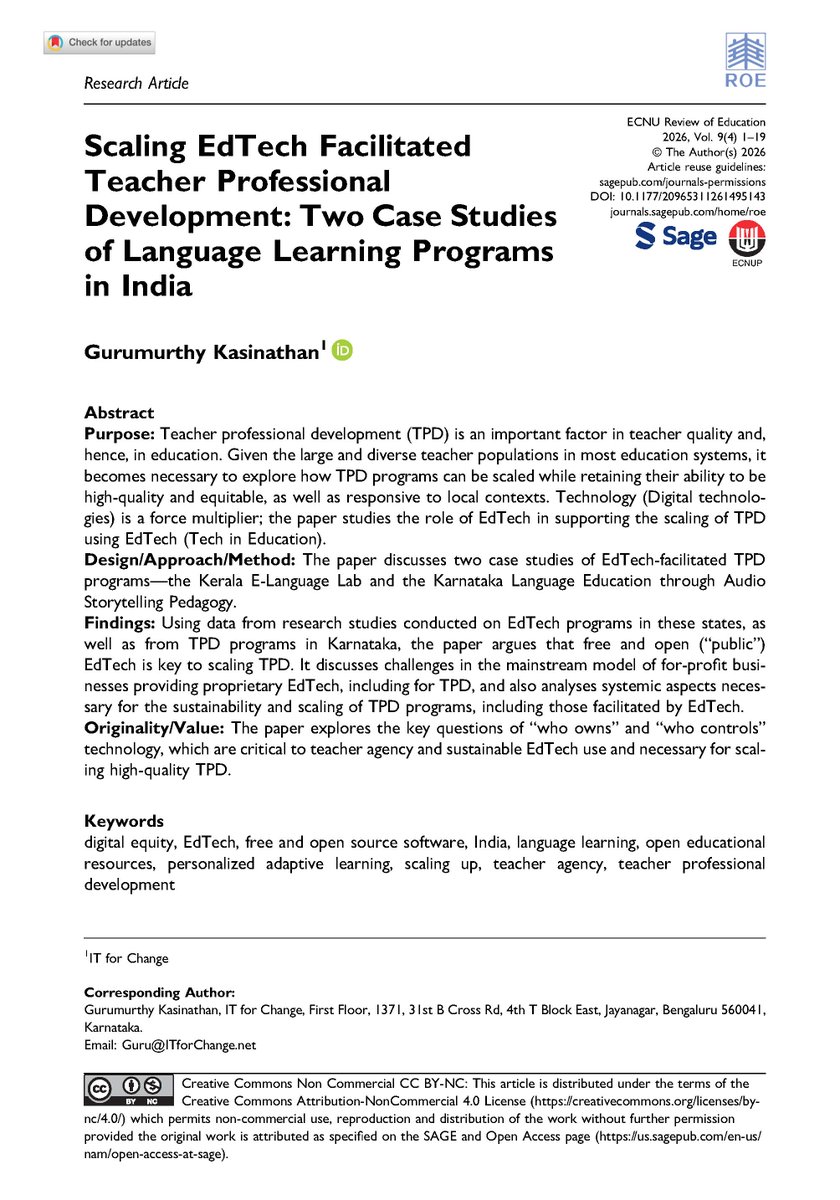
Who owns and controls the tech teachers use? Two Indian language-learning cases show free and open EdTech can help scale teacher professional development @ITforChange . They also flag vendor lock-in and control risks in proprietary tools. Teacher agency matters.


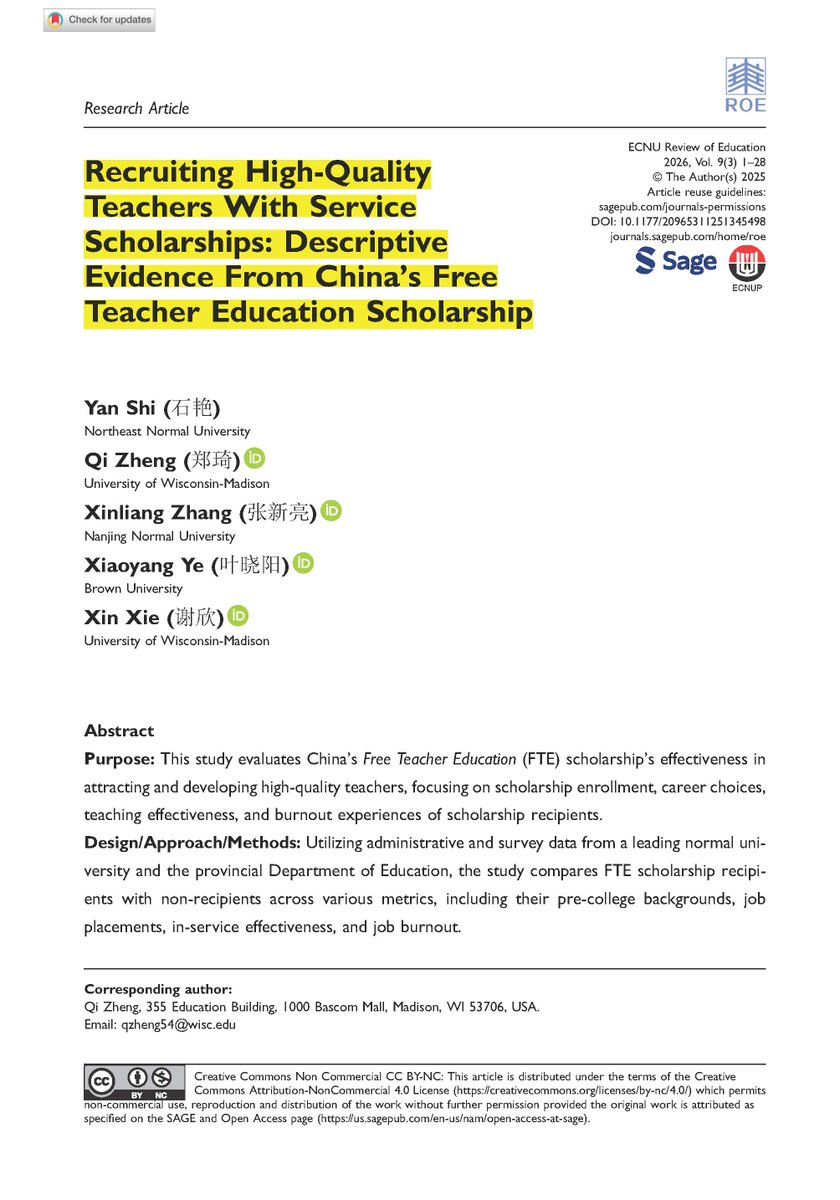
Do service scholarships attract better teachers? Shi and colleagues @UWMadison @BrownUniversity studied China’s Free Teacher Education program. Yes—recipients were more likely to become teachers and showed stronger effectiveness, though slightly more burnout.