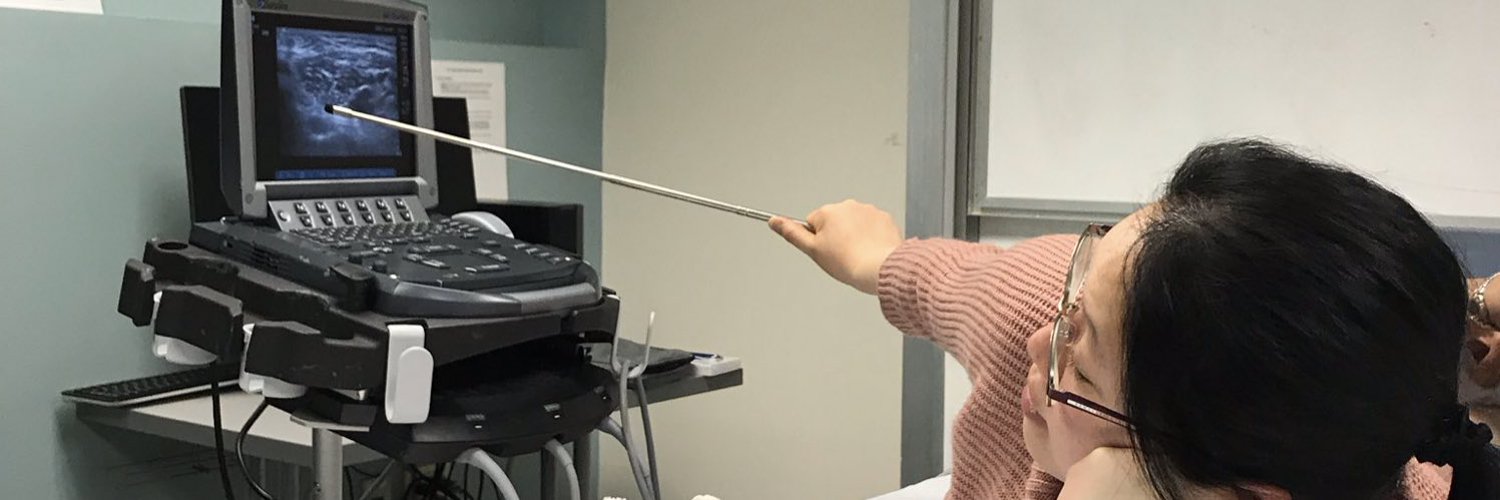
And that’s a wrap for our 2026 webinars!
Last night, we explored #ultrasound patterns in gout, CPPD, & basic calcium phosphate (BCP) deposition.
Thanks to Drs. Joseph Azzam & Pirooz Parsa and everyone who joined us. #MSKUS#RhMSUS
See you in 2027!
#rheumatology#USSONAR
Super excited about the launch and the rapid growth (almost 500 members in 3 weeks!) of the praxis-project.com, but mostly about the building of a community of like-minded, forward looking clinicians of all levels of experience, a way to extend the unbelievable HR experience worldwide and year round. Thanks to the amazing faculty for all your help! As always, we are totally inclusive in terms of fields of expertise and especially growing the concepts of physiology and resuscitation outside of critical care/emergency/anasthesia into the spheres of internal medicine and those who take care of a large number of patients on the wards.
What is the diagnosis and treatment for this dyssynchrony?
Check your answer and learn the treatment with The VentCoach, a free, high-fidelity, interactive, case-based simulator: simulator.themvedproject.com…
Claude Fable 5.2 built this beating 3D heart from one prompt.
Live ECG and pressure traces, heart sounds, and four conditions to compare: normal, AF, heart block and aortic stenosis. It also wrote its own tests.
Try it: clockendbader.github.io/fabl…
Three patients:
HR 90, DBP 30 mmHg
HR 120, DBP 40 mmHg
HR 150, DBP 50 mmHg
All have a diastolic shock index (DSI) of 3.
But do they have the same haemodynamic problem?
DSI is associated with prognosis in septic shock. That doesn’t mean it measures vascular tone or tells us which treatment to give.
Pulse pressure presents a similar problem. It can provide clues about stroke volume, but the relationship is complicated by arterial compliance, runoff and wave behaviour.
In the latest article in Complicated Ways to Learn Very Little, I examine the physiology behind both measurements, the evidence supporting their use, and how much they really add to clinical assessment.
Pulse Pressure & DSI — Part 3
Now published in The Dependent Variable.
Link in reply.
@NephroP and I recently proposed hemodynamic profiling, rather than conventional “volume assessment”, to guide management in patients with HepatoCardioRenal syndrome, a more targeted approach to understanding their physiology and tailoring treatment. #POCUS
Rhythms. Devices. Cases. 🫀
Looking deeper into what you can do with our SpectraSim Learning suite
SpectraSim EP Lab: 41 rhythms on a 3D heart, pacemakers to CRT-D, and an expanding library of guided pacing cases where you make the call.
Coming 11/27/2026: spectrasim.cardiospectralab.…#EPeeps#MedEd#Cardiocurious#Cardiology#AHA26
Made a cardiac POCUS trainer with @claudeai. Move the probe around, see what the beam cuts through, and practice finding each view: claude.ai/artifact/FYzr2aG7m…