←
Ross 🧬🔬9,579 posts
Ross 🧬🔬 avatar

Ross 🧬🔬

@GutOptimized

Helping clients resolve their unexplained symptoms and coaches establish clinical practice. Healed my own fibromyalgia, MCAS, and trigeminal neuropathy.

◷ Joined September 2015▧ 637 Photos and videos
Ross 🧬🔬 avatar
Ross 🧬🔬@GutOptimized·4h

I believe EMF mitigation has cumulative benefits over time. When I began focusing on avoidance, around the 3 month mark I noticed some improvements to my health. However, as with most things in holistic health, there's usually multiple variables that may have explain the improvement. So who knows. There's definitely a placebo element that's possible too. Don't think we should get neurotic about it though.

At the cost of making people neurotic, has anyone reduced their EMF exposure and found a significant increase in their overall health? I was talking with a doctor friend about this recently, he's a big advocate of minimizing EMF within the household

Ross 🧬🔬 avatar
Ross 🧬🔬@GutOptimized·14h

In mouse models, testosterone synthesis was inhibited via endoplasmic reticulum stress from induced obesity. Notably, T synthesis was restored via apigenin (from chamomile) via alleviating this pathway (Perk-Chop mediated ER Stress).

Did anyone know that both aromatase and 5-alpha-reductase are found in the endoplasmic reticulum? You think that would be important thing to think about when managing hormones

Ross 🧬🔬 avatar
Ross 🧬🔬@GutOptimized·18h

If your gut lining has become severely dysfunctional or damaged... healing it is not just a matter of taking away a trigger causing the dysfunction and the process of cell re-generation efficiently begins. If your gut lining sucks, your microbiome sucks. And if your microbiome sucks, the consequence of this most likely is an impaired stem cell production process which is required generate new gut cells. This is one example of gut relationships. Moral of story: just because a epithelial cell in a lab regenerates in 3 days, this does not reflect how your gut works.

Ross 🧬🔬 avatar
Ross 🧬🔬@GutOptimized·20h

The other critical thing about this study: Even once symptoms alleviated, damage to the gut lining was still evident. No gut symptoms doesn't equal no gut issues. Usually that just means when things are bad.

Does removing an immune trigger solve leaky gut? 241 adults with celiac disease who underwent repeat intestinal biopsies after starting a gluten free diet. Researchers wanted to know how long it took for the intestinal lining to structurally recover. They found: - 34% recovered within 2 years. - 66% recovered within 5 years. So roughly 3.5 years is median. What was actually damaged? In celiac, there's immune-mediated destruction of the intestinal villi, the finger-like things lining your gut (responsible for nutrient absorption) A couple of notes about this study, comparing it to discourse you hear online. Healing the gut lining is slow. It's often said online that the gut can repair itself in 3 days. Biggest load of bullshit in gut health (it comes from animal and laboratory studies and inferred onto humans). The reality of the human gut is it's so complex, the context of someone's gut hugely dictates healing rates. The second part is that, do more to heal your gut lining other than removing triggers. This study shows show slow the healing rate is (median was 3.8 years). More needs to be done to take care of the intestines. Study: pubmed.ncbi.nlm.nih.gov/2014…

Ross 🧬🔬 avatar
Ross 🧬🔬@GutOptimized·Nov 17

The human gut is incredibly complex, but the very first rule to understanding the gut is that it works in relationships. Everything, and I mean everything, depends on something else. Every important thing in your gut depends on multiple other systems working effectively.

Ross 🧬🔬 avatar
Ross 🧬🔬@GutOptimized·Nov 17

If I catch any of you repeating "the gut heals itself in 3 days", I'm going to come to your house and give you salmonella and maybe some giardia for good measure. Stop repeating that nonsense.

Does removing an immune trigger solve leaky gut? 241 adults with celiac disease who underwent repeat intestinal biopsies after starting a gluten free diet. Researchers wanted to know how long it took for the intestinal lining to structurally recover. They found: - 34% recovered within 2 years. - 66% recovered within 5 years. So roughly 3.5 years is median. What was actually damaged? In celiac, there's immune-mediated destruction of the intestinal villi, the finger-like things lining your gut (responsible for nutrient absorption) A couple of notes about this study, comparing it to discourse you hear online. Healing the gut lining is slow. It's often said online that the gut can repair itself in 3 days. Biggest load of bullshit in gut health (it comes from animal and laboratory studies and inferred onto humans). The reality of the human gut is it's so complex, the context of someone's gut hugely dictates healing rates. The second part is that, do more to heal your gut lining other than removing triggers. This study shows show slow the healing rate is (median was 3.8 years). More needs to be done to take care of the intestines. Study: pubmed.ncbi.nlm.nih.gov/2014…

Ross 🧬🔬 avatar
Ross 🧬🔬@GutOptimized·Nov 17

Higher Bacteroides dominance predicted poorer survival in older adults. While greater microbiome uniqueness was associated with a reduced risk. Microbiome uniqueness was associated with higher circulating microbial metabolites derived from phenylalanine, tyrosine and tryptophan. Bacteroides increase from complex carb fermentation and host glycans. The microbial metabolites are associated with microbial amino acid fermentation.

Post attachment
BowTiedPhys avatar
⟳ Ross 🧬🔬 retweeted
BowTiedPhys@BowTiedPhys·Nov 16

Every serious immunity stack needs to start with the most important compound: belief

Post attachment
Ross 🧬🔬 avatar
Ross 🧬🔬@GutOptimized·Nov 16

The trigeminal nerve is highly sensitive because it controls a huge amount of surface area of your face. Activating it can lead to heart rate, HRV and blood pressure changes. Now with the amount of people living indoors around mold, suffering immune issues, and chronic sinus infections, how do you think this is going to impact this nerve network.

Post attachmentPost attachment
Preethi Kasireddy avatar
⟳ Ross 🧬🔬 retweeted
Preethi Kasireddy@iam_preethi·Nov 15

Why aren't PCOS women told to eat more fiber? In a 12 week trial, women with PCOS took a blend of inulin, resistant starch, and beta-glucan. Their androgens dropped and they started ovulating again. The fiber fed gut bacteria that breaks down androstenedione (which is the hormone your body turns into testosterone). Inulin = chicory root, garlic, onions, leeks, asparagus, and slightly green bananas. Resistant starch = cooled potatoes and rice, green bananas, plantains, beans, lentils, and oats. Beta-glucan = oats, barley, and mushrooms.

Ross 🧬🔬 avatar
Ross 🧬🔬@GutOptimized·Nov 16

The cells (enterocytes) that absorb iron in your gut are highly sensitive to stress, hypoxia and inflammation. People with IBD and celiac commonly have iron absorption due to damage to these cells, even though iron transporters in these cells are up-regulated.

Post attachment

Iron absorption in your gut is a complex process. Easy for the chain to be broken - especially in women. See much of the nuance here. Hepcidin especially is important because it blocks iron absorption and yet is unregulated in many diseases.

Post attachment
Ross 🧬🔬 avatar
Ross 🧬🔬@GutOptimized·Nov 16

Iron absorption in your gut is a complex process. Easy for the chain to be broken - especially in women. See much of the nuance here. Hepcidin especially is important because it blocks iron absorption and yet is unregulated in many diseases.

Post attachment
Fez☯️🐸 avatar
⟳ Ross 🧬🔬 retweeted
Fez☯️🐸@Zenfrog4·Nov 15

Cardio remains one of the most tried and true methods to improve gut motility.

Post attachmentPost attachmentPost attachmentPost attachment
Ross 🧬🔬 avatar
Ross 🧬🔬@GutOptimized·Nov 15

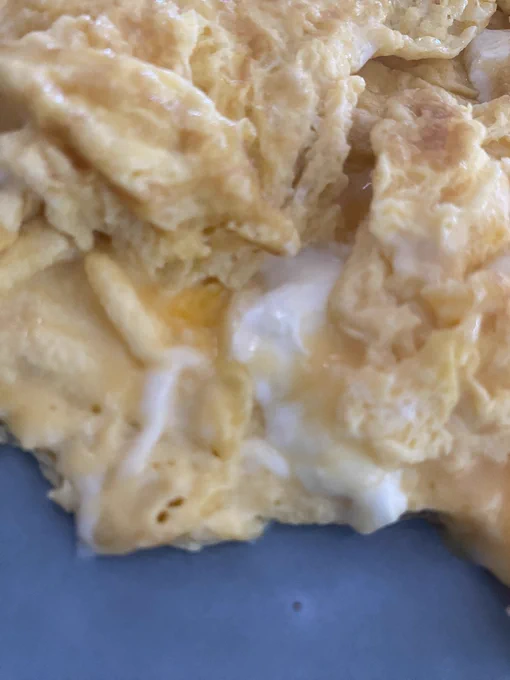
So simple but my favourite breakfast is soft goats cheese folded into an omelette. Could eat this 3 x daily.

Post attachmentPost attachmentPost attachment