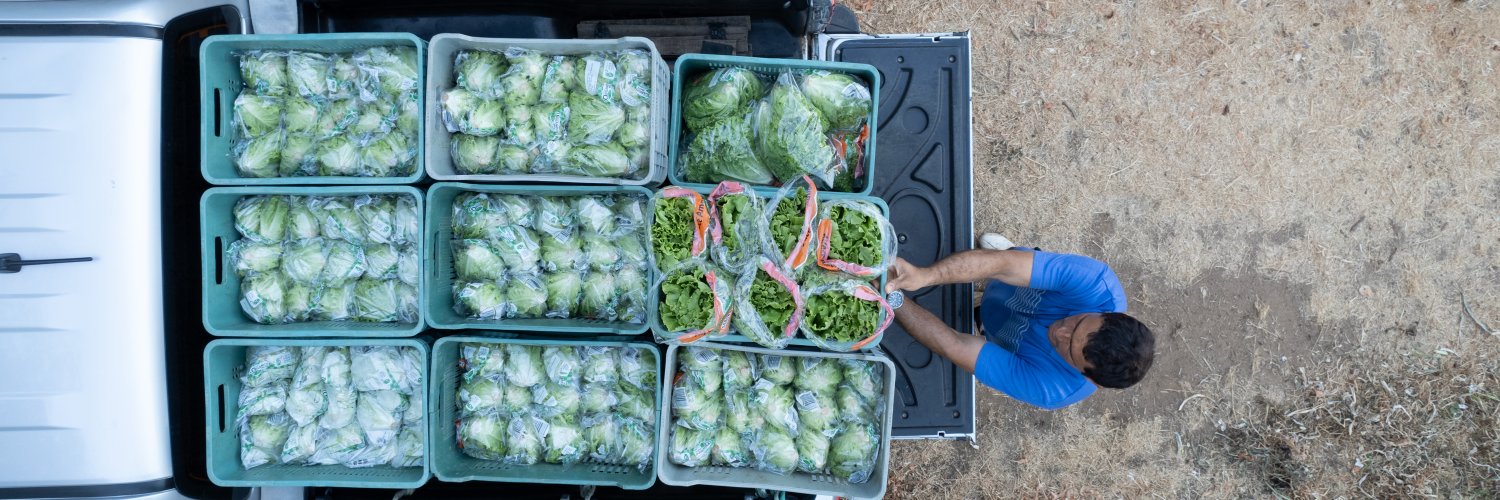
Building resilience, growing opportunity.
For more than 15 years, IFAD has worked alongside Fiji and its rural communities to strengthen resilience and protect harvests in the face of frequent tropical cyclones, which can result in annual losses equivalent to 5% of the country’s GDP.
With the valued support of partners such as #Canada, these efforts are helping rural communities safeguard livelihoods and build a more sustainable future.
@CanadaDev | @CanadainItaly | #FinancingTheFirstMile | #CanadaRBAs
Bangladesh has renewed its investment in IFAD with a US$2 million pledge to IFAD's 14th Replenishment.
The pledge reaffirms Bangladesh's commitment to building climate resilience in vulnerable rural areas, expanding rural finance and enterprise, and creating jobs for rural young people and women.
#FinancingTheFirstMile | #IFAD14
⟳ International Fund for Agricultural Development retweeted
When @FAO, @IFAD , and @WFP work together, we can achieve more than any one of us can alone.
IFAD brings its distinctive role as an international financial institution to the RBA partnership: mobilizing resources for long-term investments in rural people and economies, while drawing on the complementary technical, policy, humanitarian and operational strengths of FAO and WFP.
Congratulations to Nepal and Niger RBA country teams, the co-winners of the 2026 RBA Award of Excellence for Country-Level Collaboration, for showing what this complementarity can deliver in practice.
In Nepal, a joint RBA programme with @UN_Women to strengthen rural women's economic empowerment has helped increase farm incomes by 63% and reduce household food insecurity from 44% to 31%.
In Niger, the RBAs are supporting a government-led initiative, alongside other UN partners, to strengthen food systems, better coordinate investments and advance national food security and self-sufficiency.
And these are not isolated examples. This year's 13 nominations received from across all regions show the potential of bringing together different mandates, resources and capabilities around country priorities.
As Member States call for greater efficiency, less duplication and more impact, our collaboration needs to be increasingly country-driven, selective and grounded in comparative advantage. The RBA Blueprint and our joint Action Plan provide a strong foundation for doing so.
@FAODG@WFPChief#FinancingTheFirstMile | #RBAs
Initiatives expanding rural women’s opportunities in Nepal and driving food-system transformation in Niger share a common thread: the joint involvement of FAO, IFAD and WFP.
By combining their complementary expertise, the Rome-based agencies deliver results that advance rural transformation, food security and resilience.
In Nepal’s Madhesh Province, farmer incomes have increased by 63%, while women’s control over their incomes has risen from 62% to 83%. These results reflect the integrated approach behind the second phase of the Joint Programme on Rural Women’s Economic Empowerment, which brings together @FAO, IFAD, @WFP and @UN_Women.
In Niger, joint support is helping advance the Government’s Food Systems Strengthening Flagship Plan, laying the groundwork for a more resilient and inclusive food system.
This year, their collaboration in Nepal and Niger was recognized with the RBA Award of Excellence, highlighting the diversity and scope of the agencies’ work, from women’s economic empowerment and access to markets to national food-system transformation.
Read more at ifad.org/en/w/explainers/col…
Climate resilience depends on investments that strengthen local food systems, raise agricultural productivity and improve access to markets.
In #Vanuatu, IFAD has supported rural communities facing increasingly unpredictable weather, cyclones and environmental pressures that put agricultural production and rural incomes at risk.
Through the Pacific Islands Rural and Agriculture Stimulus Facility, funded by IFAD and the Australian Government, US$8.1 million reached nearly 5,000 households across the Pacific, strengthening food security, improving livelihoods and building resilience to climate shocks.
In Vanuatu, this support combined training in seedling production, soil management and climate-smart agriculture with more than 1,000 agricultural toolkits and nearly 4,500 seed packs. Investments in market infrastructure and income diversification, including duck farming, complemented this support, helping communities access economic opportunities and reduce their reliance on a single source of income.
As climate risks intensify, investing in rural producers’ skills, productive assets and market access is essential to protect livelihoods and strengthen the resilience of local food systems.
Read more at ifad.org/en/w/publications/i…@turkiyecop31 | #FinancingTheFirstMile | #COP31Türkiye | #COP31Antalya
While women make up about four in ten farm workers, only 3% of international public climate finance for agrifood systems has their empowerment as its main goal.
At #COP31, IFAD and Türkiye’s Ministry of Agriculture and Forestry launched "The Unfunded Half – Financing Rural Women’s Resilience: From the Bond Market to the Farm". The report describes rural women as “the investable half”, highlighting evidence that they are reliable borrowers who, with sufficient finance, can help their farms and families adapt to a changing climate.
“When women's economic empowerment is the main objective of climate finance, investments can be structured around barriers that disproportionately affect women farmers. That could mean credit that does not require a land title, insurance distributed through women's groups, or financial support that allows women to invest in equipment and productive assets they control,” said @IFADPresident Alvaro Lario.
Read the report at ifad.org/en/w/news/new-repor…@turkiyecop31 | @TCTarim | @MFATurkiye | #FinancingTheFirstMile | #COP31Türkiye | #COP31Antalya
As world leaders gather today at #COP31, IFAD has three messages for how to build more climate-resilient food systems:
1. Build resilience across the whole food system. Investments in agricultural inputs must be made alongside strengthening markets, insurance and access to finance. Together, these investments protect nearly twice as much farm income during a bad year as finance alone
2. Close the climate finance gap for small-scale farmers. They produce around one third of the world’s food yet receive less than 1 per cent of global climate finance. Public finance must take on the risks that hold investors back to mobilize more private capital into rural communities before climate shocks hit
3. Turn healthy soils into healthy meals. The UN’s Rome-based Agencies bring different pieces of the solution: @FAO works with countries on agricultural policies and standards; IFAD invests in farmers, farmers’ organizations and the food producers that supply schools; and @WFP works with governments on national school meal programmes. Together, we can create reliable markets for farmers while bringing more nutritious food to children
“Resilience depends on bringing the whole system together: what farmers produce, where they sell it and how they finance it. Public investment can reduce risk and draw in private capital, while partnerships across the Rome-based Agencies can connect healthier soils, stronger rural economies and healthier meals for children” Pieternel Boogaard, Head of IFAD’s COP31 delegation
Learn more about IFAD at COP 31: ifad.org/en/w/events/ifad-at…@turkiyecop31 |#FinancingTheFirstMile | #COP31Türkiye | #COP31Antalya
⟳ International Fund for Agricultural Development retweeted
At the @ParisPeaceForum today, I opened the high-level roundtable “Beyond the Plate: Unlocking Investment in Resilient School Meals Value Chains”, co-hosted by France and @RockefellerFdn, in partnership with the @SchoolMeals_ .
We discussed how the predictable demand from school meals can unlock investment across farms, supply chains and finance, benefiting children, farmers and rural communities.
School meals do more than nourish children. They can help transform the rural economies that supply their food. In 2024, school meal programmes reached at least 466 million children worldwide, supported by an estimated US$84 billion in investment, 99% financed through national budgets. This purchasing power represents an enormous opportunity to connect small-scale farmers with reliable markets.
But demand alone is not enough. Farmers need finance, climate-resilient production, storage, processing and infrastructure to supply nutritious food consistently. This is where @IFAD invests, strengthening local food systems at the first mile and mobilising partnerships that connect producers to markets.
I welcome the Call to Action's emphasis on country-led investment, resilient local food supply chains and stronger coordination among financing partners. The priority now is to turn these ambitions into concrete, investable opportunities that improve nutrition, create rural jobs and strengthen resilience. Investing beyond the plate starts with financing the first mile.
@CaroitEleonore@WFP@WorldBankGroup@AFD_en@the_IDB@AKF_Global@Enabel_Belgium@GPforEducation@CIFFchild@SF4Nutrition@nopovertyhunger@EU_Commission@francediplo_EN@Itamaraty_EN@ItamaratyGovBr@AmbFinlandePAR@TZWaziriMkuu@mfa_tanzania#FinancingTheFirstMile#SchoolMeals#PPF2026#ChildSummit
Investable pipelines enable scale, reduce transaction costs and help unlock the private capital needed to drive rural economic transformation.
This approach is at the centre of "Rural Supply Chains Under Stress: Integrating Food Systems Through a Bundled Approach", launched by IFAD and Türkiye's Ministry of Agriculture and Forestry at #COP31.
In #Egypt, the Nexus of Water, Food and Energy (NWFE) platform brings together partners across agriculture, water and energy through a coordinated investment pipeline worth more than US$2 billion.
The report shows that, under compounding shocks, bundled investments in inputs, markets and finance can prevent nearly twice as much farm income loss as the strongest standalone intervention.
As shocks become more interconnected, so should our solutions. With El Niño's potential cost to the global economy estimated at US$11 trillion, bundled investments offer a pathway to transform resilience into a scalable investment opportunity.
Read more at ifad.org/en/w/news/cop31-el-…@turkiyecop31| @TCTarim | @MFATurkiye | #FinancingTheFirstMile | #COP31Türkiye | #COP31Antalya
El Niño’s potential US$11 trillion cost to the global economy underscores the growing pressures on food systems from interconnected challenges, including rising fertilizer and energy costs.
Launched at #COP31 by IFAD and Türkiye’s Ministry of Agriculture and Forestry, "Rural Supply Chains Under Stress: Integrating Food Systems Through a Bundled Approach" examines how coordinated investments in agricultural inputs, finance and markets can strengthen rural resilience to #ElNiño and other overlapping shocks.
Strengthening the links between production, finance and markets can help rural households absorb shocks, sustain their livelihoods and continue contributing to economic growth.
The findings demonstrate the value of this approach: climate shocks can cause farm-level income losses of up to 62%. Bundled interventions reduced these losses by 18.7%, compared with 9.8% for the most effective standalone intervention.
Read more at ifad.org/en/w/news/cop31-el-…@turkiyecop31 | @TCTarim | @MFATurkiye | #FinancingTheFirstMile | #COP31Türkiye | #COP31Antalya
When risks overlap and reinforce one another, investments must be equally integrated to deliver lasting rural resilience.
At #COP31, IFAD and Turkiye's Ministry of Agriculture and Forestry launched "Rural Supply Chains Under Stress: Integrating Food Systems Through a Bundled Approach", a landmark report warning of the potential trillion-dollar economic cost of El Niño and highlighting the unique strength of bundled interventions.
By combining interventions across inputs, markets and finance, the impact on income loss can be nearly doubled compared to the strongest standalone intervention. Across IFAD-supported projects, bundled approaches have delivered measurable results.
Read the full report at ifad.org/en/w/news/cop31-el-…@turkiyecop31 | @TCTarim | @MFATurkiye | #FinancingTheFirstMile | #COP31Türkiye | #COP31Antalya
0:55
⟳ International Fund for Agricultural Development retweeted
Yesterday at #COP31, I launched @IFAD's first US$70 million Climate Adaptation Bond, privately placed with Japan's Zenkyoren. This first-of-its-kind global bond focused on rural communities opens a new channel for institutional capital to support rural development worldwide, with climate adaptation at its core.
Closing the climate adaptation gap of US$305 billion annually for developing countries by 2035 requires new approaches to mobilizing finance at scale, with public resources playing a catalytic role in attracting private capital.
The launch, co-hosted with @TheOPECFund, brought together leaders from development finance, philanthropy and investment sector to explore how capital markets, multilateral financing and catalytic resources can work together to scale adaptation finance and deliver measurable results. I thank Zenkyoren for its confidence and partnership.
With an AA+ credit rating and over US$1 billion in sustainable bonds issued since 2022, IFAD is demonstrating how international financial institutions can connect capital markets with rural development.
I also met with Mikko Ollikainen, Head of the @adaptationfund, to discuss strengthening our longstanding partnership, advancing locally led adaptation and exploring how grants, concessional finance and innovative financial instruments can complement each other.
Mobilizing capital is only the beginning. The real measure of success is whether investment reaches the first mile, strengthens rural economies and delivers lasting resilience.
Read the full press release: ifad.org/en/w/news/ifad-anno…@EIB | @the_IDB | @RockefellerFdn | @BSTDB@BritishIntInv | @turkiyecop31 | #FinancingTheFirstMile | #COP31Türkiye | #COP31Antalya
Through its sustainable bond programme, IFAD is mobilizing private capital to support climate resilience and sustainable rural development. A recent US$70 million climate adaptation bond, privately placed with Japanese agricultural cooperative insurer Zenkyoren and announced at #COP31, will help finance IFAD’s rural development projects worldwide, supporting small-scale farmers as they adapt to climate change.
The bond builds on IFAD’s longstanding experience in rural climate adaptation, including through its Adaptation for Smallholder Agriculture Programme (ASAP), which has mobilized US$429 million since its launch in 2012 and catalyzed eight times that amount in additional resources.
By opening new channels for private investment, IFAD’s adaptation bond programme is helping expand the financing available for rural resilience and demonstrate the potential of capital markets to support climate adaptation in agriculture.
Read more at ifad.org/en/w/news/ifad-anno…@turkiyecop31 | #FinancingTheFirstMile | #COP31Türkiye | #COP31Antalya
⟳ International Fund for Agricultural Development retweeted
Today at #COP31 in Antalya, I joined Türkiye's Minister of Agriculture and Forestry, @ibrahimyumakli, to launch two new reports examining how to strengthen rural resilience and close critical financing gaps:
• Food Systems Under Stress: Building Resilience from the First Mile shows that combining investments in agricultural inputs, markets and finance can reduce farmers' income losses from overlapping shocks by over 18%
• The Unfunded Half: Financing Rural Women's Resilience makes the investment case for using climate finance instruments such as adaptation bonds, guarantees and insurance to address the financing gap of rural women and strengthen their resilience.
The reports draw on @IFAD evidence from across our portfolio and build on results achieved under the IFAD-Türkiye partnership. Since 1982, we have jointly invested in strengthening agricultural productivity, natural resource management, market access and climate resilience, particularly in underserved rural communities where we have reach more than 1.3 million rural households.
Building on this foundation, we discussed expanding cooperation through Türkiye's agricultural expertise and regional knowledge exchange. I also expressed appreciation for Türkiye's continued support across IFAD replenishments. As we advance #IFAD14, our priorities of markets, jobs and resilience, supported by innovation and private sector engagement, provide further opportunities to deepen this partnership.
My thanks to Minister Yumaklı, the Government of Türkiye and the COP31 Presidency Office TÜRKİYE for their leadership and collaboration.
#FinancingTheFirstMile | #COP31Türkiye | #COP31Antalya | @turkiyecop31 | @TCTarim
At #COP31, IFAD and the Ministry of Agriculture and Forestry of Türkiye launched a new report highlighting the need to scale up climate finance for rural women, who play a central role in food production, natural resource management and rural economies, yet continue to face significant barriers to accessing finance.
Women make up about four in ten farm workers worldwide but have less access to land and agricultural inputs and earn 82 cents for every dollar earned by men in farm wage work.
While lenders tend to see women as costly to serve, the report, “The Unfunded Half – Financing Rural Women’s Resilience: From the Bond Market to the Farm”, describes them as “the investable half,” pointing to evidence that they are reliable borrowers who, with sufficient finance, can help their farms and families adapt to a changing climate.
The report reveals that while 80% of all international public climate finance for agrifood systems takes gender equality into account in some way, only 3%, or US$855 million a year, has gender equality as its main objective.
“When women's economic empowerment is the main objective of climate finance, investments can be structured around barriers that disproportionately affect women farmers. That could mean credit that does not require a land title, insurance distributed through women's groups, or financial support that allows women to invest in equipment and productive assets they control,” said @IFADPresident Alvaro Lario.
Read more at ifad.org/en/w/news/new-repor…@turkiyecop31 | @TCTarim | @MFATurkiye | #FinancingTheFirstMile | #COP31Türkiye | #COP31Antalya
⟳ International Fund for Agricultural Development retweeted