I’ve always told students to see things from the perspective of the particle when teaching radiation physics. Now I can actually make it, with @AnthropicAI's @claudeai Fable 5.2.
'Ride the Photon' is a POV ride through a linac's beam line (the machine that delivers radiation therapy for cancer patients). You start as an electron, reach 99.7% of the speed of light, hit a tungsten target and become an X-ray, then travel into a patient and break both strands of a DNA molecule.
Each ride samples a different X-ray using Monte Carlo simulation, and about 3 in 10 pass through the patient without hitting anything. The patient is modelled as water and the machine is generic, so it’s a teaching tool, not a planning tool.
ride-the-photon.netlify.app
My new piece in @NEJM_AI, "Vibe Coding versus Clinical Reality": the barrier to building has dropped, but the barrier to building safely hasn't. Physicians can now prototype; getting it safely to patients still takes engineers working alongside us.
ai.nejm.org/doi/full/10.1056…
A ChatGPT interpretation of a radiation oncology medical physicist. The “troubleshooting” one really hit home.
Happy International Day of Medical Physics!
#MedPhys
Not to discredit the authors for this work, as I love seeing some dosimetric analyses in these studies. As the post points out, another datapoint. But are people not already allowing >120% hotspots routinely?
🫁🌶️ SPICE-ing up lung SBRT
Intentional tumor 🔥hotspot (PTV Dmax ≥120%) vs <120% in VMAT SBRT for early-stage NSCLC
3-year local recurrence rates:
🔥0% with ≥120% hotspot
🧊8-9% with <120% hotspot
📚 Not a novel concept. Prior work has suggested that higher intratumoral dose improves local control!
✅ What this study contributes is additional clinical evidence, plus a practical planning strategy (SPICE: Stereotactic Planning with Intentional Central Escalation).
⚠️ No PFS or OS advantage seen.
🎯Take-home: Another data point supporting intentional hotspot escalation in lung SBRT, rather than proof of a brand-new concept
@ASTRO_orgadvancesradonc.org/article/S…
📣 📣📣 We’re hiring! 📣 📣📣
Join us at St George Hospital, Sydney, as a Medical Physics Postdoc, advancing same-day simulation-to-treatment for patients with brain metastases.
More info and apply below
iworkfor.nsw.gov.au/job/st-g…
Can a simple finding on CT predict tox after prostate SBRT?
Excited to share our newly published study!
Pts with periurethral calcifications had higher risk of developing acute gr2+ gu tox. A simple, cost-free biomarker that warrants further study.
🔗 doi.org/10.1016/j.ctro.2026.…
Could we further reduce radiation-induced lymphopenia by using SABR to < irradiated volumes and # fx where appropriate, while optimising plans to reduce circulating blood dose?
An important consideration as RT and immunotherapy become increasingly integrated.
Nice work! Study shows more RT fx > more lymphocyte depletion > worse OS.
Palliative RT setting, but relevant to definitive/SBRT.
Post-RT lymphocyte = underutilized biomarker IMO (though cheap, routinely collected) but increasingly important w more RT/IO integration. @OncoAlert
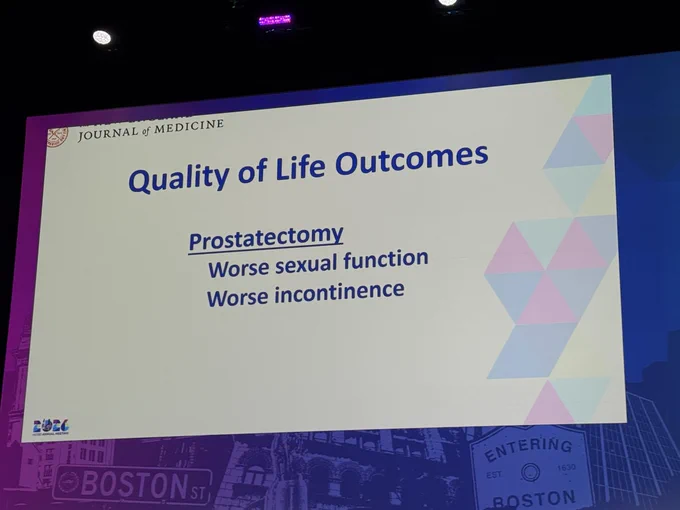
Critical trial, ProtecT, shows surgery and radiotherapy have equal cancer control. Favorable sexual preservation and less incontinence with radiation #pcsm#prostatecancer#ASTRO26
#astro26
Can treat multi target liver to 10 Gy in single breath hold of ~20 sec. Speed like never before.
Thanks to our clinical trials, physics, RTTs, dosimetrists, physicians and the whole team for the immense work that went into to being one of the only sites in the world to already have this technology!
Fascinating!
In a world where submissions to journals are tending towards work performed with assistance from AI, the responsibility of reviewers and AEs has never been greater.
If ever there was an argument for improved recognition of this service, this is it!
Terence Tao, one of the most well known mathematicians, speaks up on AI in mathematics in his new paper:
“What if an AI tool generates a lengthy proof that is verified to be correct, but which nobody — 𝘯𝘰𝘵 𝘦𝘷𝘦𝘯 𝘵𝘩𝘦 𝘩𝘶𝘮𝘢𝘯𝘴 𝘸𝘩𝘰 𝘱𝘳𝘰𝘮𝘱𝘵𝘦𝘥 𝘵𝘩𝘦 𝘵𝘰𝘰𝘭 — understands? This is no longer hypothetical. Sites devoted to collecting mathematical problems already contain dozens of AI-generated proof submissions. Many of these are likely to be correct; but in a substantial number of cases no human expert has yet volunteered to verify and vouch for them, and in several cases the human submitters have themselves declared that they are not qualified to do so.
We may soon be faced with the very real possibility of a verified proof of a major result that NO HUMAN understands well enough to explain.
For a proof to actually contribute to its field, then, it is NOT enough for it to be correct, and NOT enough for it to be readable. It also needs to be accepted and valued by the community: other mathematicians need to 𝗱𝗶𝗴𝗲𝘀𝘁 𝘁𝗵𝗲 𝗿𝗲𝘀𝘂𝗹𝘁 𝗮𝗻𝗱 𝗶𝗻𝗰𝗼𝗿𝗽𝗼𝗿𝗮𝘁𝗲 𝗶𝘁 𝗶𝗻𝘁𝗼 𝘁𝗵𝗲𝗶𝗿 𝗼𝘄𝗻 𝘄𝗼𝗿𝗸.
Our current publication infrastructure relies on human editors and referees to provide this acceptance, voluntarily and largely without credit. This work is routinely regarded as less prestigious than the work of generating proofs in the first place; but it is an essential component of the profession, and it is precisely the mechanism by which the individual achievements of mathematicians are converted into collective progress and understanding.
Finally, even publication is not the last stage. Key results should ultimately become part of the definitive textbooks and reference material of their subject, in the form in which 𝘁𝗵𝗲𝘆 𝗮𝗿𝗲 𝘁𝗮𝘂𝗴𝗵𝘁 𝘁𝗼 𝘁𝗵𝗲 𝗻𝗲𝘅𝘁 𝗴𝗲𝗻𝗲𝗿𝗮𝘁𝗶𝗼𝗻 𝗼𝗳 𝘀𝘁𝘂𝗱𝗲𝗻𝘁𝘀. This process of canonicalization is the slowest stage of all. It requires broad, deliberative consensus, and it is the stage least amenable to optimization by AI tools.”
📍 Terence Tao concludes:
“We will transition from an era of proof scarcity to an era of proof abundance. Most of our institutions — journals, priority conventions, hiring and promotion criteria, prizes, the very notion of a research program — were designed under the assumption of scarcity, and it should not surprise us if they behave poorly under abundance.
In some areas, particularly in education and in the training of young mathematicians, it will be crucial to emphasize 𝘁𝗵𝗲 𝗶𝗿𝗿𝗲𝗱𝘂𝗰𝗶𝗯𝗹𝘆 𝗵𝘂𝗺𝗮𝗻 𝗮𝘀𝗽𝗲𝗰𝘁 of our work, and to restrict the use of AI tools quite tightly; the goal of training a mathematician is NOT achieved by producing correct homework.
In other areas, we will need to take the initiative on AI usage, and define best practices for incorporating these tools into our workflows on our own terms rather than on terms set for us by vendors.”
__
[I highlighted & capitalized words in the text for clarity]
🌏 Today is World Brachytherapy Awareness Day.
Proud to work alongside an incredible multidisciplinary team delivering brachytherapy and helping advance patient care through research, innovation and collaboration.
#ThisIsBrachytherapy