
1/ You're going to hear a lot about RWAs in 2026. Tokenised RWAs just crossed $26B on-chain, ($2 trillion still off-chain). But capital efficiency is broken, and until that's fixed, the market is stuck.

 Open web. Clear feed.

Research and insights from @KeyringNetwork
1/ You're going to hear a lot about RWAs in 2026. Tokenised RWAs just crossed $26B on-chain, ($2 trillion still off-chain). But capital efficiency is broken, and until that's fixed, the market is stuck.

If you are a VC interested in what we do, slide into my DMs. I have goodies.
Equity basis exhibits momentum like beta to equities and ethereum whilst a slight positive beta to bitcoin. Momentum typically shows losses in the second to worst quintile with gains in the worst. The chart below shows the funding premium net of all trading and execution costs, conditional on the returns of: $Eth; $BTC and an equal weight basket of the equity returns on @HyperliquidX Corporate actions have been taken into account as the index trades out of the single stock name 5bd prior of any event.

The basis trade is now fully decentralised ...
Bitget and @KeyringNetwork have decentralised equity-basis with @RealityFi_xyz rTokens, using deterministic vaults and DeFi lending markets. This brings together programmable vaults, portfolio monitoring, and risk tools to explore more capital-efficient, transparent equity-basis strategies. Selected products are planned for Bitget Earn, subject to review, eligibility, and availability. Check the full report here. ⤵️

How to trade tokenised assets in crypto ... Rule 1: Get a TradFi quant trader. Rule 2: Leave them alone. Things are cooking.
We are looking at a very deep level into hyperliquid perps and their transaction costs. The dashed line is the sqrt impact. This has been proven a number of times to hold in tradfi equities. Early indications are that it doesn't hold on @HyperliquidX perps. Seems that there is microstruture inefficiency. We don't know precisely why yet. Any thoughts welcome. The plots follow

This is Vanguard's Total Stock Market ETF. -47% decline in minutes across >3000 US equities. The vast majority of tokenised asset liquidations rely on charity bailouts - shown in the paper below. Equities can move significantly intraday. Who is the liquidator and how? Goodluck liquidating $100m in 12 seconds on a Saturday night...

Call for contributors for a paper on DeFi liquidations... Liquidator roles have changed drastically since the addition of tokenised assets as DeFi collateral. Originally coordinators of infrastructure, they are now expected to provide balance sheet to absorb market and credit risk. The problem is that DeFi protocols have been built assuming assets can be sold instantly to a willing buyer. Whilst risk managers have taken this into account somewhat with LTVs, the protocol design has neglected the liquidator's need for a haircut to warehouse these risky assets. Our calls with leading liquidators this week confirmed what we suspected: most are unaware that protocols have hard constraints on the discounts that can be applied to collateral. This means that a slightly unhealthy position in a tokenised fund is unlikely to find any bidders, and will instead sit idle in the market. It is also possible that under certain conditions an asset can never be liquidated, as the maximum discount available is simply not enough for any rational actor. Different lending protocols have different constraints, but we found that in general none were well suited to clearing tokenised assets and funds in their default configuration. Some DeFi lending protocol teams, as well as some risk managers, have been aware of this issue and have been working on fixes. In talking to industry practitioners, one recurring theme was that levered credit positions rarely (if at all) got liquidated. The liquidation business for tokenised assets was therefore a low priority for most would-be liquidators, despite a surge in interest earlier this year. What this means is that for these assets, liquidators are relied upon to provide a service that is objectively negative expected value for them. We expect that some of the largest market operators, Aave for example, can justify this position as a service. But it gives reason to believe that the majority cannot, or would not, in a big market sell-off. The incentives are skewed against them, as being a liquidator in such conditions is effectively being a charity. We consider any third-party agreements (SLAs) with liquidators under such conditions to be largely spurious unless there are significant protocol changes: they are effectively deep out-of-the-money uncleared put options. This concerns us as retail exposure to DeFi increases through exchanges, PSPs and neobanks. It represents a critical fragility vector. Link to the GitHub repo below. It's still a draft, but we've spent about a week tidying it up so that it's ready for outside reviewers and contributions.


@Bitget 🫶 @KeyringNetwork 🫶 @eulerfinance Seeded by the @bitget earn programme, @KeyringNetwork is bringing tokenised assets by @RealityFi_xyz to @eulerfinance. The equity basis premium will define the next explosion in tokenised global markets. Powered by @BitgetWallet and @BitgetWallet; on @arbitrum, the home of tokenised stocks.

@Bitget 🫶 @KeyringNetwork 🫶 @eulerfinance Seeded by the @bitget earn programme, @KeyringNetwork is bringing tokenised assets by @RealityFi_xyz to @eulerfinance. The equity basis premium will define the next explosion in tokenised global markets. Powered by @BitgetWallet @BitgetWallet; on @arbitrum, the home of tokenised stocks.

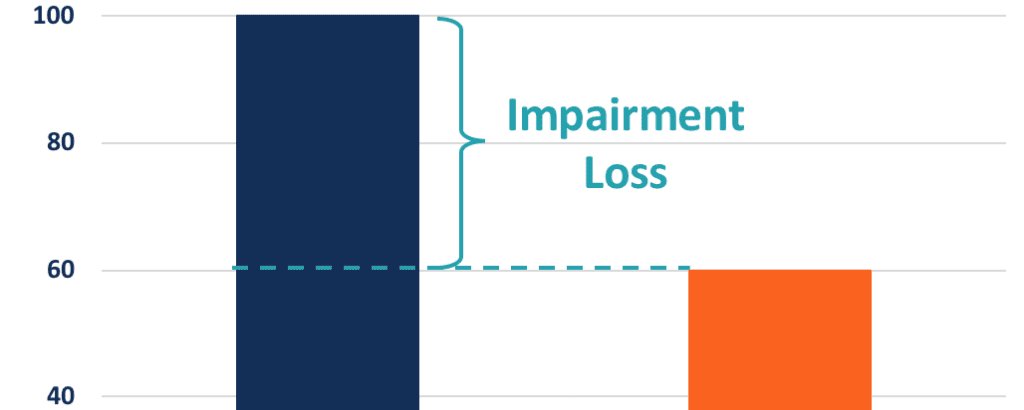
The Russian-Ukrainian conflict highlights a fundamental risk / flaw in tokenised asset collateral in DeFi that has been overlooked. This year Belgium was under a lot of pressure from the @Europarl_EN to seize Russian-linked collateral on @EuroclearGroup. The action would have resulted in the collateral being transferred from Russian-linked accounts to another entity(s) that would receive the yield, instead of the Russian-linked accounts, to fund the Ukrainian war effort. DeFi is absolutely not geared up for this. Imagine you have TokenA and it has balanceOf mapping like (0x1:1000, 0x2: 1000, 0x3: 1000)* and 0x2 is sanctioned. Suddenly 1000 units of TokenA are impaired because the 0x2 cannot redeem them. The valuation has dropped but only for the units of 0x2. The impairment could potentially be reflected in the oracle price but it doesn't make so much sense because the assets of 0x1 and 0x3 can absolutely be redeemed, so why should they see a NAV change? This is a fork in the oracle price between two sets of users. More problematic... If the issuer of TokenA then seizes the assets and moves their rights to a wallet address 0x4 the protocol is left with bad debt if assets are borrowed against this collateral. It is unclear in such a seizure whether the subpoena would require the movement between wallet addresses or if they could just redirect yield. I suspect reading a lot of the PPMs they would have to move the wallet addresses! This is the minor point though, the major point is that the TokenA asset splits in value. This is another reason why lending markets need side pocket/impairment functionalities! * This is actually not how it would be but I wanted it to be easier to read. The balanceOf for TokenA would be 3000 assigned to a single DeFi collateral escrow contract that can be borrowed against. That vault, itself a derivative of TokenA, would have the BalanceOf as stated with 1k each to 0x1, 0x2, 0x3.
Alex McFarlane @flipdazed Mar 17 Article Feature Request: DeFi RWA Impairments (aka side-pockets) DeFi assumes instant liquidation. RWAs break that. I want DeFI lending apps to introduce an "impairment state" for positions with illiquid, settlement-pending collateral: Ring-fence impaired
I spent about 6 months on creating an implementation of @ISDA's SIMM for DeFi. I hope this represents a step forwards in providing an open-source guide to removing the risks around arbitrary leverage in DeFi. As a lender, you can use an AI model to audit collateral LTV limits for safety. This gives you minimum safety bounds, derived from cross-industry quants and experts to rely on. For risk managers, structurers and lending protocols this gives you a benchmark on how to set parameters with a full methodology. Now caveats, I'm really not happy with putting this out there today as I feel like it's not finished and I keep finding errors here and there. But it's at the point, where my errors seem to just be grammatical or bad phrasing, or some random slop that snuck in. Whilst, I remain unable to say this is a final version I think it's well past the 80/20 principle and needs to just get out there. Contributors ... 1) As mentioned, this isn't finished (arg). There are a number of sloppy parts in the back components in particular. 2) We need to extend this to a new crypto risk class - btc, eth, sol, avax etc. - bridges (wBTC, BTC.b etc) - wrappers / staking (wstETH, weETH, wETH etc.) 3) I'll be working on some edits over the next few weeks into FX, Equities, Comm etc as they're a LOT easier than tokenised funds. Link in comments ...

Excited to apply our research to @tydrohq
Tydro v2 will go live with @KeyringNetwork as a core partner. We are excited to bring the trust layer for onchain markets into Ink: • structuring: risk methodology support. • connect: zk-permissioning for our markets. • [un]wind: levered borrowing without secondary liquidity. Keyring provides Tydro seamless integration across the Ink ecosystem and beyond. Let capital flow with @KeyringNetwork 🫶 Tydro.

New website. New docs. New Features. Link in profile description.


Join us on May 22nd at 5:15pm UTC for our panel: How AI Is Already Changing Your Daily Operations
AI hype is everywhere. What’s risky, and what comes next? Co-powered by @arbitrum. Join us to discuss AI Beyond the Hype: 🔹 Are AI agents ready for real-world use? 🔸 Can we trust AI with payments, privacy, and online truth? 📆 22nd May | 2PM UTC onwards 30+ speakers across 8 panels, unpacking where AI x Web3 is headed next. Save the date: x.com/i/spaces/1nGeLydoVzvKX

Fixed income vaults in DeFi are increasingly becoming a cornerstone of the liquidity ecosystem. A simplified model of both @aave and @Morpho below shows how the vaults are used by borrowers to provide a service to lenders by giving them liquidity combined initial margin protection on the underlying illiquid collaterals in exchange for a cut of the yield. This trade only works for assets with yields greater than 1.8 times the overnight rate in each currency. Right now, that threshold is 6.55% If you are a tokenisation platform or fund issuer: make sure to focus on assets that clear this rate if you intend them to be used as DeFi collateral.

Think Google single sign-on, but you share nothing. No email, no personal data. You just verify. That's zkVerification.


