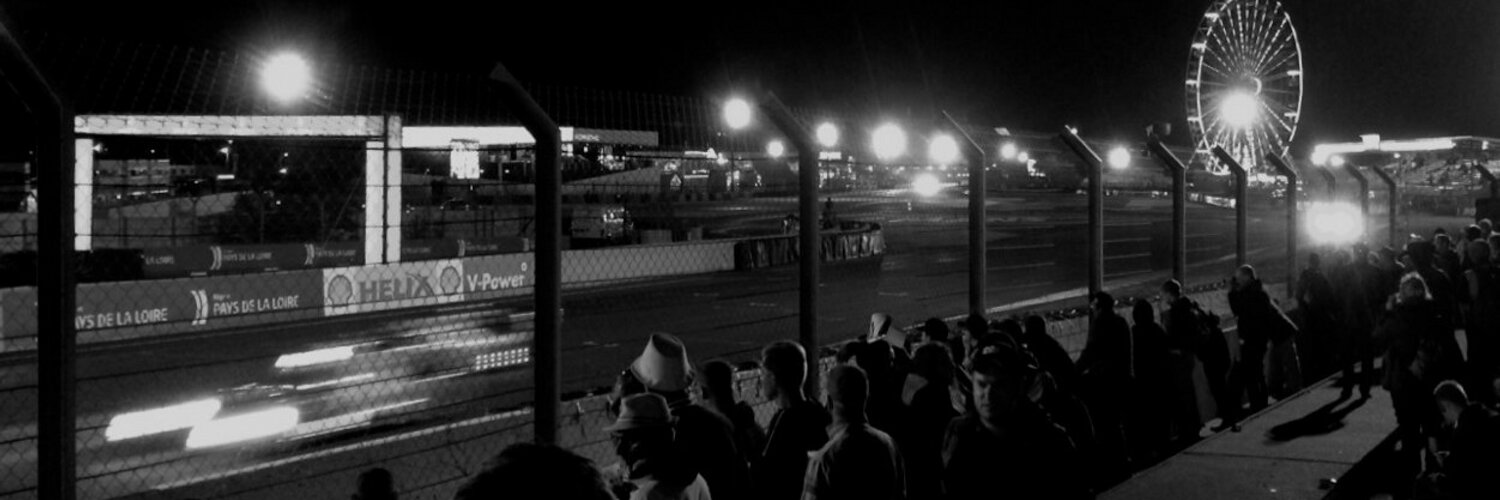
Objects of high aspect ratio benefit from specially designed cameras to avoid perspective distortion. Daniel Lawrence Lu’s photos of San Francisco streetcars, like Adam Magyar’s earlier ones of NYC Subway trains, use line scan cameras, capturing 1000s of pixel columns/second.
A camera that only sees one column of pixels at a time turns out to be the perfect way to photograph a streetcar.
Daniel Lawrence Lu stood by the Muni tracks for three hours with a line scan camera, capturing about 10,000 one-pixel slices a second as each tram rolled past.
Since the vehicle paints itself onto the frame, there's no perspective at all. The trams come out flat and dead-on, like the elevation drawings an engineer would make, while the background smears into stripes. And people don't blur either.
news.ycombinator.com/item?id…
Everyone has heard the story about how the horizontal lines of the Parthenon are subtly curved to adjust for an optical illusion that would make them *look* curved if they were *actually* straight.
According to recent research, however, there is simply no evidence for this optical illusion. The slight curves of the actual building are real, but they are not correcting for anything, and they are probably too slight to be perceptible. We don't know why the Athenians included them – perhaps to help shed rainwater.
We might really have guessed this before, since, after all, countless other classical buildings have straight horizontals without looking weirdly curved to us.
The moral here is not to trust elaborate mathematical theories of why buildings are good and bad. The huge pretentious literature on the Golden Ratio is, in my view, similarly bogus. Aesthetic theories need to be tested contrastively: do people actually like buildings less when some feature is not there?
thetimes.com/uk/history/arti…
If @elonmusk used just 0.5% of his wealth to play the modern Carnegie, and to reestablish the physical library as a shared community asset for curious minds, especially the young, and as a fortress to defend information, it would be the greatest philanthropic act of the century.
Roma non smette mai di incantare il mondo.
Siamo sul Colle Oppio, nelle gallerie sotterranee delle Terme di Traiano, e qui sotto c’è una meraviglia unica al mondo: la “Città dipinta”.
È un affresco straordinario, una vera e propria città vista dall’alto, con le mura, le torri e gli edifici rappresentati in prospettiva. Ed è ancora più incredibile pensare che è stato realizzato quasi duemila anni fa, in epoca neroniana o flavia, quindi prima ancora delle Terme di Traiano. E poi c’è un altro capolavoro: il mosaico della “Musa e del Filosofo”, che faceva parte della decorazione di una grande sala affacciata su un ninfeo.
Sulle pareti, i mosaici riproducono addirittura una grande scenografia teatrale, con statue e personaggi reali. Insomma, qui sotto Roma continua a sorprenderci. E ogni scavo aggiunge un pezzo alla storia straordinaria della nostra città.
Ma la sorpresa non finisce qui.
Perché anche sopra abbiamo completamente riqualificato il giardino e la grande esedra delle Terme di Traiano.
Abbiamo realizzato una nuova cavea per accogliere il pubblico e valorizzare questo luogo con piccoli concerti, conferenze ed eventi. Ci sono una nuova illuminazione, il nuovo manto erboso e nuovi percorsi pedonali.
L’apertura al pubblico inizierà in via sperimentale, solo per alcune giornate e in piccoli gruppi, per poter monitorare e valutare l’impatto della presenza antropica sulla conservazione delle delicate opere. Per il mese di settembre, a partire da sabato 12 e domenica 13, la galleria sotterranea e l’esedra saranno aperte al pubblico nel fine settimana con visite guidate gratuite, in lingua italiana e su prenotazione. Poi, a partire dal 2 ottobre, le visite si svolgeranno dal venerdì alla domenica. Per ciascuna giornata sono previsti sei turni, alle ore 10.00, 11.00, 12.00, 13.00, 14.00 e 15.00 per un massimo di 15 partecipanti per fascia oraria. Prenotazione consigliata allo 060608.
Following the UN vote on #EqualEarth I built a light #D3 app with sliders for central meridian/reference parallel. I like using 45° instead of the equator; balances distortion, brings the Arctic Circle into view, shows northern landmasses clearly. Try it:
codepen.io/editor/staridas-g…
On Friday, the United Nations General Assembly adopted an African proposal for a new world map, which shows countries’ true size relative to one another.
In favor: 164
Against: 1
Abstentions: 6
As someone who ships LLM systems in production, this double pendulum video is the closest thing to a "why one changed word breaks Claude and GPT-5" explainer I've ever seen released for free.
Everyone thinks LLMs are deterministic machines. They're not. Every prompt to GPT-5 is a chaotic double pendulum - a tiny perturbation in the initial state (one comma, one whitespace) sends the entire response into a completely different attractor.
Bookmark this 26-min video and watch tonight. Same butterfly-effect chaos that broke Poincaré's math, now the exact reason your API calls to Claude feel unreliable.
In other words, a disgraceful dereliction of duty for a site of cross-cultural significance, that should be open to all curious visitors, to say nothing of its alleged protection by @UNESCO. Sed quis custodiet ipsos custodes?
Great to see an animated version of the dimension-busting Flatland photography by @aydinbuyuktas. It would be fantastic to try this in a navigation app.
Remembering the night I got fixated on paper data storage and learned you can fit about 140 pages of (encoded) plaintext on a single sheet of paper. The page below includes the encoder legend and its source code repeated 26 times
It's illegible at a glance and breaks when photographed or shared on social media, but is totally reconstructable without guidance if printed, scanned, and handed to an LLM for decoding
Do with that what you will!
Remembering the late, great Dolly, who brought joy, comfort and inspiration to so many - including the millions of children given free books through her Imagination Library. We will always ❤️ you.
There are now FOUR Odyssey translations on Amazon’s list of the fifty bestselling titles. Emily Wilson’s translation just sold its millionth copy. People everywhere are reading a 2,700-year-old poem. Those of us who were myth geeks as kids have waited our whole LIVES for this.
1/n
A physical book is a real object, anchored. If you read a particular edition, you remember not only the contents but the object itself: its cover, typography, smell, even where a passage sat on the page.
Books organize themselves in memory by place --the ancient method of loci.
Digital text does not exist.
My new library does not have tall bookshelves, intentionally so all books are in easy reach.
Non #Lindy books are ditched except those that can be useful are in a hallway not in the main rooms.
[Same material as Umberto Eco's but shorter]
The greatest harbinger of end times is not plague or war, but the sudden enormous proliferation of Xerox-quality POD editions (unmarked! no warning!) from houses like Penguin.