←
Marine Ecology Progress Series (MEPS)2,117 posts
Marine Ecology Progress Series (MEPS) avatar

Marine Ecology Progress Series (MEPS)

@MEPS_IR

MEPS has been long established as the leading journal in marine ecology. It is known for its high-quality publication of cutting edge research articles.

◷ Joined June 2016▧ 1,378 Photos and videos
Marine Ecology Progress Series (MEPS) avatar
Marine Ecology Progress Series (MEPS)@MEPS_IR·8h

Tracking Antarctic Weddell seals over 13 years revealed stable foraging behaviour despite environmental variability, with marked individual variability. This flexibility may help seals cope with changing sea ice and prey distribution. bit.ly/meps15277

Post attachment
Marine Ecology Progress Series (MEPS) avatar
Marine Ecology Progress Series (MEPS)@MEPS_IR·Nov 17

Why do Portuguese man-of-war strand year-round in N Brazil but only in spring/summer further south? New study links this to shifts in the South Equatorial Current, tracing likely source regions & drift pathways along >7000 km of coastline. bit.ly/meps15289

Post attachment
Marine Ecology Progress Series (MEPS) avatar
Marine Ecology Progress Series (MEPS)@MEPS_IR·Nov 6

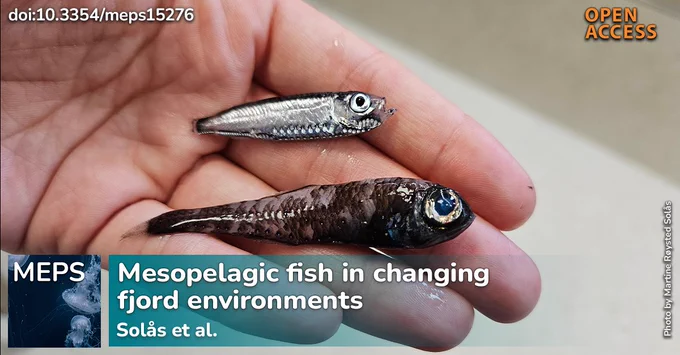
Annual surveys spanning a decade suggest that mesopelagic fish in a deep Norwegian fjord do not avoid hypoxia. Modeled light penetration accounted for more variation in vertical distribution than oxygen. Trends also differed between species. bit.ly/meps15276

Post attachment
Marine Ecology Progress Series (MEPS) avatar
Marine Ecology Progress Series (MEPS)@MEPS_IR·Nov 5

A new study shows that California spiny lobsters prey primarily on snails, rather than sea urchins, across six sites spanning the Southern California Bight in California, USA. Lobster diets were similar across sites and lobster sizes. bit.ly/meps15282

Post attachment
Marine Ecology Progress Series (MEPS) avatar
Marine Ecology Progress Series (MEPS)@MEPS_IR·Nov 4

In 2025, Okinawa Island, Japan, experienced unprecedented coral bleaching after the typical summer bleaching period, driven by the longest recorded thermal stress event, with spatially disproportionate impacts particularly evident in deeper reef zones. bit.ly/meps15273

Post attachment
Marine Ecology Progress Series (MEPS) avatar
Marine Ecology Progress Series (MEPS)@MEPS_IR·Nov 3

A new study finds that ocean warming can enhance corallivorous snail impacts on corals by both enhancing snail metabolism and feeding on corals, and by reducing coral energy reserves, potentially making them more susceptible to mortality. bit.ly/meps15272

Post attachment
Marine Ecology Progress Series (MEPS) avatar
Marine Ecology Progress Series (MEPS)@MEPS_IR·Oct 29

Meta-analysis shows the strength of predation risk on oyster responses varies across predator types and environmental gradients. Harnessing context-specific responses of oysters to predators can help meet locally relevant management goals. bit.ly/meps15245

Post attachment
Marine Ecology Progress Series (MEPS) avatar
Marine Ecology Progress Series (MEPS)@MEPS_IR·Oct 28

Stingray pits on tropical sandbanks give mangrove crabs safe low‑tide refuges. Crabs used ~15% of pits, favouring narrow ones that reduce heat & predator risk. We reveal a new link between stingray engineering & crab survival in coastal ecosystems. bit.ly/meps15258

Post attachment