
Were you getting a little yippy?
 Open web. Clear feed.
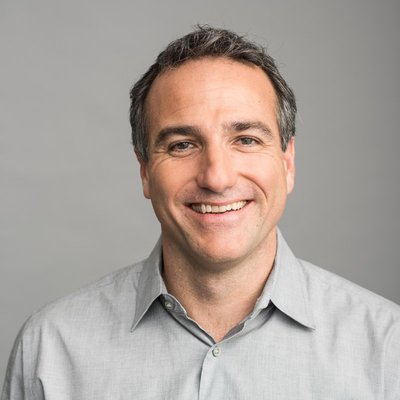
Founder & MD @stormventures. Early investor in enterprise startups. Host of #AskaVC YouTube channel. linkedin.com/in/ryanfloyd1
Were you getting a little yippy?

@nvidia was a $2 billion company when I joined as a young engineer in 2002. It has since grown more than 2,000X. As an entrepreneur, I know how hard it is to grow a company 2X. 2,000X is almost impossible to comprehend. The remarkable thing is not valuation, but that its success was never supposed to happen. Not at this scale. @JensenHuang willed that one-in-a-million future into existence. As part of NVIDIA’s innovation team, I saw his belief in making the impossible possible. Betting on a technology that might not deliver any commercial returns for years is hard enough. I know it as a founder. Now imagine sustaining that conviction for 20 years, through changing markets, skeptical investors, competing priorities, and countless chances to take the safer path. That takes unbelievable courage, time and time again. It’s founder-level conviction, not corporate leadership. Conviction alone wasn’t enough. What struck me most about Jensen was the breadth and depth of his expertise: hardware, architecture, chip design, software, computing, AI, developer ecosystems, product strategy, markets, sales, and business models. Most companies would need a dozen world-class experts to match that. But a committee of a dozen world-class experts doesn’t create groundbreaking innovation. A committee might have optimized the GPU business with better chips, better margins, and more market share. But would it have spent decades investing in accelerated computing, building CUDA and an entire developer ecosystem, long before the commercial opportunity was obvious? Then there’s the business model. Chip companies have historically faced enormous pricing pressure. They risk becoming interchangeable components, with device makers and cloud providers squeezing margins. NVIDIA turned that on its head. Through technology leadership, relentless innovation, software, and ecosystem building, it created pricing power no chipmakers ever had: gross margins above 70%, higher than Apple, Google, or Amazon. Creating the technology, building the products and developer ecosystem, recognizing and enabling the AI revolution, and building a business model that captures this much value: any one of these would be a career-defining accomplishment for most entrepreneurs. Jensen drove all of them. Today, much of the AI industry is built on the foundations NVIDIA created. That wasn't accident. It wasn’t inevitable. The more I’ve experienced entrepreneurship myself, the more I appreciate the sheer improbability of what he accomplished. There is virtually no chance NVIDIA would be what it is today without Jensen Huang. People can debate Jensen’s decisions, leadership, and judgment. None of those debates change what he built. I believe history will place him among the rare individuals who fundamentally changed what humanity can do with technology. The core algorithms behind AI existed for decades. The compute Jensen built made them an industry. That deserves recognition.

So much change in venture. Great write up by @colossusmag I am putting together more of my thoughts on the opportunities - but I am convinced that many will require less capital as AI has reduced the cost of building. Get in touch w perspectives. colossus.com/article/venture…

This is a great post by @arakharazian looking at @tryramp customer AI usage data. First dataset I have seen where clearly coding (and maybe security) are driving spend. There is consumption outside of the dataset by venture backed AI companies but suspect this is an excellent representation of enterprise spend. The real threat for the "AI trade" is whether the growth in other areas outside of coding can keep pace. Coding has left some very big shoes to fill - the good news is I imagine coding is going to keep growing substantially. Its still early days. ramp.com/data/ai-index-nov-2…


Anthropic is truly an amazing business. At the same time, in the roadshow Dario making claims that Anthropic will solve cancer, mental illness and heart disease among many is just not credible to me. What do you believe?
Many will dismiss the Apollo AI report as doomerism -especially the tech crowd. Its obvious issue is that productivity and profit will be lagging to any AI adoption. And the lag could be substantial - coding is a killer use case today for example but seeing the fruits of more functionality, more product etc. may take time. It doesn't seem like reducing headcount in a meaningful way is playing out either - at least not yet. What is true - ultimately the enterprise buyers will need to see meaningful gains. It will come but it may take some time. Most are not there yet today. Its just early which is not an indictment of AI or its potential value. And your Muse agent figuring our your kids soccer practice schedule is not going to fill the gap. apollo.com/insights-news/ins…

all the cool kids are doing it
Scoop: @kevinweil former chief product officer at OpenAi and product exec at Meta, Twitter has a new science meets AI startup that he’s aiming to value at $750m right off the bat. businessinsider.com/weil-val… w/ @thebenbergman
Great first day at @Shift_AI_Events in Barcelona. We have all come a long way w AI in just a few short years! @Benioff @salesforce

We see the same trend towards open weight models in the portfolio but to be fair these are tech forward businesses. More interesting - Khosla makes the argument that the reason the frontier LLMs will win against opensource is bc they will control the infrastructure below the model like custom silicon and data centers - which allows them to serve at a lower cost. One thing is for sure - that is going to take a lot more capital.
Scott Wilson, the chief investment officer of Washington University in St. Louis, became the envy of his peers after a bold early bet on SpaceX helped vault the school into the ranks of America's wealthiest endowments. Now Wilson is sounding the alarm ... bit.ly/3TNUbuw
It bums me out that AI has ruined the use of em dashes
And open weight models next. Mature models are a commodity. Amazing how fast that happened.
Extraordinary share gains for OpenAI vs. Anthropic over the last two months. Per Openrouter, OpenAI has gone from 20% share to 50% share vs. Anthropic (meaning Anthropic has gone from 80% to 50%) since June.


There is zero chance this happens as a public company. Zero.
The way that Anthropic and OpenAI are going to “pace” the frontier is by spending more time and more *compute* on alignment, monitoring and evals. The frontier labs that choose to “pace” likely spend slightly more money on compute at the cost of lower margins. That’s it.
How many cool processes and workflows have you set up with AI and told all your friends about But don't read or pay attention to now at all ?
Well that is a different but predictable take
Let's all take a moment to understand how self-serving it is for OpenAI, Anthropic and other execs of big hyperscalers to talk of slowing things down. 1. LLMs are not AI and won't be AGI. There is nothing AI to slow down. 2. Competition is coming up fast, slowing benefits incumbents. 3. IPOs need hype & puffery; "we are so awesome it could become dangerous" is hype & puffery 4. Cover for real uncontrollable slowing growth as IPOs look to be pushed out
I am totally a sunday night x/twitter person. I am still amazed at the Wed 3pm poster. So many.
Well said.
If you were young in 2001, or weren’t even born yet, it can be hard to imagine what 9/11 felt like. The shock of that beautiful, cloudless morning. The heartbreak of the families whose loved ones were taken with such swiftness and cruelty. The realization that the forces of malevolence and violence were closer, and the future less certain, than we knew. But in the days that followed, we felt something else, too. Pride in the rescue workers who had rushed to the scene, and the passengers who had stormed the cockpit. Admiration for the men and women who left behind lives of comfort to serve their country. A deep resolve that nothing would break the will of a truly United States of America. Today Michelle and I are remembering those we lost that day, and those who made the ultimate sacrifice in the wars that followed. We pray for their families. And we hope Americans everywhere remember the true lesson of 9/11: that we can survive even our darkest days as long as we move forward as one nation and one people.


