←
Science Advancement and Outreach5,152 posts
Science Advancement and Outreach avatar

Science Advancement and Outreach

@SAOscience

Promoting human-relevant research, policies, and funding opportunities. Better for patients, better for animals.

◷ Joined September 2022▧ 1,340 Photos and videos
Science Advancement and Outreach avatar
Science Advancement and Outreach@SAOscience·May 26

Wondering why we've been talking so much about the new Research Modernization NOW website? This short video explains its value, and who it’s for. A resource designed for multiple audiences: ✍️ Journalists and authors Reporting on animal testing, non-animal methods, biomedical research, or any of the 15 disease areas covered. It also provides context on recent NIH and FDA developments, oversight systems (including IACUCs), and the implications of the scientific evidence on animal sentience. 🧑‍🎓 Students A reliable starting point for reports, or for building a foundational understanding of these issues. 🧑‍🏫 Educators Content to support teaching on research methods, ethics, and emerging scientific approaches. 🧑‍💼 Policymakers and staff Background research and policy-relevant insights to inform legislative priorities and decisions. 🧑‍⚕️ Healthcare professionals A way to stay current on the scientific and regulatory landscape, and to engage in efforts advancing human‑relevant science. 🐾 Animal advocates Credible, evidence-based information to deepen understanding of animal use in research and testing, and to strengthen advocacy for modern, non-animal approaches. This structured, evidence-based resource is for anyone working at the intersection of science, policy, and ethics, and for those helping drive the transition to human-relevant research. 🎞️ Watch the video to see how it can support your work. youtu.be/wCT9OTnSUk8

0:54
Science Advancement and Outreach avatar
Science Advancement and Outreach@SAOscience·2h

🦇 Wild bats are being captured, sampled from, and killed in an attempt to answer questions about zoonotic disease. In a new systematic review in @AW_TheJournal, Carlotta Pasetto et al. show how widespread these practices remain. doi.org/10.1017/awf.2026.101… Researchers examined 226 studies involving the capture and sampling of wild bats for zoonotic disease experiments between 2014 and 2024. Nearly half reported euthanizing bats. Blood sampling occurred in 18.6% of studies, while anesthesia was reported in 20.3%. Notably, 55% of studies that reported euthanasia involved one or more species classified by the IUCN as being of conservation concern. There are obvious animal welfare concerns, as well as scientific problems. The authors wrote, "a relatively high proportion (46.3%) of research papers did not describe key methodological details, making it not possible to assess their compliance with recommended practices. Another 15.0% of the articles used methods recognised as Not compliant." Research intended to protect public health should meet rigorous standards for methodology and transparency, and should not reduce animal welfare. Prioritizing non-invasive approaches over invasive experiments on animals should be a foremost goal. For zoonotic surveillance, this means advancing methods that can obtain pathogen data while minimizing capture and avoiding invasive sampling and killing of wildlife. Protecting human health and protecting wild animals should be part of the same scientific objective. "The collapse of more than 70% of global wildlife populations over the past 50 years, is yet another stark confirmation of the ongoing biodiversity crisis. ... This context calls for an urgent shift toward more ethical and conservation-aware approaches to wildlife research." 🏛️ Wildlife Conservation Medicine Research Group of the @UABBarcelona, @CReSA_r, @ctforestal, and @uvic_ucc's BETA Technological Centre #AnimalWelfare #WildlifeResearch #PublicHealth

Science Advancement and Outreach avatar
Science Advancement and Outreach@SAOscience·Nov 16

What happens in frontotemporal dementia before tau pathology appears? 🧠 In a new study, researchers from @NeuralStemCells demonstrated how carefully standardized human cortical organoids can help identify early molecular changes that precede tau pathology. Bertucci et al. built a scalable platform using hiPSCs carrying disease-associated MAPT mutations and their isogenic controls. By improving organoid manufacturing, cortical patterning, and quality control, they generated organoids with gene-expression profiles that closely resembled those of the developing human cortex, with minimal evidence of culture-related cellular stress. Their quality control system, CortiCOSI, helped identify organoids that developed consistent cortical characteristics. Focusing on these organoids revealed disease-associated molecular changes that had been obscured by variability across samples. In MAPT V337M organoids, the researchers identified early dysregulation of PP2A signaling and prefoldin function that preceded the tau hyperphosphorylation and oligomerization observed at later time points. By reducing the experimental variability that can obscure subtle biological signals, this platform could make it easier to identify early disease mechanisms and investigate how tau-related disease unfolds over time in human cells. In @Nature_NPJ npj dementia: 🔗 nature.com/articles/s44400-0… Congratulations to the researchers and collaborators, including Sally Temple, Steven Lotz, @GeschwindLab, @KateTubbesing, @karchlab, and others. 🏛️ NSCI, @UKDRI, @dgsomucla, @SinaiGenetics, @SinaiGenHealth, @CGM_MGH, @CompHealthMuc, @ETH_BSSE, @WashUMedADRC This work was funded by the National Institute of Neurological Disorders and Stroke (NINDS), the National Institute on Aging (NIA), @RCFNeuro, @tau_consortium, @AFTDHope, @_BrightFocus, @CurePSP, UKDRI, and @MALifeSciences. #RareDisease

Science Advancement and Outreach avatar
Science Advancement and Outreach@SAOscience·Nov 14

What do we really know about the minds of other animals? In this @voxdotcom interview, Professor @jeffrsebo speaks with @jonquilynhill about animal intelligence, consciousness, and sentience. They explore a question science is increasingly taking seriously: what is it like to experience the world as another animal? As evidence of complex cognition, emotion, and sentience continues to grow across species, the ethical implications matter. Scientific uncertainty about exactly how other animals experience the world should not become an excuse to disregard their experiences. Instead, it strengthens the case for greater precaution and protection. Sebo says, "[T]here are studies showing that animals like insects have remarkable capacities for perception and learning and memory and adaptive, flexible decision-making and communication with each other. Animals that we might have written off as simple, as mechanistic, are in fact incredibly complex, seemingly sensitive, seemingly intelligent." 🔊 To read the full interview: vox.com/explain-it-to-me/508…

Post attachment
Science Advancement and Outreach avatar
Science Advancement and Outreach@SAOscience·Nov 12

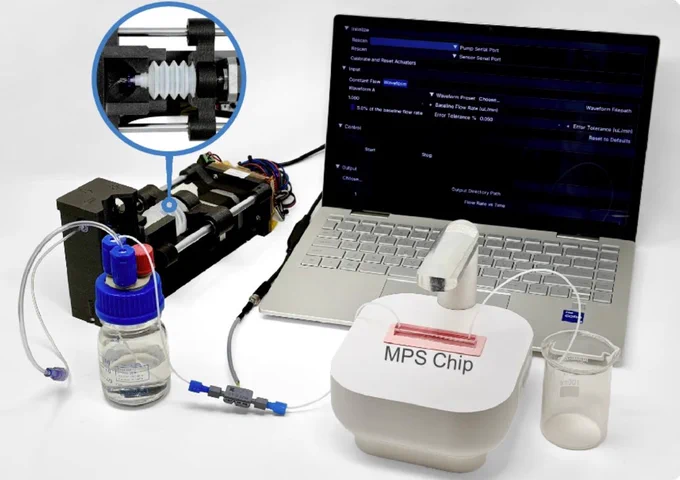
🎶 ICYMI, an accordion-inspired innovation is helping scientists model human vascular disease without using animals. @aguycalledankit, Rashmi Pandey, @theERlab, @JainLabTAMU, and others at @TAMUEngineering have developed Hemadyne, an automated perfusion system that can reproduce complex, patient-specific blood flow waveforms in human cell microphysiological systems. Inspired by the expanding and contracting bellows of an accordion, the technology allows organ-on-a-chip platforms to accurately recreate the rapid, multipulse flow generated by the human heartbeat.🫀 The system can take a waveform recorded from a patient and replicate it “with nearly absolute spatiotemporal fidelity,” sustain primary human endothelial cells in a vessel-chip for up to 60 days, and recapitulate an age-associated pathological vascular effect “that animal models cannot reproduce.”👏 Published in @NatureComms, the study demonstrates how engineering advances can strengthen human-based models and help overcome the translational limitations of animal experimentation. Rather than attempting to approximate human vascular biology in another species, Hemadyne enables researchers to investigate disease mechanisms using human cells exposed to clinically relevant blood flow patterns, leading to “better drugs, better knowledge of human diseases” and allowing "good-faith clinical trials where the chances of success will be significantly higher than what they are now.” 🔗 Read the news story: news.engineering.tamu.edu/ne… 🔗 Read the paper: nature.com/articles/s41467-0…

Post attachment
Coalition to Address Animal Methods Bias avatar
⟳ Science Advancement and Outreach retweeted
Coalition to Address Animal Methods Bias@TheCOLAAB·Nov 11

🎈 One year ago today, the UK committed to a bold set of goals to accelerate the transition to animal-free science in its Replacing Animals in Science strategy. Since then, the COLAAB has been working to help translate that promise into action.

Post attachment
Science Advancement and Outreach avatar
Science Advancement and Outreach@SAOscience·Nov 11

Animal sentience science is advancing. Animal welfare standards must follow! For much of modern history, assumptions about which animals could feel pain or have subjective experiences were strongly influenced by the similarity of their nervous systems to humans’. The science of sentience is steadily dismantling that narrow view. The new book Invertebrate Sentience: The Evidence and Its Implications, edited by @evaroseread and @birchlse, brings together researchers from philosophy, biology, animal welfare science, and animal behavior to examine evidence of sentience in decapod crustaceans, insects, cephalopod mollusks, and gastropod mollusks. Evidence of sentience has accumulated across an increasingly diverse range of species and is one of the most important developments in modern animal welfare science. Even where it hasn’t, animal welfare standards should not require definitive proof of suffering before better protections are provided. All animals should be treated as sentient, with a precautionary approach to avoid pain and distress. Contributors: @evaroseread, @birchlse, @AndrewCrump94, @zoophilosophy, @Dr_AlexSchnell, Charlotte Burn, @matilda_gibbons, Meghan Barrett, Sajedeh Sarlak, @LChittka, Sarah Dalesman, Jack Olive, and Katherine Sloman, with a foreword by @nickyclayton22. 📙 Read more: taylorfrancis.com/books/edit…

Post attachment
Science Advancement and Outreach avatar
Science Advancement and Outreach@SAOscience·Nov 9

Reducing moral distress among laboratory animal personnel doesn’t mean the problem has been solved. In a new paper, Margot et al. offer a framework that separates the situation creating the moral conflict from the distress it causes and the effects that follow. In laboratories where animals are used, moral conflict arises when workers are required to harm or kill animals, including healthy animals, or otherwise treat them as tools. The authors warn that the absence of moral distress in such an ethically contentious environment isn’t necessarily a good sign and that addressing workers’ distress without addressing what's causing it leaves the underlying problem intact. "Importantly, reducing moral distress should not be understood as an ethical objective independent of the underlying moral conditions producing it. In some contexts, moral distress may constitute an appropriate and ethically significant response to practices perceived as morally problematic. Eliminating distress without addressing the underlying source of moral conflict risks suppressing moral agency rather than resolving ethical tension. In some contexts, moral distress may therefore constitute an unavoidable consequence of institutional systems whose functioning depends on practices perceived as morally problematic. For example, purely procedural or technological solutions that distance workers from animal harm might reduce emotional burden while leaving the underlying ethical issues unchanged. From this perspective, the complete absence of moral distress in ethically contentious environments would not necessarily indicate ethical health, but might instead reflect moral disengagement, normalisation or institutional silencing." Read in @JME_BMJ's JME Practical Bioethics: doi.org/10.1136/jmepb-2026-0…

Post attachment
Science Advancement and Outreach avatar
Science Advancement and Outreach@SAOscience·Nov 9

🏆 @UUtah recently awarded $360,000 to six non-animal projects through its first-ever Novel Alternative Methods (NAMs) Seed Grants. Every university should be making this kind of investment, and on a much larger scale. Transitioning away from animal experimentation requires the funding and institutional support that can help researchers put these technologies to work. 🥂 Congratulations to the awardees: @ScottSummers339, distinguished professor and chair of @uofunuip and co-executive director of @UtahCMH, for modeling lipotoxic heart disease using hiPSC-derived cardiomyocytes. @BoudinaSihem, associate professor in @uofunuip at @CofHealth and an investigator in @UU_MolecularMed, for developing engineered human heart tissue. @peter_j_west, research associate professor, @uofu_pharmtox at @uofupharmacy, and co-investigator with @AddProgram, for developing an assay to test anti-seizure medications in human neuronal cell cultures. Laith Al-Rabadi, physician at @UofUHealth and professor in @UofUInternalMed, for developing a fully human Glomerulus-on-a-Chip (GOAC) platform to model kidney disease. William Holland, associate professor in @uofunuip, and @MarcusPezzolesi, assistant professor, @UofUNephrology, for using hiPSC-derived cells to model genetic propensity for lipid dysregulation. Bruce Edgar, professor of oncological sciences at @huntsmancancer, for establishing a shared library of patient-derived colon organoids for studying colorectal cancers. research.utah.edu/research-i…

Science Advancement and Outreach avatar
Science Advancement and Outreach@SAOscience·Nov 6

📊 You can’t measure progress if you don’t know where you’re starting. The U.S. lacks a comprehensive public accounting of animals used in experimentation, leaving major gaps in our understanding of animal use across the industry. In a new article, Amal Dadi, MA examines this gap and asks what the U.S. can learn from Europe’s approach. The EU’s ALURES system provides centralized, publicly accessible information about animal use, including species, numbers, experiment purposes, harms, and other key details. The article makes the case for a similar national reporting system in the U.S. and explains how greater transparency could help identify opportunities to reduce and replace animal use, strengthen scientific accountability, and guide investment toward human-based research. As federal agencies increasingly prioritize non-animal methods, understanding where, how, and why animals are still being used is critical to measuring progress. Better data could help identify trends in animal use, evaluate implementation of the 3Rs, strengthen oversight, and pinpoint areas where investment in non-animal methods could have the greatest impact. 🔗 Read the article on @SciLightNews's Substack: scilight.substack.com/p/beyo… While not quite a national reporting system, OLAW is seeking input on annual reporting of vertebrate species covered by the Public Health Service Policy but currently excluded from annual reporting requirements by the USDA. Please send OLAW your feedback before December 21! grants.nih.gov/grants/guide/… Need help drafting your comment? See our guidelines here: scienceadvancement.org/tell-… Also, please join the @PCRM’s webinar, “Bringing Animal Experiments Out of the Shadows” on November 17 at 12:00 pm ET: us06web.zoom.us/webinar/regi…

Post attachment
Science Advancement and Outreach avatar
Science Advancement and Outreach@SAOscience·Nov 5

🔬 What if we could conduct a “clinical trial” before a patient ever receives a drug?  A new review in @jclinicalinvest family of journals explores how non-animal methods could transform cardiometabolic drug development. @Debarun0005, Ibrahim M Sayed, Ravichandra Venkateshappa, Latha Palaniappan, Tracey McLaughlin, and @Joseph_C_Wu at @StanfordMed, @StanfordCVI, @Stanford_ChEMH, @StanfordDeptMed, and @GreenstoneBio highlight a fundamental problem with the traditional pipeline: experiments on animals remain widely used to predict human responses, despite the fact that many have never been validated and that physiological differences between humans and other animals contribute to poor translation. “This unbridgeable translation gap makes it imperative to develop more human-relevant approaches.” They point toward a human-based approach combining: 🫀 Human-derived biological twins, including organoids, organ-on-chip systems, and other patient-derived models 💻 Digital twins, using computational approaches to interpret biological data and predict drug responses at the patient and population level 🤖 AI and machine learning to help predict responses The authors argue that the question is increasingly shifting from whether NAMs should be used to how best to use them, envisioning them ultimately becoming “the primary tool" for preclinical research. 👏 This is the direction biomedical research needs to go. 🔗 Read the paper: jci.org/articles/view/209668

Post attachment
Science Advancement and Outreach avatar
Science Advancement and Outreach@SAOscience·Nov 4

Putting a welfare label on animal experiments doesn’t make them ethical. The newly proposed CARE label by Katharina Tillmann and Bernhard Voelkl at the University of Bern aims to assess refinement in experiments on animals and reward labs that "proactively improve the welfare of their laboratory animals beyond minimal requirements." Read their paper in @LA_NatRes: nature.com/articles/s41684-0… Refinement is a good thing. Measures to ensure animals used in laboratories are protected from as much suffering as possible should be implemented. But a label that only measures refinement must never become a seal of ethical approval. And there should always be a safeguard to ensure that welfare certifications don’t become grounds for reducing independent inspections or regulatory oversight. Most importantly, a high welfare rating does not resolve the fundamental ethical problem of deliberately breeding animals for and subjecting them to experimentation. Refinement should reduce harm while experiments on animals continue, but its role should be temporary. Efforts must be made to protect animals now while also accelerating the transition to non-animal methods that ultimately make such welfare labels unnecessary. #AnimalWelfare #AnimalEthics #Bioethics #SciencePolicy #Refinement #3Rs

Post attachment
Science Advancement and Outreach avatar
Science Advancement and Outreach@SAOscience·Nov 2

Researchers now have a remarkable and growing toolkit for studying the human female reproductive tract without using animals. In a new review, researchers from @uofl map the expanding landscape of human-relevant methods for modeling female reproductive biology, including: 🔴 Multicellular co-cultures that capture interactions among human cell types 🔴 Organoids that recreate aspects of 3D tissue architecture 🔴 Microfluidics that reproduce fluid flow and molecular transport 🔴 Organs-on-chips that combine human tissues, biological barriers, microbes, and dynamic culture conditions in controlled systems 🔴 Computational and mathematical models, with AI offering additional opportunities to analyze the large datasets these methods can generate The authors highlight models spanning much of the reproductive system, including the vagina, cervix, endometrium, fallopian tubes, ovaries, placenta, and maternal-fetal interface. Some systems model infection or cancer; others examine drug transport, microbiome interactions, or hormonal signaling. One interconnected microfluidic model even represented five tissues and features of a 28-day menstrual cycle. These approaches also provide new opportunities to study nanomedicines designed for targeted therapeutic delivery to the female reproductive tract, an application the authors note remains underutilized. And scientists and engineers are rapidly improving these models, including their immune components, standardization, throughput, and scalability. Congratulations to Arielle Greiner, Kenneth Palmer, and Hermann B. Frieboes, from @BE_UofL, @UofLSpeedEng, @UofLBCC, @UofLHealth, @UofLPharmTox, @uoflmedschool on this useful synthesis of an exceptionally fast-moving area.

Post attachment
Science Advancement and Outreach avatar
Science Advancement and Outreach@SAOscience·Nov 2

📢 @NIH is putting significant funding behind human-based infectious disease research. This new funding opportunity will establish Translational Centers using human cell-based microphysiological systems to study infectious diseases and advance medical interventions. Projects proposing animal studies, animal-derived cells, or MPS without primary human cells or human-derived iPSCs ***will not be reviewed.*** Participating ICOs include NIAID, the Office of AIDS Research, and the Office of Research Innovation, Validation, and Application (ORIVA). Learn more about the opportunity and how to apply: files.simpler.grants.gov/opp… @NIH_Innovates

Post attachment
Science Advancement and Outreach avatar
Science Advancement and Outreach@SAOscience·Oct 29

👏 More momentum for human-based research! Here are some recent news articles from @NIH: Funded by NIAID and NIGMS, @Dr_ASingh, @KrishRoyLab, and colleagues combined a human lymphoid organoid with a bone marrow-on-a-chip to study aspects of immune function that have been difficult to investigate directly in humans. The platform can incorporate cells from specific patient populations to study aging, infections, autoimmune disease, and allergies while providing “opportunities to gather new insights that existing models do not offer,” said John H. Powers III, acting director of NIAID. nih.gov/news-events/news-rel… NCATS highlighted a new project funded by Complement_ARIE to develop non-animal methods to better understand fibrotic diseases and accelerate the discovery of potential treatments: the 3D MultiOrgan Models of Fibrosis (3D-MOFIB) technology development center. Researchers from NCATS, NIEHS, NIAAA, NHGRI, and the University of Michigan are bringing together human 3D tissue models, high-throughput drug screening, multi-omics, and AI-driven computational models. ncats.nih.gov/news/news-even… Nine papers by @CDNeurogenomics, funded by NIA, showed how scientists are using donated human brain tissue, single-cell technologies, and AI to build high-resolution molecular maps of Alzheimer’s and related brain disorders. By analyzing more than 6.3 million nuclei from 1,494 human donors, researchers identified shared and disease-specific molecular processes that could inform new biomarkers and precision treatments. nih.gov/news-events/news-rel… Funded by NIAID, NHLBI, NIGMS, NIDDK, and NCI, Calvin Kuo’s team developed human lung organoids using samples from more than 220 patient volunteers. The organoids retain key immune cells and mount virus-specific immune responses, creating a promising platform for studying respiratory infections and testing interventions. The platform “may provide a replacement for animal models for some types of evaluations and may provide insights that tests in animal models could not capture.” nih.gov/news-events/news-rel… 🚀 This exciting progress exemplifies the possibilities that emerge when funding agencies embrace technologically sophisticated human-based methods designed around the biology we ultimately need to understand: our own.

Post attachment