
We will be closing this X account by the end of the month. For more content on the Smithsonian's work to save migratory birds, follow us @nationalzoo or find us on Facebook and Instagram under Smithsonian Bird Friendly Coffee!

 Open web. Clear feed.

Fostering understanding appreciation & protection of the grand phenomenon of bird migration. #ornithology. Legal: s.si.edu/legal Tweets/RT ≠endorsement
We will be closing this X account by the end of the month. For more content on the Smithsonian's work to save migratory birds, follow us @nationalzoo or find us on Facebook and Instagram under Smithsonian Bird Friendly Coffee!
Why Fake Cobwebs Are Dangerous for Birds ‼️ 🎃 🕸️ Artificial cobwebs are made of thin, strong synthetic fibers. Once tangled, they struggle to free themselves, often tightening the fibers further and causing injury, stress, or even death. Image courtesy of Getty Images

Commonly found in the shade canopy foraging for large flies, caterpillars, and other leaf-eating insects, the Cerulean Warbler plays an important role in insect pest control on coffee farms! #DrinkBirdFriendly #FeatheredFactFriday #CeruleanWarbler

When grown under a diverse canopy of shade trees, coffee plants, the trees that shade them, and the plants that grow on the trees provide a diverse smorgasbord of flower resources. 🌺 It is no wonder that shaded coffee farms can support impressive numbers of hummingbird species!
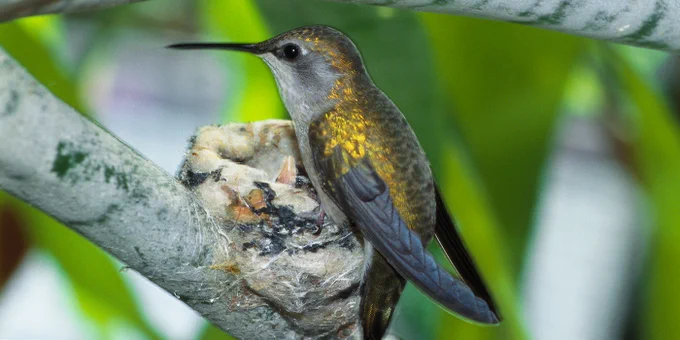
🌿🌸 Spring is here, and so are the migratory birds! 🌸🌿 We’d love to hear from you—what migratory birds have you spotted so far this season? 🐦 Whether it's a familiar favorite or a new sighting, share your spring birdwatching experiences with us in the comments below! 📸✨

Did you know? The Hoatzin, or "stinkbird," has a unique digestive system that ferments leaves, producing a strong odor. Its chicks even have claws on their wings, helping them climb back into trees—just like ancient birds from the dinosaur era! #FeatheredFactFriday

Tomorrow is World Migratory Bird Day! Fuel your birdwatching session with a coffee that supports birds and the environment. Drink Smithsonian Bird Friendly-certified coffee, protect hundreds of bird species. It's that easy. Learn more: birdfriendly.si.edu 📷: Smithsonian

This Emerald-bellied Puffleg was spotted in a cloud forest adjacent to a Bird Friendly® farm in Peru. These glittering hummingbirds provide important pollination services and can be found along the east slope of the Andes in Colombia, Ecuador, and Peru. #FeatheredFactFriday

Bird Friendly® farms aren’t just beneficial for birds–they also help support the ecosystem as a whole! #BirdFriendlyCoffee #Coffee #CoffeeTime #Café #Birds #MigratoryBirds #WildlifeConservation #Conservation #Organic #Wildlife #BirdWatching #Flora #NativePlants
Birds are in trouble, but you can help bring them back. Live bird friendly by starting with these seven ways to make your home and lifestyle better for birds and the planet. #DrinkBirdFriendly #LiveBirdFriendly #Songbirds #SpringMigration
If you love songbirds, you’ll love Bird Friendly® coffee, the environmental gold standard. #BirdFriendlyCoffee #Coffee #CoffeeTime #Café #Birds #MigratoryBirds #WildlifeConservation #SaveOurSongbirds #Songbirds #Migration
The Bluish-fronted Jacamar is found within and around Bird Friendly® farms in Peru. They can be spotted sitting on vines and branches where they await their chance to capture insect prey. #FeatheredFactFriday

The findings show that of nearly 3 billion birds lost, 90 percent belong to 12 bird families. Learn about the Seven Simple Actions to Help Save Birds here: 3billionbirds.org/7-simple-a… Courtesy of Cornell Lab of Ornithology
What’s better than the perfect cup of coffee? The perfect cup that protects the planet! Bird Friendly® coffee flies above the rest by maintaining a combination of foliage cover, tree height, and tree diversity proven to provide quality habitat for birds and other wildlife.
“When bird populations are healthy, it tells us that the ecosystem is healthy, and when bird populations are declining or in trouble, it tells us that something is wrong.” —SMBC Center Head, Dr. Scott Sillett #DrinkBirdFriendly

Did you know the Blackburnian Warbler is the only warbler in N. America that has an orange throat? These vivid birds can be spotted high in the canopy jumping from branch to branch and inspecting leaves for insects like caterpillars, beetles, and mayflies. #FeatheredFactFriday
