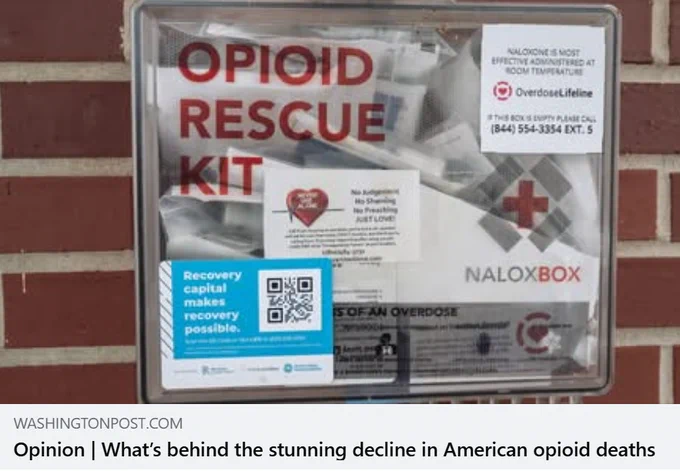
Overdose deaths are finally falling in the U.S. and Canada — but the most uncomfortable question is why. A new analysis suggests the decline may have little to do with policy, enforcement, or even harm-reduction efforts — and far more to do with a sudden fentanyl supply shock. Key takeaways worth sitting with: -- After two decades of relentless increases, overdose deaths began dropping sharply in 2023 -- U.S. drug deaths fell from nearly 113,000 to roughly 73,000 in two years -- Canada saw a similar decline despite very different drug policies -- Street fentanyl purity dropped by ~50% at the same time deaths fell -- DEA seizures slowed not because of better enforcement, but because there was less fentanyl to seize -- Drug-user forums began openly discussing a “fentanyl drought” — a real-time signal of supply collapse -- The most plausible cause may be upstream: a crackdown on fentanyl precursor chemicals abroad The implication is sobering. Deaths may be down not because we solved the crisis — but because supply temporarily tightened beyond North America’s control. That means two things can be true at once: -- This decline has saved tens of thousands of lives -- It may be fragile, reversible, and largely accidental History shows that when supply returns, risk returns — often worse than before due to lost tolerance and substitution with even more dangerous substances. If there is a window here, it is this: -- Fewer people are actively using -- More people reachable -- More opportunity to move individuals into real treatment and recovery If we mistake this moment for victory, we will waste it. If we treat it as a warning — and act accordingly — we may finally change the trajectory. Learn more here: theatlantic.com/ideas/2026/0…