Open web. Clear feed.

Director, Research Unit for Precision Regenerative Medicine @HelmholtzMunich; Professor @LMU_Muenchen

Excited to introduce our latest experiment from @GoogleLabs: Co-Scientist Workbench! Sign up for early access today! labs.google/science/#co-scie…


Introducing Helios: measuring 1,000+ protein biomarkers from a drop of blood to help you live younger, longer. Here’s how it works: • Self-collect blood at home with a painless, needle-free device • We measure the proteins carrying signals from cells and organs throughout your body • Your Helios AI agent explains your results, highlights risks, and offers personalized guidance Proudly backed by Y Combinator and Formation VC. Join the waitlist at myhelios.com

We have shown that Granzyme K mediates organismal aging but not immune aging @ImmunityCP . Mice lacking GzmK showed significant attenuation of heart, liver and kidney decline. cell.com/immunity/fulltext/S…


a new way to contribute to scientific progress is emerging until recently, there were effectively two paths for scientists: - stay in academia: get to work on more or less whatever you want, but be resource limited and underpaid - go into industry: be well resourced and well paid, but have to work on narrow, research programs that increase shareholder value there’s now a third option: contributing to improving the scientific capabilities of AI. this has some of the best aspects of both traditional industry and academia - you get freedom to pursue the research that interests you - your work is very high leverage, helping accelerate research of all scientists who use AI - you are resourced and paid much better than academia interestingly, what makes it possible for this third path to exist is that the frontier labs actually mean it when they say they want to “cure all disease in 5 years.” whether or not you think this is plausible, there is strong conviction and abundant capital trying to make it happen i’ve joined @latchbio and i’m very excited to be part of this new wave of scientists striving to ensure AI can contribute to revolutionary scientific discovery @latchbio we build benchmarks and evaluations that frontier labs and pharma use to measure and improve their models i am building out a team focused on Aging & Longevity whose goal is to give AI (1) a deep understanding of aging biology, (2) the ability to develop next generation biomarkers of aging, and (3) the capability to discover and develop anti-aging interventions. if you’re interested in helping accelerate research across the aging & longevity ecosystem my DMs are open latch.bio/careers/ai-biologi…


Our new paper, “Simply Aging,” is out in @PNASNews! What is aging, when does it begin, how do we measure it, and what would it take to extend lifespan? We tackle these questions directly and simply. 📄 Read: pnas.org/doi/10.1073/pnas.26… 💬 Discuss: simplyaging.xyz/


Smith and Montesquieu thought that markets and commerce made us better: that they create an incentive to pursue self-improvement and to create things of value for others. In the positive AI visions, where the labor of humans is made redundant, I find myself wondering how we fare in the presumptive absence of these incentive gradients. Perhaps we are released to a life of freedom, where we can study Mozart and read Dickens, but that still seems complicated: both Mozart and Dickens were themselves deeply commercially-motivated in the production of their work, as were most of the great artists through human history. If the premise is that nobody will need to work or produce, how confident are we that we actually get the next Mozart and Dickens? The relevant question is not the partial equilibrium of whether one individual can pursue a life of enlightened leisure, but the general equilibrium of what form a society as a whole will take on. One could maybe invoke Periclean Athens or the aristocratic gentleman scientists of Victorian England as a counterpoint. While these individuals were perhaps not motivated by commercial considerations, they were embedded in wider societies shaped by commerce, attendant betterment, and trade: Byron was himself upper class, but he was also surrounded by and writing for an educated bourgeois audience. So we’re back to the equilibrium question. Furthermore, even these individuals were surely motivated by a sense of high-stakes and consequential agency: if they did not apply themselves to their labors, they presumably believed that the work would not otherwise exist. Thucydides was addressing pressing military matters. So I would like to read more optimistic cases from AI proponents about what a society (vs individual life) looks like if everything goes well: what people do, why they do it, whether humans achieve excellence (and in which domains), and which historical groups we should look to as relevant precedent. One can perhaps imagine that humans will turn out to have a strong preference for work created by other humans. This may work in certain domains (ceramics?), but for how many will it actually apply? (I’m told that much of what is sold on indie crafts websites is now in fact manufactured in China.) It’s hard to see how this human preference, even if strong, would, for example, save scholarship. Another idea would be to accept that nobody will become Einstein or Mozart or Byron, and that human excellence as such diminishes, but that there are compensatory benefits (planet brains and Dyson swarms?). I believe that we can satisfy individual desires, but to what extent will we cultivate behavior worthy of admiration? Will a post-scarcity society mold capable and ambitious people? Which institutions will sustain them and which responsibilities will they have? I’d like to hear more of the equilibrium for the maximalist case spelled out.

By 2028 most of us will rely on powerful AI agents to make our decisions. After the unprecedented success of coding agents this year, forecasting and decision making are the new frontier. Similar to coding, forecasting is amenable to large-scale reinforcement learning with verifiable rewards: Agents are tested on historical data, predicting past market data and events while only able to access prior events. RL can then teach agents to predict at a superhuman level. The use of such tools will be irresistible to CEOs, politicians and anyone else who carries responsibility and has the money to afford them. If the agents are demonstrably smarter than you, can you really afford not to use them? These users will be willing to pay several $10,000 per month or more to rely on the agents. At @river_ai_inc we are working on building open-source forecasting RL recipes that run on our API platform, accessible to anyone. Any company and organization in the world should have the ability to own and improve their own decision-making agents!

Shinya Yamanaka et al. study showing that the effects of partial reprogramming vary across cell types 👀 It suggests that cellular rejuvenation strategies need to be optimized for different cell types, questioning the feasibility of whole-body rejuvenation approaches.
Partial reprogramming reveals lineage-specific uncoupling of rejuvenation, function, and recoverability in human cells biorxiv.org/content/10.64898…

reversing this concentration is one of the great opportunities for our species in the coming years
77% of clinical-stage drugs go after the most popular 20% of targets, and 31% after the top 2%


Meet Gemini 4 Hydrogen: built for rapid coding, multimodal synthesis, and everyday workflows. It finishes tasks 2.5x faster than 3.8 Flash and surpasses Argon on the @ArtificialAnlys Intelligence Index.


Our strongest frontier model, Gemini 4 Carbon, is now available. Built for deeply complex, long-horizon workflows that push a frontier model’s intelligence, Carbon delivers frontier performance in agentic workflows across complex knowledge work, software engineering and web development, cybersecurity, and scientific reasoning. While Gemini 4 Argon remains the ideal model for the majority of software engineering and knowledge work, Carbon steps in for your hardest tasks that push a model to its limits — from complex, multi-step debugging to open-ended scientific research. Available starting today: — Consumers: use it in the @GeminiApp and AI Mode in Search for Google AI Ultra subscribers — Developers and Enterprises: build via the API in @GoogleAIStudio and @AndroidStudio, Google @Antigravity for Google AI Ultra subscribers, and Gemini for business — Scientists and Researchers: apply for a chance to get 6 months free via @Antigravity — Cybersecurity Defenders: apply to join the Fairwind Program for access to Carbon for cyber Watch how Carbon brings reasoning and coding together, turning avian research into an interactive 3D simulation of a songbird’s vocal organ that synthesizes the sounds of six bird species live.

For no particular reason I feel compelled to RT the fact that curing diseases is data rather than intelligence limited. For anyone serious about having AI accelerate cures, please get in touch so @impetusgrants can get you the necessary data.
Re. compute vs bio data collection, path is obvious when you consider EV of marginal spend on either: If a frontier lab put $50M into collecting data that may be gating, e.g. rich multiomics from real human longitudinal trials, that's ~1 day of compute budget. Such data takes incompressible time from study initiation. If pure simulation doesn't need this data, cures delayed 1 day. If the data guides models to simulate sooner, cures accelerated by months or years. If the data is strictly necessary, cures accelerated years. Obvious choice if eg the first AI benefit example in your S-1 is ""profoundly accelerate the rate of progress in biology and medicine, potentially curing diseases that have plagued humanity for millennia ..."


I’m very pleased to introduce AlphaGenome 2, @GoogleDeepMind’s next-generation genomics model that deciphers how DNA changes affect cells. Cells are the basic units of life and key to our understanding of biology. It is an ongoing challenge to predict how DNA changes affect the functioning of different cells, such as for a heart muscle cell or an immune cell fighting an infection, and to uncover cellular drivers of disease. To make progress on this challenge, we needed to design the architecture of AlphaGenome 2 so its predictions were conditional on cell types and states. This new design enables AlphaGenome 2 to predict variant effects across hundreds of human cell types and adapt to unseen cell and disease states without retraining. When evaluated on the TenK10K immune cell dataset, AlphaGenome 2 demonstrated a major leap in accuracy over its predecessor. It reliably identified nearly twice as many causal variants (30% vs. 16%) and directional gene effects (43% vs. 23%) compared to the original AlphaGenome. This step-change improvement in precision helps researchers pinpoint previously overlooked disease-relevant variants with high confidence. Using analysis on retrospective case studies, we were able to show AG2’s real world utility in disease understanding. A landmark study had previously shown that a variant in a distant regulatory switch drives irritable bowel disease by overactivating the ETS2 gene in gut macrophages. When used to make predictions across various immune cell types in the gut, AlphaGenome 2 singled out the exact causal variant and showed that it selectively boosts the ETS2 gene in gut macrophages, leaving other cell types and genes largely unaffected. I would like to thank my colleagues Adam Gayoso @adamgayoso, Žiga Avsec @Avsecz, and our entire genomics team for their incredible contributions and dedication to bringing this model to life. We are making AlphaGenome 2 available for non-commercial academic research via the AlphaGenome API, and soon we will release AlphaGenome 2 Skills in Google Antigravity. I’m incredibly excited to see how scientists around the world use this model to make progress on biological understanding and treating disease. Read more on our blog here: deepmind.google/blog/alphage…


What makes a biological reasoning task verifiable? Our team @tahoe_ai has spent the last few months on that question and landed on one conviction: for human-difficult tasks with verifiable rewards, the answer key has to come from ground-truth experimental data. Along the way we built thousands of such environments, which we call TahoeMysts, and we use them to evaluate frontier models (among other things). Every so often a new model produces a big jump, and it is always exciting. Today is one of those days: @claudeai Mythos 5.2! We will say more about this work in the future. In the meantime, take a look at our results today.


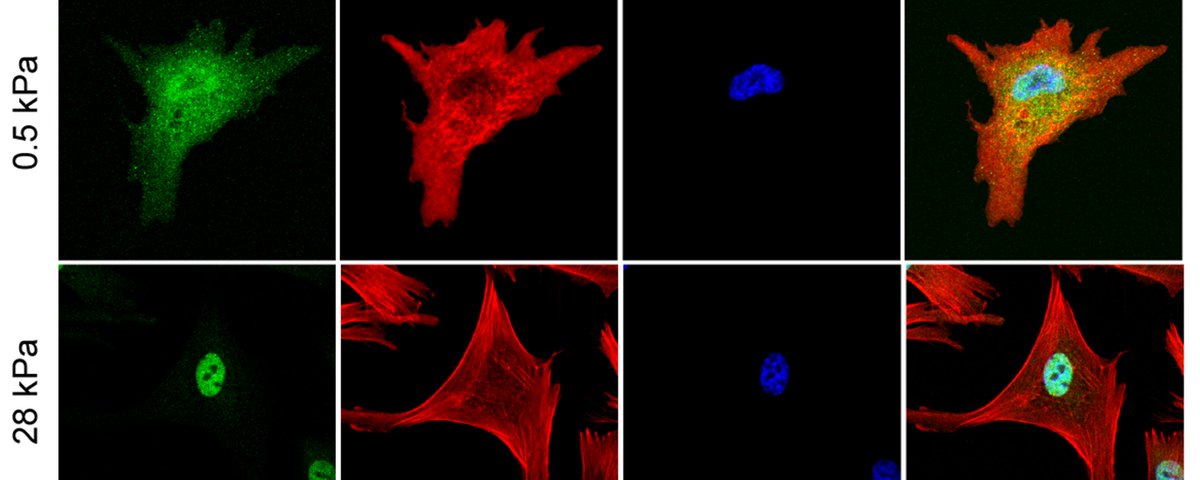
📣 On the cover of @JCI_insight! 🧬 Our research identifies microtubule acetylation as a new mechanical checkpoint and potential therapeutic target, with reduced fibroinflammation and fibrosis in lung, skin & kidney preclinical models. insight.jci.org/articles/vie… #Mechanobiology