At SurePulse, we’re transforming neonatal monitoring with solutions designed to make it safer, faster, and more family-friendly. Discover more about these challenges: buff.ly/ZDf0ewU #NeonatalCare #NewbornMonitoring #FamilyCenteredCare

SurePulse VS wireless monitoring for newborns I #Neonatology I Contact us to learn more ... surepulsemedical.com/contact…

At SurePulse, we’re transforming neonatal monitoring with solutions designed to make it safer, faster, and more family-friendly. Discover more about these challenges: buff.ly/ZDf0ewU #NeonatalCare #NewbornMonitoring #FamilyCenteredCare

Traditional ECG heart rate monitoring isn’t designed for newborns. ❌ Slow to attach & prone to dislodgement (Mizumoto, 2012) ❌ Risk of damaging delicate newborn skin (Anton, 2019) ❌ Wires interfere with crucial delivery room cuddles & kangaroo care (Bonner, 2017)

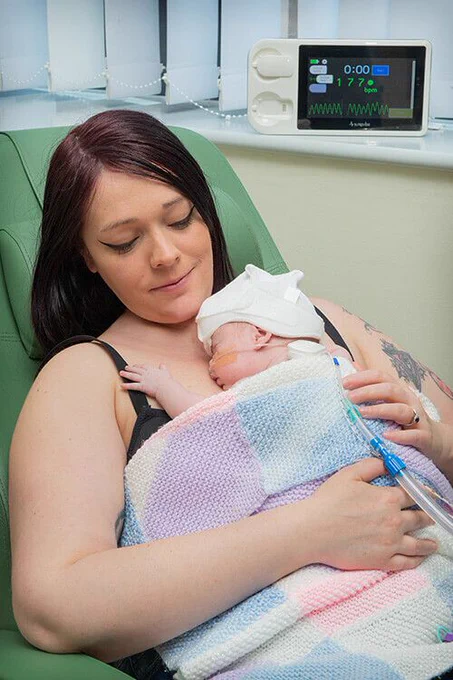
SurePulse VS: the first wireless forehead-mounted PPG monitor for newborns. Supporting research in delayed cord clamping, skin-to-skin, early feeds, and more. Learn more 👉 buff.ly/VKeAiXo #newbornmonitoring

''Wireless HR monitoring has the potential for assisting safe and effective monitoring by staff, while allowing parents greater autonomy during first cuddles with their babies in the DR, and during skin-to-skin/kangaroo care in the NICU’’. Read more zurl.co/XoXe

A UK real world evaluation of SurePulse VS was presented at the jENS congress 2023. It concluded: ‘‘This relatively new HR monitoring approach demonstrated feasibility for use in preterm babies in our tertiary-level centre, and good staff user acceptability.''

Their findings? The new method was three times faster to apply than traditional individual electrodes. Learn more about this innovative approach here: buff.ly/3CIwZFy

Applying ECG electrodes to newborns with vernix-covered skin can be challenging, often leading to dislodgement and potential skin injuries (Mizumoto). A study by Henry et al. (2022) explored a novel ECG electrode placement method using a patch secured through surface tension.

Combining optimal cord clamping with wireless monitoring provides greater assurance during critical care decisions. 🔗 Find out more about our wireless vital sign monitoring devices on our website: buff.ly/kMvh5tj #CordClamping #InnovationInCare #WirelessMonitoring

Now imagine using wireless vital sign monitoring during those precious minutes: ✅ Confidence that babies' vital signs are in a stable range ✅ All the benefits of optimal cord clamping ✅ Safer transition while the cord is still intact

🕒 Waiting 2 minutes can save lives. For preterm babies, studies have shown that deferring cord clamping ≥120 seconds reduces mortality by allowing vital placental transfusion.

That’s why SurePulse VS stands out. Designed to provide precise and reliable heart rate monitoring for newborns, regardless of skin tone. This innovation ensures equitable and optimal care for all babies from birth. 📖 Read more : buff.ly/40WqEzB #NeonatalCare

Research shows that these devices overestimate oxygen levels in patients with darker skin tones, potentially delaying critical care. In neonatal care, accurate monitoring is vital.

Last year we shared the findings of an independent review by the UK Department of Health & Social Care which highlighted concerns about racial bias in medical devices, particularly in pulse oximeters.

Dr Anne Maire Heuchan, Consultant Neonatologist at Glasgow Children’s Hospital discusses the challenges of monitoring heart rate at birth. Find out more about our wireless heart rate monitoring solutions for the delivery room: buff.ly/SIQNSsm #Neonatology MedTech

➡️ Skin-to-skin contact is encouraged “whenever possible,” with close monitoring of breathing and temperature for at least 1 hour to support early breastfeeding. Read the full article for the key updates ➡️ buff.ly/4c9lhM2 #NeonatalResuscitation #HeartRateMonitoring

➡️ The 2025 guidelines also highlight the importance of continuous temperature monitoring during resuscitation to prevent hypothermia and hyperthermia, both linked to adverse outcomes.