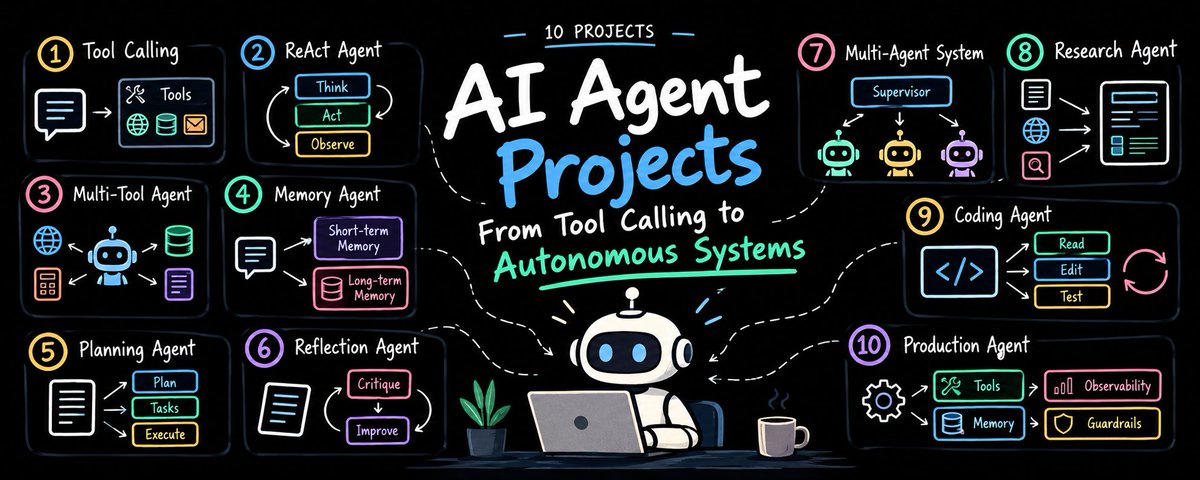
We've spent the last couple of years making AI agents better at individual tasks.
But an important problem we need to solve is: How do we make multiple AI agents work together inside our existing engineering workflows?
Think about an incident:
• One agent pulls the relevant Jira tickets.
• Another checks Datadog for signals.
• Another helps draft an incident update or document.
Instead of switching between tools, copying context and manually coordinating agents, imagine having them work in shared rooms alongside your team.
That's what caught my attention about Switch AI.
Switch Buddy helps set up your first agents and rooms in minutes. Agents can work with Google Workspace, Jira, Confluence, GitHub and Datadog, acting as the person who connected them, with read or write access chosen per agent.
You can also interact with them naturally in conversations without tagging an agent in every message.
And importantly, admins retain control over connectors, roles and access.
The next step in AI-assisted engineering isn't just better individual agents. It's making them useful as part of the engineering team's actual workflow.
Worth exploring.
Say hi to Switch Buddy 👋
Claude Code writes code. Codex reviews it. Another agent debugs. No copying context or managing handoffs.
Switch AI brings them into shared rooms with your team. Now Buddy helps you set it all up in minutes.
Open source. Your agents. Your choice.
Robert Pattinson received $1 million just to audition for coveted Bond role and is set to earn almost $100 million to play the iconic Secret Service agent trib.al/QW6eNJ9
Java is one of the most used technology worldwide.
90% of software systems will need to be checked at least
All the best to everyone fighting in the trenches today
🚨A critical vulnerability in Java has been disclosed.
Java4Shell (CVE-2026-114938), a critical OpenJDK vulnerability with a CVSS score of 9.2. It isn't in the application code but inside the JVM.
Here's what engineering teams need to know.
1. What's the vulnerability?
OpenJDK has an optimized Base64 decoder that uses specialized AVX-512 CPU instructions to improve performance.
A bug in this low-level implementation causes an out-of-bounds heap write when processing specially crafted Base64 input.
An attacker can potentially use this memory corruption to:
• Read sensitive data from the Java heap.
• Corrupt application memory.
• Achieve Remote Code Execution (RCE).
The particularly concerning part? Remote exploitation without authentication has been demonstrated.
2. Who is affected?
This isn't limited to one Java framework or application.
Affected OpenJDK-based distributions include:
• Amazon Corretto
• Eclipse Temurin
• Microsoft OpenJDK
• Azul Zulu
• Red Hat OpenJDK
• Oracle Java
The vulnerable code path requires an x86-64 CPU with AVX-512 VBMI support.
Applications demonstrated to be vulnerable include
• Jenkins
• Keycloak
• Jira
• Confluence
• JFrog Artifactory
• Elasticsearch
• Apache Kafka
• Spring Boot and Apache Struts
These are demonstrated examples, not an exhaustive list.
3. What should engineering teams do NOW?
If you're responsible for Java infrastructure, here's your immediate action list:
• Inventory all Java runtimes, including those bundled inside containers and third-party products.
• Identify vulnerable Java versions and check whether the underlying CPU supports AVX-512 VBMI.
• Prioritize internet-facing services, authentication systems and applications processing untrusted Base64 data.
• Upgrade to vendor-patched Java releases.
• If immediate patching isn't possible, temporarily disable the vulnerable Base64 intrinsics using -XX:-UseBASE64Intrinsics or disable AVX-512 using -XX:UseAVX=2 on supported x86-64 systems.
• Rebuild container images and redeploy affected workloads.
• Review application logs and endpoint telemetry for suspicious activity.
calif.io/java4shell
🚨A critical vulnerability in Java has been disclosed.
Java4Shell (CVE-2026-114938), a critical OpenJDK vulnerability with a CVSS score of 9.2. It isn't in the application code but inside the JVM.
Here's what engineering teams need to know.
1. What's the vulnerability?
OpenJDK has an optimized Base64 decoder that uses specialized AVX-512 CPU instructions to improve performance.
A bug in this low-level implementation causes an out-of-bounds heap write when processing specially crafted Base64 input.
An attacker can potentially use this memory corruption to:
• Read sensitive data from the Java heap.
• Corrupt application memory.
• Achieve Remote Code Execution (RCE).
The particularly concerning part? Remote exploitation without authentication has been demonstrated.
2. Who is affected?
This isn't limited to one Java framework or application.
Affected OpenJDK-based distributions include:
• Amazon Corretto
• Eclipse Temurin
• Microsoft OpenJDK
• Azul Zulu
• Red Hat OpenJDK
• Oracle Java
The vulnerable code path requires an x86-64 CPU with AVX-512 VBMI support.
Applications demonstrated to be vulnerable include
• Jenkins
• Keycloak
• Jira
• Confluence
• JFrog Artifactory
• Elasticsearch
• Apache Kafka
• Spring Boot and Apache Struts
These are demonstrated examples, not an exhaustive list.
3. What should engineering teams do NOW?
If you're responsible for Java infrastructure, here's your immediate action list:
• Inventory all Java runtimes, including those bundled inside containers and third-party products.
• Identify vulnerable Java versions and check whether the underlying CPU supports AVX-512 VBMI.
• Prioritize internet-facing services, authentication systems and applications processing untrusted Base64 data.
• Upgrade to vendor-patched Java releases.
• If immediate patching isn't possible, temporarily disable the vulnerable Base64 intrinsics using -XX:-UseBASE64Intrinsics or disable AVX-512 using -XX:UseAVX=2 on supported x86-64 systems.
• Rebuild container images and redeploy affected workloads.
• Review application logs and endpoint telemetry for suspicious activity.
calif.io/java4shell
Most teams are drowning with security vulnerabilities in the AI era. Engineering team are facing a different problem.
Which ones are actually exploitable?
Which are false positives?
Which require immediate attention?
And how do you know you haven't missed something?
Security reviews can consume days because finding suspicious code is only the first step. Validating it, tracing its impact and producing actionable findings takes considerably more effort.
There are a couple of ways teams approach this.
1. Traditional security scanning
Tools like SAST scanners, dependency analyzers and secret scanners inspect code for known vulnerability patterns.
They're useful for catching common issues early, but they don't always understand the application's complete architecture, trust boundaries or business logic.
2. Manual security reviews and penetration testing
Security engineers trace data flows, investigate attack surfaces and attempt to exploit weaknesses.
This provides deeper context, but it takes time and doesn't always scale across large codebases or frequent releases.
Now, what if AI agents could help with this process, not just by scanning code, but by systematically investigating and validating vulnerabilities?
That's what makes Cloudflare's Security Audit Skill interesting.
It's an open-source skill that turns a coding agent into a structured security auditor.
Instead of asking one agent to scan a repository and list suspicious code, it follows a six-phase workflow:
• Reconnaissance: Understand the architecture, entry points and trust boundaries.
• Coverage-led hunting: Assign isolated agents to investigate different attack surfaces and track what's been covered.
• Candidate validation: Give every potential vulnerability to a fresh agent whose job is to disprove it.
• Structured findings: Classify issues as confirmed, rejected or needing further validation.
• Independent verification: Have another agent verify the source-code evidence behind confirmed findings.
• Reporting: Generate structured security reports with evidence and remediation context.
What makes this particularly relevant in the AI era is its security coverage.
It goes beyond traditional application vulnerabilities and includes:
• Prompt injection and unsafe agent tool execution.
• MCP security and trust boundaries.
• Agent memory and cross-tenant data leakage.
• Cloud IAM and deployment misconfigurations.
• Supply-chain and CI/CD vulnerabilities.
• Authentication, authorization and data isolation.
There are two design decisions I particularly like.
First, the agent that discovers a vulnerability isn't the one that validates it. Another agent actively tries to disprove the finding.
Second, it doesn't treat every suspicious code pattern as a confirmed vulnerability. It requires source evidence and a concrete security impact. If a critical runtime or deployment detail cannot be established, the finding remains needs_validation.
Of course, this isn't a replacement for security engineers, dedicated scanners or penetration testing. It also requires parallel-agent support and a properly isolated sandbox to execute target code safely.
But it demonstrates an interesting direction for AI-assisted security engineering.
Don't just ask AI to find vulnerabilities. Build a workflow where AI agents discover, challenge, validate and document them.
x.com/_jaydeepkarale/status/…
Jaydeep @_jaydeepkarale Jan 31 Article Lessons From Breaking Production Recently, a junior engineer shared a story online: they accidentally ran a destructive command on a production server. The application vanished. There were no backups. No snapshots. Production had
🐍 Python + AI devs, add this to your roadmap:
Karpo-Decision-31B
→ SOTA, #1 on the Decision Index
→ Beats Gemini Decision 1 on When2Call and Mind2Web
→ Python API: Decider.from_pretrained(...) then decider.decide({...})
Hands-on starts here:
karpo.ai/models/decision
Picking the next tool shouldn’t take a paragraph.
We built Karpo Decision. A family of six open-weight models, from 0.8B to 31B.Give it the context, a question, and the options. It returns a probability for each option in one forward pass.
Karpo Decision 31B
🏆 73.9 on Decision Index, tied for #1 on the Nov 12 board
⚡ 94 ms median per request on a single RTX PRO 6000
📊 87.2 on JevBench Capability vs. 78.5 for Google’s Gemini Decision 1
🤗 Hugging Face
huggingface.co/MachinePulseA…
📝 Technical write-up
karpo.ai/blog/karpo-decision…
Here’s where I’d try it first: Search. Recommendations. Tool choice. Model routing. Browser actions. Point it at the slowest decision in your stack and tell us what breaks.
Software Engineering looks much different than it was a decade or so ago.
Here's how its evolved
2012: I can write code.
You learn programming fundamentals, databases, HTTP, APIs and version control. You focus on writing code that works and solving problems one at a time.
2019: I can build production applications.
You go beyond writing code. You learn API design, database optimization, caching, authentication and testing. You start thinking about performance, security, maintainability and what happens when real users use your application.
2022: I can design and scale distributed systems.
You start thinking beyond individual applications. Microservices, messaging, distributed systems, containers and automation become part of your toolkit. You learn to handle failures, manage complexity and build systems that scale.
2026: I can engineer intelligent, reliable systems and lead technical decisions.
AI becomes part of the engineering stack. You work with LLMs, AI agents, model infrastructure and cloud-native architectures. You understand observability, reliability and resilience. More importantly, you take ownership of architectural decisions and their business impact.
But here's something worth remembering:
The fundamentals never become obsolete.
Programming, databases, networking, concurrency and distributed systems are still the foundation. New technologies change how we build software, but they don't eliminate the engineering principles behind it.
The journey isn't about replacing everything you learned five years ago.
It's about building on it.
From writing code to building applications. From building applications to scaling systems. From scaling systems to engineering intelligent systems.
Keep learning. Keep building. Keep evolving.
A developer built the world's first backend
.
.
.
Nobody cared
.
.
.
The developer then built the worlds first frontend.
And people were like, "Now we're talking."