
 Open web. Clear feed.

CEO, Wind Stream 🌱 @windstreamai

Where are my ex-meta folks who worked on haste module system. How are we feeling about that today 👀 tag em in the thread please.
I immediately recognize the Gemini imagen.
Celebrating 1 year at @GoogleDeepMind today 🥳 Feels like both a minute and a decade! Pretty proud of what we've achieved on the Gemini Audio side in the last 12 months, so I had @antigravity pull it together into an infographic 🪩 • Gemini 2.5 Flash Native Audio • Gemini Live API Docs refactor & gemini-live-api-examples • gemini-live-api-dev Coding Agent Skill • Gemini 3.1 Flash Live • Gemini 3.1 Flash TTS & Gemini 3.1 Flash-Lite TTS • Lyria 3 Pro • Gemini Interactions API (GA) • Gemini 3.5 Live Translate • Streaming TTS improvements • v1beta Ephemeral Tokens for Gemini Live API • Gemini 3.5 Transcribe & Gemini 3.5 Transcribe Live (Smart Transcription, Speaker Diarization & Word Timestamps) • Gemini 3.8 Live & Gemini 3.8 Live Extended Thinking • Lyria 3.5 • Gemini 3.8 Flash TTS & Gemini 3.8 Flash-Lite TTS • Voice Design, Voice Replication (/v1beta/voices) & 2,000+ Voice Library in Google AI Studio • Voice Remixing (for Gemini 3.8 TTS) Love shipping with this team, plenty more to come 🚀

Good products have always needed good validation and customer alignment. We reduce the overheard with feed forward context in @windstreamai.
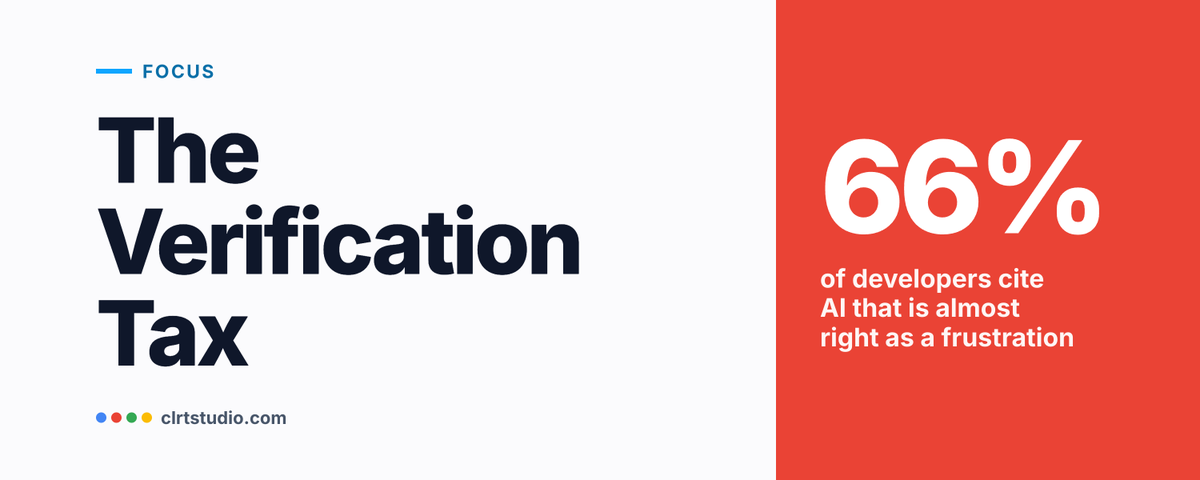
Every AI pitch says it will save you hours. 🧾 What they don't say: someone has to check the work. Google's researchers found the time saved writing often gets spent checking. Here's how to see where your hours go, using last week's calendar 👇

A thousand years ago, I made a dent in dev envs with “Vagrant.” The most popular request always was “I want Vagrant for remote envs.” I’ve been asked this to this day!! I tried and failed many times. I made things that worked but didn’t work right. Well, Rex is done right. Rex is my answer, finally. It’s always lived in the back of my mind no matter what I did. I would come up with something and try it and it didn’t feel right. I got really close around 5 years ago to the point I setup a website branding etc (via HashiCorp). But at the last minute I pulled it. It still wasn’t right. I couldn’t explain why and didn’t have a better solution. I just knew it had to be binned. Well, Rex is it. This is the real deal. Rex is doing for remote development (and a lot more than just dev) what I think a proper solution should’ve done. It’s far more than just a dev tool but I think part of what I knew is once you reach into remote environments that line isn’t clear anymore. You have to solve both remote dev and remote prod. Here we go, back to the beginning.
Building the connected workspace over teams is nightmare fuel. When you recover, come join us at @Windstreamai .
Introducing Copilot Workspaces: a multiplayer experience where people and agents collaborate toward a common goal with shared context. A new way to move work forward, together. #MSIgnite
Does anyone read tests anymore?
Instructions to get your CI under 2 minutes ⚡

We put an awful lot of effort into making sure everything is ready for fully autonomous execution in Wind Stream. windstream.ai

Passing 63% of the tests but finishing fewer than 8% of the jobs — coding agents can write code, they just can't deliver. SWE-CoWork drops agents into a simulated software company: 101 real-repo assignments, 26 colleagues with distinct roles, and requirements scattered across people and records that the agent must recover, reconcile, and verify. Across 11 models, the leaders pass about 63% of fail-to-pass tests yet complete under 8% of assignments. Handing them complete requirements upfront lifts test scores by roughly 16 points — but full-task success doesn't move at all. The bottleneck isn't coding, it's requirement tracking. Claude-Opus-5.5 asks the right owner 93% of the time but still retrieves only 64% of colleague-held requirements, and 31% of the requirements it reports done fail their tests. When you use a coding agent, what stalls you more — code it can't write, or requirements it never really understood? #AI #CodingAgents arxiv.org/abs/2611.20218

Last year we migrated all Yarn usages in the organization to pnpm. The combination was better security + pnpm has better isolation between packages (the Yarn settings had a bug)

I was a strong Yarn supporter hard until my HDD filled up bc agent worktrees.. then tried PNPM again, had no issues we couldn't solve so switched. Tried different Yarn modes but they had more issues than PNPM.
You might dip in and read a bit of the code, but I nobody's reading the tests.
we deleted 75% of our tests this weekend out of the last 50 failed ci runs, only one of them caught a real bug. maybe CI is not a compute problem but an agent slop problem

Software factories, with harness, memory and model not coupled, come try Wind Stream. windstream.ai
What does software engineering look like when generating the code becomes cheap and verifying it is the hard part? A rare podcast focused on everything around building software, with @satyanadella. Timestamps: 00:00 Intro 02:12 Microsoft’s open-source shift 04:15 Building VS Code in the open 05:55 Copilot, Cursor, and Claude Code 09:52 Decision engines 12:32 Verifying AI-generated code 15:39 The software factory 20:45 Bringing AI to existing products 24:06 Why adopting AI is different to adopting React 26:29 The changing role of software engineers 29:25 Microsoft’s voluntary exit offers 34:05 AI anxiety and changing roles 36:35 Junior hiring 42:36 Open models 45:39 Owning your AI infrastructure 51:21 Building trust in AI agents 53:48 Local models and hybrid intelligence 56:39 Microsoft’s model strategy 59:26 Advice for engineers 1:01:21 Closing takeaways Brought to you by: • @turbopuffer – a vector and full-text search engine built on object storage. It’s fast, cheap, and extremely scalable. turbopuffer.com/pragmatic (I built a greatly improved podcast/newseltter search with it, check it out: pragmaticengineer.com/search) • @linear – the product development system for teams and agents. linear.app/pragmatic • @WorkOS – everything you need to make your app enterprise-ready. workos.com/ 3 interesting takeaways from Satya: 1. A new form of software engineering: teams building software factories to improve their work. Satya cites the Azure networking team which manages 500+ fiber network operators and recently built an agentic system to better manage emails and processes. Now, they operate much more efficiently as a result. Satya sees this as the reality of “AI transformation”: brownfield work on building software factories to improve how teams operate, all while continuing the day-to-day work. 2. “Own the intelligence”: avoid lock-in & treat agents as an insider risk. Satya cautions companies to avoid lock-in with any single model provider by ensuring that the harness, memory, and model are not coupled, so that they can be changed with ease. He also thinks more companies should consider using open models as a way to protect their core intellectual property (IP) from leaking out, and build private evals to decide what models to use and upgrade to. He also says that models are intelligent but unreliable, so it’s best to treat them as “insider risks” and build a separate system to verify that agentic systems work as expected. 3. What’s with those voluntary exit offers? I asked Satya directly why Microsoft recently made voluntary exit offers to most of its software engineers for the first time in the company’s history. I also wanted to know if it could mean layoffs in the future. Unsurprisingly, his reply was diplomatic, but in the podcast I rehashed what I heard in a more direct way.

It's not just Bitrise: OpenCode, Railway, Northflank, Fireworks have all gotten popped in the exact same massive attack wave that bad actors, probably from China, using albiterared AI models are waging against any and all infra providers, to get AI keys It's very bad
Possibly the worst security incident I've ever seen coming out of Bitrise. I don't really see any customers trusting them after this 💀


