←
Yutong (Kelly) He223 posts
Yutong (Kelly) He avatar

Yutong (Kelly) He

@electronickale

PhD student @mldcmu

◷ Joined March 2021▧ 28 Photos and videos
Yutong (Kelly) He avatar
Yutong (Kelly) He@electronickale·Oct 30

Super slick and elegant idea!

Foundation models are trained in stages: pretraining, midtraining, and post-training. But is this separation fundamental? We introduce unified training: a single algorithm for the full pipeline. This gives ⚙️ Simpler infrastructure 🔬 A framework for better science (1/n)

Post attachment
Pika avatar
⟳ Yutong (Kelly) He retweeted
Pika@pika_labs·Oct 29

Meet Pika H3 Flex, debuting today as the #1 open weight model on DesignArena’s t2v board. It’s built for professional iteration, with exportable audio stems, resolutions up to 4k, and faster-than-realtime generation. It can produce a 15-second clip with soundtrack in as little as 7 seconds. So, yeah. It’s kind of a flex 💅

1:03
Lawrence Jang avatar
⟳ Yutong (Kelly) He retweeted
Lawrence Jang@JangLawrenceK·Oct 29

Agent swarms have yielded nutty outcomes, such as the HuggingFace incident, or every math problem ever. It is not clear what form of communication is emerging between agents. It is equally important to understand this for capability and safety reasons. To study this, we created SwarmChat, a simple Slack/Message Board for researchers working on multi-agents to use on any domain. We have validated it on ProgramBench experiments, where SwarmChat allows us to cleanly analyze how agent swarms work collectively! Check out our blog for our analysis and how to use SwarmChat - it is super intuitive and easy to use. I personally believe the community really needs this, as a lot of people I know are using some makeshift communication tool. Blog: swarmchat.io Code: github.com/Pranjal2041/swarm…

Post attachment
Sukjun (June) Hwang avatar
⟳ Yutong (Kelly) He retweeted
Sukjun (June) Hwang@sukjun_hwang·Oct 28

Since we first introduced H-Nets last year, I've been working with Cartesia to push the frontiers of H-Nets. We truly believe that removing handcrafted heuristics by learning abstractions end-to-end from raw data is a key step toward building AI that can understand any modality. Very excited to finally share these blog posts, with much more to come!

I've always believed that intelligence should come from simple, general building blocks that learn their own abstractions directly from raw data; in other words, the bitter lesson. I think we're finally seeing a real step towards AI that can learn from all data. Language modeling on raw bytes is a microcosm of this ideal, and to me it's a central problem in AI: if we can't build LLMs that learn end-to-end from bytes, how will we handle the rest of the world's data that we understand even less? Last year we introduced hierarchical networks (H-Nets) as a first step. Our new version finds up to 3-5x efficiency gains in controlled scaling law experiments, and at larger scale matches an open-source model trained on 11T tokens with ~10x less data and compute. The posts below walk through what we found and why we think it works.

1:19
Yutong (Kelly) He avatar
Yutong (Kelly) He@electronickale·Oct 18

One of the coolest things in this paper is that we now have a regression style loss function for divergence matching (just like flow matching!) which is super simple but works super well! Check out our paper and the original thread by our amazing first author @TonyRKOuYang!

Post attachment

Introducing SCALLOP 💜 Our new paper accepted at NeurIPS 2026 🐨 🚀 A scalable, efficient way to train few-step likelihood-available flow maps, enabling effective Boltzmann generation! 📽️ project page: tonyauyeung.github.io/scallo… 🔗 paper: arxiv.org/pdf/2606.29110

0:16
Daman Arora avatar
⟳ Yutong (Kelly) He retweeted
Daman Arora@amuseddaman·Oct 16

1/ RL for improving task success has made LLMs remarkably capable. But what happens when the model fails? Turns out, training for graceful failure can be surprisingly tricky! Very excited to share our new paper: Training Language Models to Fail Gracefully 🧵

0:13
Donghoon Ahn avatar
⟳ Yutong (Kelly) He retweeted
Donghoon Ahn@donghoon_ahn·Oct 13

Can diffusion models generate high-quality images without CFG? Yes! We introduce ✨Correction Training for Diffusion Models✨, which significantly improves sample quality without relying on classifier-free guidance. Project page: sunovivid.github.io/correcti… 🧵 (1/n)

0:30
Google DeepMind avatar
⟳ Yutong (Kelly) He retweeted
Google DeepMind@GoogleDeepMind·Sep 30

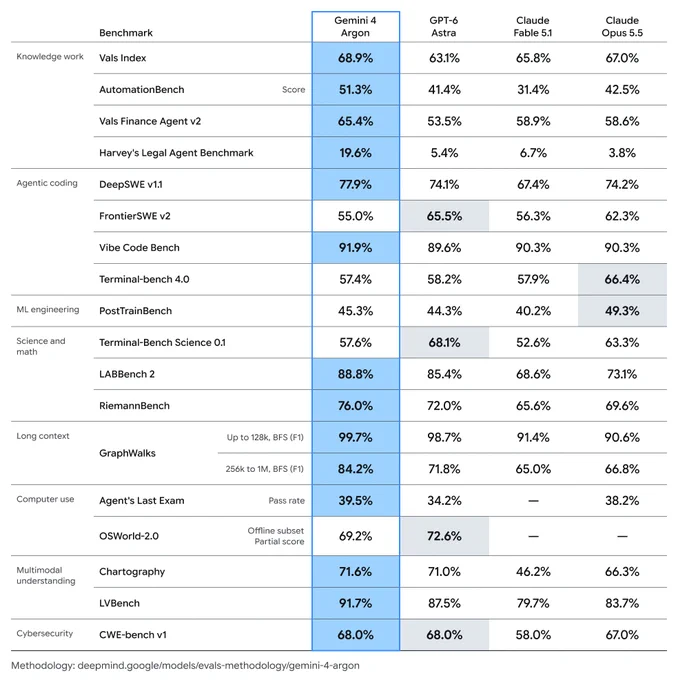
Introducing Gemini 4 Argon – our new frontier model. It’s built for complex workflows across coding, enterprise knowledge work, and cybersecurity defense – rolling out today to a set of trusted testers through our Fairwind Program.

Post attachment
Yuda Song avatar
⟳ Yutong (Kelly) He retweeted
Yuda Song@yus167·Sep 30

The key to continual learning is through **efficient** and **generalizable** deployment-time updates. How do we teach the model this important meta-capability without complicated training? Check out @ZAlvin39105's post to see how we achieve this via **Harness Learning** 👇

1/8 How do we train a model to adapt to tasks it has never seen, without updating its weights at test time? With Harness Learning, we train a model to revise harnesses using execution feedback. At test time, the model applies this learned skill to improve harnesses on unseen tasks, while model weights stay fixed. Improving agent harnesses takes experimentation. We want a model to learn from those revisions and make better edits on unseen tasks. Models trained with harness learning nearly double their performance on challenging unseen reasoning and multihop question-answering tasks.

0:18
Yutong (Kelly) He avatar
Yutong (Kelly) He@electronickale·Sep 30

Witnessing @ssokota’s work on this project has been one of the most inspiring experiences of my PhD. It’s a reminder to me that even in this day and age, it’s ok to choose to work on the hard things, to go all in, and to pour your heart and soul into them. Huge congrats man!

In our Nature paper, we introduce the first superhuman Stratego AI, which we built using general techniques that we developed for RL & test-time compute under imperfect information. 1/N

Post attachment
Yuda Song avatar
⟳ Yutong (Kelly) He retweeted
Yuda Song@yus167·Sep 2

The most common question we get after MaxRL is: how do you handle continuous reward? Now I think we have a good answer to that -- check out the post from @stablegradients to see how we did it 👇 (We'll share more evidence for why we believe this is the correct extension soon.)

Is RL optimizing the right objective? 🤔 Should we maximize mean reward? Best-of-k? Which k? Standard RL pulls on the mean and often the distribution collapses to a spike. The tail dies 🥲 We introduce Tail-Likelihood Reinforcement Learning (TailRL). It maximizes the mean reward while simultaneously maximizing coverage over high reward outputs. 🧵 1/n

0:23
Jean Tarbouriech avatar
⟳ Yutong (Kelly) He retweeted
Jean Tarbouriech@jean_tarbou·Aug 4

Our tech report on DiffusionGemma is out! 🚀 My biggest highlight? Online post-training is a game changer for text diffusion. We performed joint Sampler Distillation and Reinforcement Learning (SD⋅RL) after SFT, pushing the quality-speed Pareto frontier into a new regime 📈

Post attachment
Brendan O'Donoghue avatar
⟳ Yutong (Kelly) He retweeted
Brendan O'Donoghue@bodonoghue85·Aug 4

We just released the DiffusionGemma tech report. Text diffusion models open up a radically different part of the latency–quality Pareto frontier 👇 We hope the report makes it easier for researchers and engineers to understand the model, build on it, and create things we haven’t thought of yet. None of this work happened in isolation. DiffusionGemma builds on years of amazing research from the text diffusion community, and we wanted the report to recognise that. We’re standing on the shoulders of giants❤️ Let’s keep pushing towards lower-latency, higher-quality LLMs together!

Post attachment
Max Simchowitz avatar
⟳ Yutong (Kelly) He retweeted
Max Simchowitz@max_simchowitz·Jun 30

As a PhD student, I was told not to work on deep RL - too full of hacks and alchemy" But after a year or two of working in this area, I’ve come to (deeply?) appreciate all of the thoughtful research that’s gone into understanding what/why things work and how to make them better. My lab (joint with @abhishekunique7) took what we’ve learned by reading this body of literature to answer the question: what are the actual best-practices for finetuning a diffusion/flow/generative robot policy (for now, in sim)? Under one set of constraints - ample compute but limited time on your robot - @servo97 paper gives a pretty compelling answer.

Interaction with the real world is the major bottleneck in robot learning. So what would robot RL look like if we didn’t need to limit compute per interaction? Our latest work, Off-Policy Generative Policy Optimization (OGPO, accepted to ICML26) embarks on answering this question (spoiler alert: when done correctly, it helps massively!). 🧵(1/N)

Post attachment
Kevin Li avatar
⟳ Yutong (Kelly) He retweeted
Kevin Li@kevinyli_·Jun 18

Excited to share last summer's work at Google Research! Most hybrid models today are static: each token sees the same interleaved pattern of your favorite linear model and attention. Oryx instead varies the model used across the sequence through shared representations. 1/

Post attachment
Jean Tarbouriech avatar
⟳ Yutong (Kelly) He retweeted
Jean Tarbouriech@jean_tarbou·Jun 10

Our team just released DiffusionGemma: a new state-of-the-art open diffusion LLM 🚀 Pushing the RL research for DiffusionGemma has been fascinating. RL doesn't just boost performance, it unlocks blistering speedups (>1000 tok/s on a single H100) ⚡️

DiffusionGemma is our new experimental open model with up to 4x faster output on dedicated GPUs. Instead of predicting word-by-word, it generates entire blocks of text simultaneously. This lets the model self-correct and format complex markdown in real time.

Post attachment