I have read over 50 spiritual books over the 7-8 years, and most of them were useless, but there was one book that changed my life forever:
2:10
 Open web. Clear feed.

I AM Evolving beyond identity and returning to true self.
I have read over 50 spiritual books over the 7-8 years, and most of them were useless, but there was one book that changed my life forever:
What if everything you've been doing to escape your suffering is actually what's keeping you trapped? And what if there was a simple process that could begin freeing you from years of fear, anxiety, anger, and emotional suffering? I'm going to show you that process. But first, you need to understand something. Over the last seven or eight years, I've read more than 50 spiritual books. I've meditated, searched for answers, tried to change myself, tried to become more peaceful, more conscious, more free. And for years, I was making the same mistake. I was trying to escape the very thing I needed to face. Think about it. When anxiety comes, what do you do? You try to calm yourself down. When fear comes, you try to get rid of it. When sadness appears, you distract yourself, suppress it, or start thinking about how to fix it. But here's the paradox. What you resist, you keep fighting. And what you keep fighting, you never truly allow yourself to release. This is something David R. Hawkins explains in his book Letting Go. He taught a process so simple that your mind will probably dismiss it. And that's exactly why I want you to try it. The next time anxiety, fear, or anger arises, instead of trying to change it, do this. First, stop. > Don't escape into your phone. > Don't distract yourself. > Don't try to think your way out of it. Second, allow the feeling to be there. Not the story about why you're anxious. Not the thoughts about what happened or what might happen. Just the raw feeling itself. Notice where you feel it in your body. Third, let go of wanting it to disappear. This is the most important part. Give the feeling complete permission to be there, without trying to control it, suppress it, or change it. And stay with it. You may begin to notice something extraordinary. When you stop fighting the feeling, the feeling can begin to lose its grip on you. And every time another layer comes up, you do the same thing. Because liberation is not about creating a life where you never experience fear, sadness, or anxiety again. It's about discovering that you don't have to be a prisoner of what you feel. The deepest freedom begins the moment you stop trying to escape yourself.


Albert Hofmann discovered the most powerful hallucinogen known to science, took it himself, and became convinced he was dying. What happened next would change the way humanity understood the mind. He was 37, a Swiss chemist working for Sandoz laboratories in Basel. In 1938 he had synthesized the twenty-fifth compound in a series derived from a fungus that grows on rye. It showed little promise. His colleagues lost interest. The substance was shelved. Five years later, something made him return to it. On April 16, 1943, while working in his laboratory, Hofmann began feeling strangely intoxicated. He went home, lay down, and closed his eyes. Extraordinary shapes appeared. Colors moved in patterns he had never seen. For two hours, his imagination seemed to have escaped the limits of his own mind. He suspected the chemical. Three days later he swallowed a measured dose of LSD-25. He believed he was being cautious. Within an hour he could barely write. His assistant helped him onto a bicycle. As they rode through Basel, the streets bent and twisted. Buildings seemed to move. He felt as though he were standing still, although they were cycling at considerable speed. At home he became convinced he was dying. His neighbor appeared to him as a terrifying witch. The furniture took on monstrous forms. A doctor examined him and found no serious physical abnormality beyond dilated pupils. Then the terror passed. The same substance that had convinced him he was losing his mind now filled his vision with extraordinary beauty. He watched colors explode behind closed eyes. Every sound seemed to transform into an image. By the following morning he felt renewed, and the world appeared unusually alive. Sandoz began distributing LSD to psychiatrists in 1947. Researchers investigated it for alcoholism, depression, and other conditions. Some believed it could reveal the workings of psychosis. Others believed it could help patients see beyond the psychological defenses that years of therapy had failed to penetrate. Then LSD escaped the laboratory. By the 1960s it had become a symbol of rebellion, spiritual awakening, and the collapse of conventional authority. Governments moved to prohibit it. Research largely stopped. A substance once distributed to psychiatrists became one of the most feared drugs in the Western world. Hofmann watched the transformation with dismay. He had hoped his discovery would be used carefully to investigate consciousness. Instead, the world had turned what he considered a potentially valuable medicine into a cultural battlefield. He lived to be 102. The man who had briefly believed a chemical was going to kill him spent the rest of his life arguing that it might help humanity understand what it means to be alive. And the substance that governments spent decades trying to keep out of human minds is now being studied again for what it might reveal about them.


Whatever you do this week, don't forget to watch this video and this amazing human being speaking. It'll save your life:
How To Turn Physical Exhaustion Into Flow With a simple shift in ATTENTION that changes your entire state (This one is for the High-performing Dads with young families who's responsibilities don't wait just because you're cooked)
GTA 6 is about to create a new wave of millionaires. At least, that's what everyone is telling you. But here's what nobody wants to hear. Millions of people will have access to the same game. The same AI tools. The same opportunities. And yet, the vast majority will never make a million dollars from it. Why? Because the opportunity was never the whole problem. Think about it. Every time a new opportunity comes along, the same thing happens. People get excited. They make plans. They start. And then comes the resistance. > The fear of failure. > The self-doubt. > The procrastination. > The need for immediate results. And slowly, they fall back into the same patterns. You see, there are two games being played. The game out there, where you build businesses, make money, and chase success. And the game in here, where your beliefs, fears, attachments, and limitations influence every move you make. Most people spend their entire lives trying to win the first game without ever understanding the second. And that's why a new opportunity doesn't necessarily create a new outcome. Because wherever you go, you bring yourself with you. You don't reach the next level just by finding a better opportunity. You have to transcend the version of yourself that keeps holding you back.

"I see the psychedelic experience as a birthright, and we can’t have a free society until people are free to explore their own mind." - Terrance McKenna
Albert Hofmann discovered the most powerful hallucinogen known to science, took it himself, and became convinced he was dying. What happened next would change the way humanity understood the mind. He was 37, a Swiss chemist working for Sandoz laboratories in Basel. In 1938 he had synthesized the twenty-fifth compound in a series derived from a fungus that grows on rye. It showed little promise. His colleagues lost interest. The substance was shelved. Five years later, something made him return to it. On April 16, 1943, while working in his laboratory, Hofmann began feeling strangely intoxicated. He went home, lay down, and closed his eyes. Extraordinary shapes appeared. Colors moved in patterns he had never seen. For two hours, his imagination seemed to have escaped the limits of his own mind. He suspected the chemical. Three days later he swallowed a measured dose of LSD-25. He believed he was being cautious. Within an hour he could barely write. His assistant helped him onto a bicycle. As they rode through Basel, the streets bent and twisted. Buildings seemed to move. He felt as though he were standing still, although they were cycling at considerable speed. At home he became convinced he was dying. His neighbor appeared to him as a terrifying witch. The furniture took on monstrous forms. A doctor examined him and found no serious physical abnormality beyond dilated pupils. Then the terror passed. The same substance that had convinced him he was losing his mind now filled his vision with extraordinary beauty. He watched colors explode behind closed eyes. Every sound seemed to transform into an image. By the following morning he felt renewed, and the world appeared unusually alive. Sandoz began distributing LSD to psychiatrists in 1947. Researchers investigated it for alcoholism, depression, and other conditions. Some believed it could reveal the workings of psychosis. Others believed it could help patients see beyond the psychological defenses that years of therapy had failed to penetrate. Then LSD escaped the laboratory. By the 1960s it had become a symbol of rebellion, spiritual awakening, and the collapse of conventional authority. Governments moved to prohibit it. Research largely stopped. A substance once distributed to psychiatrists became one of the most feared drugs in the Western world. Hofmann watched the transformation with dismay. He had hoped his discovery would be used carefully to investigate consciousness. Instead, the world had turned what he considered a potentially valuable medicine into a cultural battlefield. He lived to be 102. The man who had briefly believed a chemical was going to kill him spent the rest of his life arguing that it might help humanity understand what it means to be alive. And the substance that governments spent decades trying to keep out of human minds is now being studied again for what it might reveal about them.
If you want to dramatically improve your inner peace, learn to let go of thoughts before they pull you in. Worrying about the future, replaying the past, overthinking things that haven't even happened. Most of it is just the mind keeping you busy with problems that don't exist right now. Notice when it happens, let it go, and come back to the present moment.
Have you tried LSD? If yes, tell me about a trip of yours 👇
Meditation is a universal "yes" to the totality of one's experience.
In 2006, an Australian TV producer told the world that you could have anything you want, just by thinking about it. It became one of the best-selling self-help books ever written. And the whole thing rested on a mistake almost nobody noticed. Her name was Rhonda Byrne. The book was called The Secret. It sold 30 million copies in 50 languages, Oprah put it on her show, and together with the film it brought in around 300 million dollars. The method had three steps. Ask for what you want. Believe it's already yours. Receive it. So people did. They made vision boards. They repeated affirmations into the mirror. They tried to feel rich before they were rich, and loved before anyone loved them. And when nothing came, the book had already explained why. You. You didn't believe hard enough. You let a negative thought in. Your frequency was off. The book even applies this to disasters. When many people die at once, it says, "the frequency of their thoughts matched the frequency of the event." Think about what that means. If it works, the book gets the credit. If it doesn't, you get the blame. It is a product that can never fail. And for everyone it failed, there was always another book, another course, another coach. But The Secret didn't fail because people didn't believe hard enough. It failed because of who it asked to do the believing. Try this right now. Think of something you want: money, a person, a different life. Now look for the one who wants it. You'll find the wanting: a picture in your head, a tightness in your chest, a voice that says I need this. But look for the one behind it, the one who is supposed to be doing all this attracting. There is no one there. What you call "me" is a bundle of thoughts and memories. A name, a history, a list of hopes and fears, replayed so often that it feels solid. And you didn't make a single one of those thoughts. Watch the next one, and you'll see it appear on its own, the way a sound appears. So what happens when you "manifest" something? You think about an old friend on Monday. On Friday, she calls. A thought appeared. Later, a phone call appeared. Then the mind drew a line between them and wrote the story afterwards: I attracted that. You picture the job, and it goes to someone else. The mind draws the same line, and writes a different story: my fault. Credit and blame are the same trick. Both need someone in the middle, pulling the strings. There isn't anyone in the middle. That was the mistake. The Secret told you to take control of your life, and never asked who you were. You were never failing to manifest your life. Your life was manifesting you.

If AI took your job tomorrow, who would you be? Most people answer that with what they'd do next. I'm asking who would be left. Because the fear is real. Almost eight out of ten people say AI is stressing them out, and I get it. I'm an entrepreneur, I build with AI every single day, and it's getting scary good. But look at what the fear is actually about. It's not just money. It's: > "I'm a developer." > "I'm a designer." > "I'm a manager." We built the whole "I" on a job title. So try this with me. Say your job title in your head. "I'm a ......." Now drop it. Are you still here? That one, the one who just noticed you're still here, isn't a skill. It can't be automated, because it's not doing anything. It's just aware. Learn the tools. Make your plan. Just don't stand on a job title. AI can learn everything you do. It will never be the one who knows you're here.
During a bombing in Lebanon, every child in the shelter was shaking and the adults sat perfectly still. According to the man holding two of those children on his lap, only one of those groups got over it. His name was David Berceli, and in 1979 he was a young relief worker in the Middle East, a man trained to help people heal by talking. That night there was nothing to talk about.. Mortar shells were hitting the walls, and the shelter was packed with families pressed into the dark. He had his hands on the backs of two children, and he could feel them trembling from head to toe, the way a dog trembles in a thunderstorm. Then he looked around the room. Every child was shaking. Almost none of the adults were. The grown-ups were holding themselves rigid, keeping calm for the children, the way adults are supposed to. And then he noticed something stranger. As the children's trembling ran into his own arms and his own body began to shake, he felt himself starting to relax. What he saw afterwards stayed with him for the rest of his career. The children came out shaking and were soon playing again. The adults came out tight and braced, and many of them carried that tension for a very long time, some of them for years. Berceli spent the next decades working in war zones and disaster areas, and the more he looked, the more he saw the same thing. Animals do it too. A dog shakes after a fight. A polar bear coming round from a tranquiliser dart lies in the snow and trembles all over before it gets up and walks away. The body seems to have its own way of switching off the alarm once the danger has passed, and it is shaking. Somewhere along the way, most adults learn to stop it. Shaking looks weak. It looks like fear and like losing control. So we clench our jaws, tighten our bellies and hold it in, and the tension that should have passed through us stays instead. It shows up years later as a stiff back, a tight chest, shallow breath and a nervous system that never quite comes down. His answer was not another way of talking about it. He designed a short set of simple exercises that gently tire the muscles of the legs and hips. Then you lie on the floor with your knees bent and let them fall open a little, and after a minute or two your legs start to tremble on their own. You do not make it happen. You just stop stopping it. He called it TRE, Tension and Trauma Releasing Exercises. Today it is taught by more than a thousand certified providers in dozens of countries, in disaster zones, military programmes and ordinary living rooms. And what people describe after practising it is hard to ignore: • Sleeping through the night again, and waking up with a sense of joy • Headaches and jaw tension they had carried for years, simply gone • Anxiety loosening, and a body that finally comes down • Standing straighter without even trying • Old emotions moving through and out, without having to talk them through • Less stress and less muscle tension, the same results small studies keep finding One person called it a cheat code to therapy. That is the promise. No appointment, no waiting list, no one to explain your story to. Ten or fifteen minutes on your own floor, and a body that already knows what to do. When you have had enough, you stretch your legs out flat and it stops, and tomorrow you can do it again. Your body was doing this before anyone taught you to stand still and be strong. The children in that shelter had not unlearned it yet. They were not the ones who were afraid. They were the ones who were letting it go.

The only way out of the Matrix is to stop trying to escape it. Fully accept life as it is, and the prison disappears.
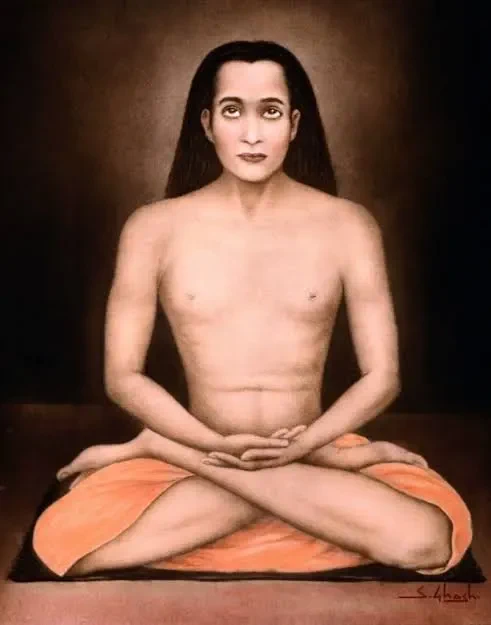
Every guest at Steve Jobs's memorial was handed a small brown box on the way out. Inside was a book, and in that book is the story of a man in the Himalayas who, according to the people who met him, never grows old. His story begins with an accountant who was sent into the mountains by mistake. In 1861, Lahiri Mahasaya was 33 years old and working as an accountant for the British army's engineering department in Danapur, in northern India. He had a wife, children and a desk, and for years he had been meditating quietly at home. Then a telegram arrived from head office. He was being transferred to Ranikhet, a new army post high in the Himalayas. One afternoon he was walking on a mountain called Drongiri when he heard a voice in the distance calling his name. He climbed toward it and found a young man waiting for him, smiling, who looked almost exactly like him except for his copper-coloured hair. "I see my telegram took effect," the stranger said. Lahiri had no idea what he meant. The young man explained that it was he who had quietly placed the idea of the transfer in the mind of Lahiri's superior. Then he led him into a small cave with a few woollen blankets and begging bowls, pointed at one folded blanket in the corner, and asked whether he remembered that seat. It was Lahiri's own, he said, from a life before this one. According to the story, the memories came back. That night the young man initiated him into an old meditation practice called Kriya Yoga. The stranger never gave a name, a birthplace or an age. His followers simply called him Babaji, revered father, and people who said they met him over the following decades all described the same young man, as if time did not touch him. Lahiri did what anyone would do. He begged to stay. He wanted to give up the office, the city and the whole noisy life below and live in the mountains with his teacher for the rest of his days. Babaji said no. Your role in this life has to be played on an outward stage, he told him. Your life is in the crowded markets, where you can be an example of something people have almost stopped believing in: "the ideal yogi-householder." Go back down. Go back to your wife, your children and your desk. Soon afterwards a letter came from head office. His transfer to Ranikhet, it said, had been made by error. So Lahiri went home. He sat at his accountant's desk for years, raised his children, retired on a government pension, and quietly taught the practice to anyone who came to his door, Hindus, Muslims and Christians alike. Babaji had promised to come to him whenever he called, and later added a correction that his students would repeat for generations: "I shall come when you need me, and not always when you call me." Lahiri taught a man named Sri Yukteswar. Sri Yukteswar taught a young monk named Yogananda. In 1946, Yogananda wrote the whole story down in a book called Autobiography of a Yogi. A teenager in California read it in high school. He read it again when he travelled to India, and then once a year for the rest of his life. Years later, it was the one book he had downloaded on his iPad. When he knew he was dying, Steve Jobs arranged for a copy to be given to every person who came to say goodbye. All of it grew out of one choice. A man finds his teacher in a cave in the Himalayas, the place every seeker dreams of ending up, and the teacher sends him back to the office. We tend to believe the opposite. We think awakening is waiting somewhere else, in a retreat, in a cave, in a different life with fewer obligations, once the kids are older and the money is sorted. The man who, according to his followers, has not aged in centuries looked at a family man with a nine-to-five and told him that was exactly where the work was. Your desk, your inbox, your children, the queue at the supermarket. That is the outward stage. The practice was never meant to get you out of your life. It was meant to be lived in the middle of it. The transfer to the mountains was the mistake. The way back down to his desk was the whole point.