←
HaxRob861 posts
HaxRob avatar

HaxRob

@haxrob

I enjoy breaking things. Telco / mobile and IoT security. Surfing the information super highway one keystroke at a time.

◷ Joined April 2017▧ 361 Photos and videos
HaxRob avatar
HaxRob@haxrob·5 Jul 2023

A friend asked me to find out why his connected lightbulb app was asking for his location, so I ducked out to Australia’s favourite hardware store, Bunnings, and grabbed one to check out. The Android grid connect app has 500k+ downloads. Let’s take a quick look! 🧵 (1/n)

Post attachment
HaxRob avatar
HaxRob@haxrob·Mar 27

hash: 2eacc8d91b9829b9606a7945fc5311fb5876cfb42ffccc1b91f61841237b04c1 Devs maintained compatibility with Solaris 🤟

Post attachment
Craig H. Rowland avatar
⟳ HaxRob retweeted
Craig H. Rowland@CraigHRowland·17 Jul 2025

Really interesting ways here to hide files and other activity on Linux.

HaxRob@haxrob13 Jul 2025

A relatively unknown but particularly stealthy technique to hide files on Linux hosts. On unhardened boxes, unprivileged users can conceal files from even the root user. Disk content remains in memory, hindering disk acquisition during forensic investigation. (1/7) 👇

HaxRob avatar
HaxRob@haxrob·13 Jul 2025

This method can be utilized to perform process masquerading.. Here an implant appears to be running from /usr/sbin/auditd but it's actually 'fileless'. No '(deleted)', no ':memfd', no '/dev/shm', no ptrace, no LD_PRELOAD. Just stealth. (6/7)

Post attachment
HaxRob avatar
HaxRob@haxrob·13 Jul 2025

Malware can use the unshare() or clone() syscalls to create the new mount and user namespaces. The uid/grp mapping is done by writing to procfs followed by mount(). If the process enters a spin lock, it can be used to keep a persistent hold of the 'stash space' (5/7)

Post attachment
HaxRob avatar
HaxRob@haxrob·13 Jul 2025

Create a new mount and user namespace, mapping the unprivileged uid to uid 0. Here the root user logs in [4] and can't see the file created by the unprivileged user in the /root directory (4/7)

Post attachment
HaxRob avatar
HaxRob@haxrob·13 Jul 2025

As a bonus, commands in this shell will not be written to the history file as we mounted over the user's home directory. No need to set HISTFILE=/dev/null. Once the shell exits, artifacts evaporate. Nothing touches the disk. Now how to do this as an unprivileged user? (3/7)

HaxRob avatar
HaxRob@haxrob·13 Jul 2025

Let's start with the most simple example. Select a mount namespace that is not used by systemd/init. Migrate the current shell into that process's mount namespace and mount a tmpfs file system. Anything that writes the mounted path is concealed from users on the host. (2/7)

Post attachment
HaxRob avatar
HaxRob@haxrob·13 Jul 2025

A relatively unknown but particularly stealthy technique to hide files on Linux hosts. On unhardened boxes, unprivileged users can conceal files from even the root user. Disk content remains in memory, hindering disk acquisition during forensic investigation. (1/7) 👇

HaxRob avatar
HaxRob@haxrob·12 Jul 2025

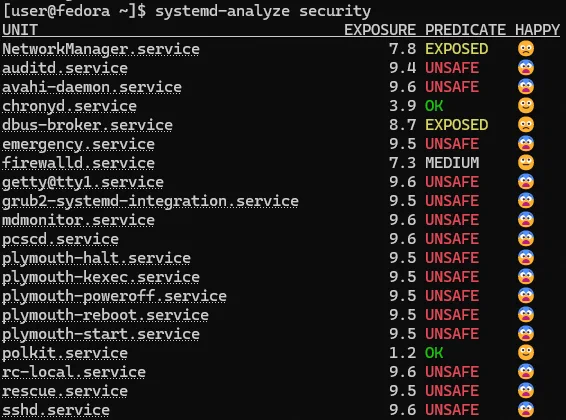
Forget compliance by severity color, how about compliance by emoji happiness level? #systemd, stay classy. 🙃

Post attachment