
Slides from a talk I gave in September at the Lunenfeld-Tanenbaum Research Institute in Toronto. Machines of Loving Hype: Let's get specific about "curing cancer with AI" (secretly, personalized TCR therapies for NUT carcinoma and beyond)

 Open web. Clear feed.

Genomics + immunology + ML = personalized cancer immunotherapy | pirl.unc.edu | alexr.bsky.social
Slides from a talk I gave in September at the Lunenfeld-Tanenbaum Research Institute in Toronto. Machines of Loving Hype: Let's get specific about "curing cancer with AI" (secretly, personalized TCR therapies for NUT carcinoma and beyond)

If you value quality over quantity, consider signing the TCS hiring statement. Bean counting is obsolete. No point in pushing students to produce more and more AI-generated papers. njbergam.github.io/tcs-hirin…
i’m increasingly of the opinion that almost everyone agrees with this, but a big fraction of people aren’t comfortable saying it in public, because of what it implies for the bean counting mechanism the whole machine is built on (for awards/promo/hiring/etc).
Was searching for the thing I named Eureka-Bench and found this other possibly more interesting EurekaBench
AI scientist agents are great at optimizing and finding solutions through endless trial and error. But is that really what science is about? As Terrance Tao eloquently put, the role of math and science should be more than that – they are "lighthouses" that guide and inspire exploration through understanding and insights. Can AI agents discover novel insights through experimentation? To study these gaps, we worked with domain experts to introduce EurekaBench, a benchmark spanning 6 science domains that evaluates an agent’s ability to discover genuinely new scientific insights. (1/n)


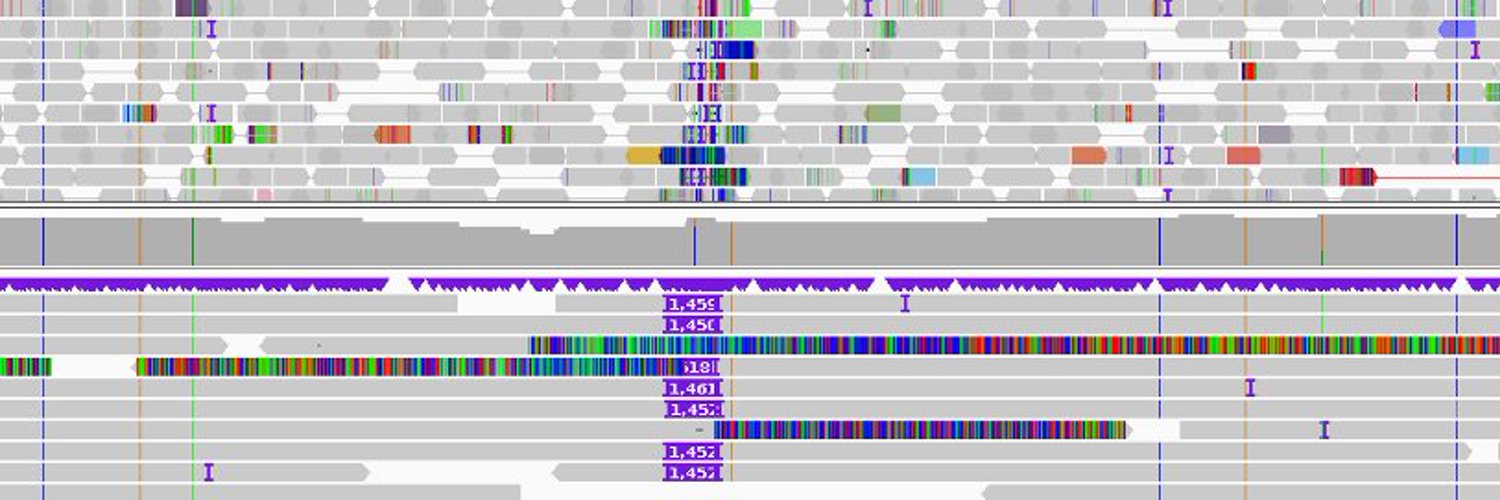
Hey bio twitter, I was sick in bed this weekend but luckily my clankers were clanking This time they found the first known case of genome-wide frameshifting in bacteria! A whole order of gut bacteria skips a letter of its genes at CGG. How they found it: My agents aligned one genome from every bacterial and archaeal family in GTDB to known proteins, this time allowing for frameshifts. Every genome has a few apparent frameshifts (assembly errors, dying genes), spread thinly over all codons. In one TANB77 (uncultured Clostridia) genome they piled up at CGG. So we tested every TANB77 genus, finding that: - 54 of 64 genera show the skip, and all 54 have lost the CGG tRNA - Related proteins have glycine at 1,237 of 1,458 skip sites, vs 6% at other frameshifts - 59% of all +1 frameshifts in TANB77 fall exactly at CGG (1,026 of 1,744); the rest are the usual background noise, scattered thinly over all the other codons. - Their phages skip CGG too: 58% of phage CGGs sit where a skip is needed, vs 2% in phages of other Clostridia - It's not a sequencing error or RNA editing: DNA reads (140 of 140) and gut RNA (305 of 305 read pairs) keep the C Closest prior work: Genome-wide frameshifting is known in the ciliate Euplotes, and glass-sponge mitochondria skip a U the same way, but at only 2 sites.
So far so good Slow but insightful reading of code + relevant scientific literature, no biosafety hurdles yet

Sad that @modal notebooks are gone, they were a nice educational/pedagogical tool

people who pursue AGI without keeping transhumanism as the Actual north star—the reason you’re doing this at all—feels so obviously wrong that i struggle to even call it evil, just an absurd degree of misunderstanding. like filling more mercury into a thermometer if you’re cold

🇨🇳 China IND Tracker (Nov 9–15) According to CDE data, 24 innovative drugs received their first IND clearances in China during the week of October 26–30. Notable INDs: - Simcere — SIM0725 Long-acting CD122 antagonistic mAb Indication: Vitiligo - Simcere — SIM0712 Oral STAT6 PROTAC Indication: Moderate-to-severe atopic dermatitis - Hubei Bio-Pharmaceutical — HW281171 Small-molecule MRGPRX2 antagonist Indication: Chronic urticaria - Wenda Pharma — WD-910 Oral highly selective brain-penetrant allosteric TYK2 (JH2) inhibitor Indication: Multiple sclerosis - Newsoara — HY8931 IL-23p19 × TL1A bispecific antibody Indication: Ulcerative colitis - Minwei Bio (Lepu subsidiary) — MWX205 Dual-target siRNA (PCSK9 + ANGPTL3) Indication: Dyslipidemia - Kovyi — KVC-191 Small-molecule Nav1.7/Nav1.8 modulator Indication: Post-herpetic neuralgia - IASO Bio — IASO208 In vivo CD20-targeted CAR-T (lentiviral) Indication: r/r B-cell NHL Prior China IIT; FDA IND cleared Sep 2026 - United Laboratories — UBT48128 Oral small-molecule GLP-1 receptor agonist Indication: Overweight or obesity - Baiying Bio — HWK-206 Next-gen SEZ6 biparatopic ADC (Fc-silenced IgG1 + novel Topo-I payload) Indication: Solid tumors - SOLEIL LABS — JUR-003 KLK2 × CD3 bispecific TCE Indication: Metastatic prostate cancer - $ONC — Zoldonrasib RAS(ON) G12D-selective inhibitor Indication: Advanced solid tumors (Rights from $RVMD partnership) - Qilu Pharma — QLS2416 CD19/BCMA/CD3 tri-specific TCE Indication: Systemic sclerosis, pSS, RA, SLE - Starray Bio — [18F]F-SR031 FAP-targeted PET imaging agent Indication: Solid tumors - Henlius — HLX105 PD-1/IL-2 fusion protein (attenuated peripheral IL-2 signaling) Indication: Advanced/metastatic solid tumors

For coding, Carbon is ~ Opus 5.5 when used in the Antigravity harness but slower. I haven't tested it in other harnesses. I still slightly prefer Anthropic models for coding, but in previous model iterations before Argon/Carbon, I literally couldn't get Gemini to do any of the work I wanted. On front end design, its base capability is still pretty bad (still defaults to dark AI slop) - but give it a design system and it can implement it flawlessly. It seems that in late 2026 coding is becoming commoditized. The research ideation of Carbon is what intrigues me the most. It's got a very interesting personality there as discussed and feels top tier or at least on par with Fable 5.2 and Opus 5.5. Maybe the tl;dr is that it surprises me with interesting and plausible leaps more often where Opus and Fable can get stuck more easily.
Gemini is good now?
Someone school me on printing basics, where do I send my STL file to get back a physical object? Do any services stand out as particularly easy & quick to work with?

Made this in ~30s with the integrated agent on AirCad Wonder how much lab equipment we can 3D print...


>be postdoc >2012 in Cambridge >join Warp Drive Bio >plan to mine bacterial genomes >find macrocycles >what is a macrocycle >RAS is undruggable >everyone says so >surface is a Death Star >smooth no pockets >picomolar grip on GTP >whole field races the OFF state >bossman crazy >says hit the ON state >the active one >soil bug makes sanglifehrin >CypA just sitting in the cell >free chaperone? >what if we glue it? >macrocycle binds CypA >new surface grabs RAS >only the GTP bound state >it clamps >signal dies >pure three way complex >years of wet lab work >first compound is garbage >micromolar >aim only at conserved residues >swap phenyl for thiazole >better CypA contact >potency jumps >no bioavailability >unfixable half life >fix it anyway >chop the right side to a cyclopropyl >stick a methylpiperazine on the left >affinity explodes >811 daltons >big chungus >breaks all rules >should not be oral >it is oral >2018 buyout >molecule becomes RMC-6236 >early data looks promising >vp writes the blog post >doesn't get it >2023 need cash for phase 3 >EQRx dying with 1.1B in the bank >buy the company for the cash >sent CRO our structures to make >they like >they steal >joyo to erasca >where compound 4a >comes back as ERAS-0015 >RASolute 302 reads out >13.2 months >double chemo SoC >ASCO plenary >1 min standing ovation >presenter angry face >senator on expanded access >calls it a miracle drug >press goes wild >rash nbd >dying is worse >approval August 2026 easy >198 million in five weeks >mfw a macrocycle, from a dead startup, funded by a dead company, generational drug
Made a new OpenVax website: openvax.org/ Also: OpenVax tools are changing rapidly as I move them towards becoming a new release of the pipeline OpenVax2 will have support for long-read seq, structural variants, ncORFs, CTAs, viral antigens, public mass spec data &c

📖 The Ultimate MoE Training Handbook 📖 We spent 1/2M GPUh to optimize MoE training and wrote the most comprehensive blog about it. With 30k words and 50+ interactive figures it covers everything from profiling to large cluster training. huggingface.co/spaces/huggin…

18 of the 20 best open models today are Mixture-of-Experts. Dense is basically over. And yet the know-how to train a good MoE still lives mostly in the heads of a handful of teams. So we spent 800k GPU hours running the experiments ourselves and wrote everything down. Super happy to finally release "The Ultimate MoE Training Handbook", free and open, organized around the questions training teams hit: - how many experts, how big, shared or not? - why is half my step spent in all-to-all, and how do I hide it? - why is my run 25x slower with no error in the logs? - softmax, sigmoid or sqrt(softplus) router, and why keep it in fp32? - aux loss or DeepSeek's loss-free bias? - upcycle a dense checkpoint or train from scratch? - can I serve with fewer experts per token than I trained with? ⚠️ Warning: it's long (~70k words, budget a few days, sorry) but with 55 interactive figures, code you can run and numbers from our own runs. Read it here: huggingface.co/spaces/huggin…

