
I've written a blog in response to @awaisaftab's misleading blog about Kalfas: "No, the Kalfas Meta-Analysis Doesn’t Prove Antidepressant Withdrawal Is Modest: Nonsense Disguised as Nuance" bit.ly/4ofhd7S

 Open web. Clear feed.

Associate Professor in Psychiatry (AdelaideU). Maudsley Deprescribing Guidelines: amzn.to/3tTQq9s (US) amzn.to/40o3wrI (UK)
I've written a blog in response to @awaisaftab's misleading blog about Kalfas: "No, the Kalfas Meta-Analysis Doesn’t Prove Antidepressant Withdrawal Is Modest: Nonsense Disguised as Nuance" bit.ly/4ofhd7S
Good to see a portion of the misrepresentations made by Jack addressed here. It is a pity so much energy needs to be expended on such ideological exercises (Jack's) which distract from the more important question of what we need to do to address such widespread and long-term use of medications with marginal benefits and significant harms.
My response to John Goulder's hit-piece against me & other critics of antidepressants. It presents itself as 'an account of a quaint, historical controversy..whereas it is actually a partisan intervention in a contemporary and ongoing debate.' joannamoncrieff.wordpress.co…
Very useful summary - especially so because it is in a paediatric journal.
Kudos to Contemporary Pediatrics for highlighting these points in this new article (link below) about stopping antidepressants in young people- something I have firsthand experience of and could've done with doctors/psychiatrists knowing this decades ago (and explaining it to me at the point of prescribing). I'm presuming it focuses on fluoxetine because it's the one that (at least here in the UK) is approved for use in children and young people - although the author is based in the US so I suspect this is from a US perspective. As well as pointing to emerging evidence supporting hyperbolic tapering, it highlights the following three points, the latter two of which are relevant to ALL SSRIs and SNRIs: "- Fluoxetine is not "self-tapering": withdrawal can occur despite its long half-life, and onset may be delayed weeks to months after discontinuation. - New, unfamiliar, or unusually intense emotional symptoms accompanied by physical or sensory symptoms after discontinuation point toward withdrawal rather than relapse. - Long-term treatment and irregular adherence raise withdrawal risk, and mistaking withdrawal for relapse can lead to unnecessary medication exposure."


"I don’t just think antidepressants are overprescribed, I’m not convinced they’re useful at all. Antidepressants don’t rectify a chemical imbalance or any other biological process, as people were led to believe; they numb emotions" "The question is, is this useful, and how harmful are they?" 👇 telegraph.co.uk/health-fitne…

Well said by Daniel. There are certainly semantic flips being executed.
If these are just ‘semantic somersaults’, why did you correct the quotation? Is it merely a coincidence that your original misquotation strengthened your central accusation that Horowitz and Moncrieff were making claims about antidepressant efficacy rather than questioning the rationale for prescribing them? If the distinction is so inconsequential, why does the inaccurate wording align so much more closely with your argument?
Fantastic to see awareness of psychiatric drug withdrawal and safe deprescribing to Greece. Greek citizens are very lucky to have @GKasioumi as a fierce champion of this work. Again, how much of an indictment it is of the status quo that patients harmed by drugs have to take on the effort to educate clinicians about the harm they have done.
On November 7, we held the 1st SafeMeds Hellas Forum on Antidepressant Withdrawal in Greece, bringing together distinguished scientists, healthcare professionals, and people with lived experience. 📊 More than 6,500 page views and 365 registrations! My deepest gratitude to @markhoro for his invaluable scientific contribution, trust, and generous support of this initiative. Sincere thanks to all our speakers, moderators, and participants for contributing to this important dialogue on antidepressant withdrawal, patient safety, and safer clinical practices. #SafeMedsHellas #AntidepressantWithdrawal #MarkHorowitz #Deprescribing #PatientSafety


Jack has not permitted comments to be put on his blog so I’ll post this here. Many of the points in his blog are false. He has latterly corrected the quotation from our press release after I emailed him (although he does not disclose this was the reason for his correction). As he now acknowledges, we did not say what he had quoted us as saying and he has now corrected the quotation to say “this research calls into question reasonsfor the use of antidepressants.” Of course our paper calls into question the main rationale given to patients for prescribing these drugs – of course it calls the ‘reasons’ into question. He and others may wish to argue that the drugs are prescribed because they are effective (discussed at length elsewhere) but the rationale presented to many patients was (and is) false. Naturally, if it were found that Hashimoto’s disease was not caused by low thyroid hormones it would throw into question the rationale for prescribing thyroid hormones. It would throw into relief questions about long term harms and benefits of such a treatment that would not be raised if the treatment was acting in the self-evidently sensible manner of correcting a hormonal deficit. His central accusation – and the central point of his published article – is that we misleadingly presented our review regarding the aetiology of depression as showing that antidepressants are ineffective. We did not such thing. Jack could find no such quote in our press release so he fudged it. (I believe this is the polite euphemism). Of course such a finding about aetiology invites reflection on the efficacy of the drugs and so naturally we discussed this in the Conversation piece - our comments in this piece are all supported by evidence. His statement about the Nordic Cochrane is also false. Nordic Cochrane moved from Righospitalet in Copenhagen to the University of Southern Denmark in Odense where it merged with the Centre for Evidence-Based Medicine and was renamed to Cochrane Denmark. It still functions today and houses the Cochrane Bias Methods Group which advises Cochrane : cochrane.dk/ He is performing quite some somersaults, slinging mud from unrelated comments made by Peter Breggin, and Peter Gotzsche, to avoid reading an article published in the BMJ Open. An article I would still encourage him and other to read so that they become aware of the substantive criticisms of Cipriani’s meta-analysis rather than assuming the solidity of claims made about antidepressant efficacy: bmjopen.bmj.com/content/9/6/… I expect that after correcting his recent blog he will also correct his original blog on Awais’ website (where he falsely says: “a press release written by Moncrieff and co-author Mark Horowitz explicitly linked the umbrella review to a lack of efficacy in antidepressants”) and his academic paper were he makes the same false claim (“a press release written by Moncrieff and co-author Mark Horowitz explicitly linked the umbrella review to a lack of efficacy in antidepressants”) as he has now acknowledged that these claims are false. I would like to be notified when these corrections are made.
Thanks Mark, just posting my reply here. jocgoulder.substack.com/p/my…

Useful response by @markhoro to the tedious recitation of long-debunked myths about antidepressant efficacy in Jack Goulder’s recent guest post on @awaisaftab's blog. Progress towards a reality-based discussion of antidepressant efficacy and safety continually runs aground on the favoured anecdotes of mental health professionals. Every biologically inclined psychiatrist has a story about a patient who made a miraculous recovery after taking antidepressants. The anecdote is reliably given more weight than the systematic evidence showing that the ratio of risks to benefits is overwhelmingly negative for the vast majority of people they are prescribed to. And so we make mental health policy based on ‘vibes’ rather than facts. Commentators like Goulder get round this by simply not engaging with critical interpretations of the evidence they cite. Unable to address the arguments of his critics in evidence-based terms, he casts aspersions on the motives of people like Mark and @joannamoncrieff instead. His piece is full of weirdly politicised psychoanalysis, intended to discredit people who have done crucial work to improve informed consent and patient safety. Incredibly frustrating. Mark and Joanna’s work is one of the few places in the discourse where the experiences of people harmed by antidepressants are actually represented. 👇


Suggesting our motivations match the tobacco industry's is absurd. My motivation is to inform people (psychiatrists & the public) about the real nature of psychiatric drugs (as captured in the drug-centred model) so they are used more wisely and cause less harm.
Thank you for setting the record straight. We did not, as accused, misrepresent the serotonin paper as demonstrating that antidepressants are not effective, although this is something I have explored in other research. 1/2
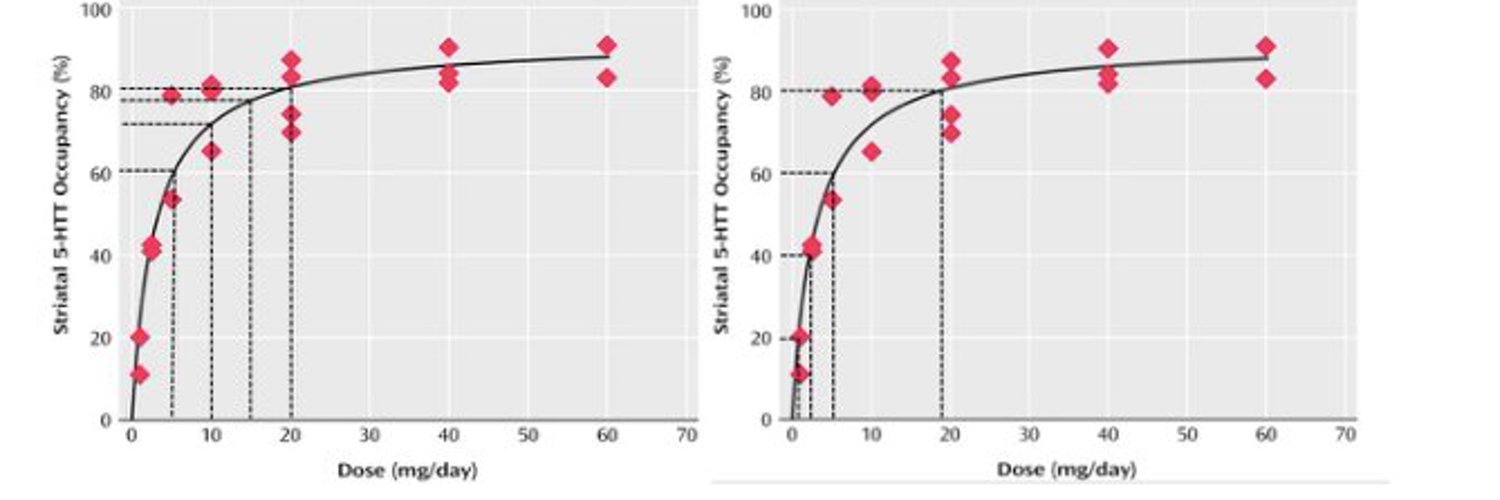
I've responded briefly to Jack's blog here: mhorowitz.substack.com/p/une… The two major problems with Jack Goulder’s blog (and the paper on which it is based) is, one, that Jack is working from the unquestioning (and largely unexamined) assumption that antidepressants work and anyone who suggests otherwise must have mischievous motivation. And two, he has misrepresented what we have said about our umbrella review. Jack said to me tellingly in an email: “I should be clear that my academic background is in history and social science, not epidemiology or pharmacology. I’m not sure I’m qualified to give a detailed analysis of the subtleties of this quite vast literature!” So without engaging with the debate about efficacy in any meaningful way he has embarked on what sounds like a year-long project on the premise that ‘the drugs work because senior people in my field agree they do’ and that he saw a young woman (with a different condition to the literature he is commenting on) improve with antidepressants ‘after a few months, and with the help of therapy too.’ This is not how science works. I sent him a very clear explanation of the issues with antidepressant efficacy written by a Cochrane group in Denmark – who I’m sure have never read Szasz! – published in the BMJ Open but he seems not to have read this: bmjopen.bmj.com/content/9/6/… To just briefly re-state the issues with the Cipriani review on antidepressants (which provides the basis of Jack and other’s unshakeable belief in the efficacy of these drugs): presenting response rates inflates the small absolute differences between antidepressant and placebo.1 This difference is 2 points on a 52 point depression scale.2 This lies below any analysis of what constitutes a clinically important difference (rather than just a statistically significant difference).3,4 See figure above to illustrate some of these elements. These studies only examine effects at 8 weeks, whilst people take these drugs for years.5 Even the small effects at 8 weeks are likely to wear off due to tolerance – the corollary of any drug that causes withdrawal.6 There are also unblinding effects – people who know they are on the drugs have raised expectations which improve mood and these expectations inflate the apparent effects of antidepressants in placebo-controlled trials.7 For example, in an analysis of the TADS study treatment guess had a substantial effect on outcome, while actual treatment group (antidepressant or placebo) did not.7 The Stone et al meta-analysis did not refute the role of unblinding as Jack suggests, it merely notes that the trials it included did not test the integrity of the double blind design (Stone writes “We cannot fully exclude the possibility that the effects of the drugs are accounted for by functional unblinding”). 8 There is also massive publication bias.9 The studies which find 15% of people benefit at an 8 week time point suffer from all the same limitations as above.8 And if there is a small pharmacological effect in the short term from this class of medication it leaves the question of the utility – or the ethics – of giving people drugs that numb their emotions when they are distressed,10 especially with the risk that for a portion of them this numbing does not wear off when the drugs are stopped.11,12 Jack’s piece ignores almost all of these issues. A central part of this argument is that Joanna and I put out a press release arguing that our paper had demonstrated antidepressants are ineffective. Notably he does not quote the lines from the press release in his blog or the paper – remarkable when this is a key part of his argument. Of course the reason he does not quote this is because his assertion is false. We don’t anywhere say in our draft press release that we have demonstrated in our umbrella review of the role of serotonin in depression that we have demonstrated that antidepressants are not effective. The closest we come is when we say: “Therefore, this research calls into question reasons for the use of antidepressants.” The research does indeed undermine a common reason for the prescription of antidepressants. I think what is most unsettling about this piece is that Jack has inverted the work of Naomi Oreskes. Her work and her book Merchants of Doubt sets out the playbook taken by large industries to undermine critics of their hegemony. When big tobacco was being criticised for causing lung cancer by researchers, it funded researchers who sewed doubt in this hypothesis by pointing to asbestos, stress, etc, anything other than tobacco which might cause lung cancer. The same playbook was used by fossil fuel companies: as climate scientists started pointing the finger at this industry for driving climate change, scientists associated with industry put out arguments sewing doubt: temperatures natural vary, humans couldn’t be doing it, etc. This is the identical playbook adopted by the pharmaceutical industry and its supporters when it comes to obscuring the harm of their products. Antidepressant withdrawal isn’t caused by stopping antidepressants, they say, it is caused by patient’s expectations of worsening (nocebo effects), their mental health condition returning, other diseases that co-incidentally occur at the same point (functional neurological disorder) and short-term withdrawal studies show that there is no real issue, etc.13,14 There is an absurdity to painting academics, many of whom are paid by one of the largest industries in the world as representing unimpeachably pure science and Joanna and a bunch of her academic colleagues (including me) as the ‘merchants of doubt’. Of course some of the scientists who defend the efficacy or minimise the harms of antidepressants are not paid by industry, but other interests, such as professional status, are also at play. I would strongly encourage Jack and anyone reading his essay to go and read criticisms of antidepressant efficacy before jumping to conclusions that anyone putting forward a criticism of the current consensus must be mischieviously motivated. The current (and poorly examined) consensus on the relative safety and effectiveness of antidepressants in the long-term has led to an avalanche of harm that can be seen spilling out onto social media, newspaper articles, government inquiries, parliamentary groups and, increasingly, concrete NHS projects and directives. Rather than expending further energy trying to shoot (and silence) some of the messengers it would be better for patients if psychiatrists examined the reality of what is occurring to patients and stopped deriving false reassurance from short term studies centrally concerned with commercial objectives. References available at: mhorowitz.substack.com/p/une…
Looking forward to speaking at this event.
Please join us in supporting SafeMeds Hellas @aws_greece, a newly formed Greek organization dedicated to psychiatric medication withdrawal advocacy and awareness! SafeMeds Hellas will host its inaugural forum on Saturday, November 7, 8:30 AM ET / 7:30 AM CT / 6:30 AM MT / 5:30 AM PT (3:30 PM Greece time), featuring Dr. Mark Horowitz as the keynote speaker. ACE founder Morgan Stewart will also be featured in a prerecorded talk. Additional details are below, and the registration link can be found in the comments! SafeMeds Hellas 1st Forum: Withdrawal Syndrome During Antidepressant Reduction/Discontinuation We are very happy to invite you to the 1st Forum of SafeMeds Hellas, a free online event on withdrawal syndrome during antidepressant reduction and discontinuation. The Forum brings together scientific research, clinical practice and the voices of people with lived experience. Our keynote speaker is Dr. Mark Horowitz @markhoro. All talks will be pre-recorded and made available a few days before the Forum, so you can watch them in advance and at your own pace. On Saturday, we will hold the panel discussions. @: Saturday November 7 2026, 8:30 AM ET / 7:30 AM CT / 6:30 AM MT / 5:30 AM PT (3:30 PM Greece time) Format: online Cost: free to attend Language: all content will be subtitled This is the first Forum we have organised, and your support would mean a great deal to us. Please register and share it with anyone who might be interested.

I've responded briefly to Jack's blog here: mhorowitz.substack.com/p/une… The two major problems with Jack Goulder’s blog (and the paper on which it is based) is, one, that Jack is working from the unquestioning (and largely unexamined) assumption that antidepressants work and anyone who suggests otherwise must have mischievous motivation. And two, he has misrepresented what we have said about our umbrella review. Jack said to me tellingly in an email: “I should be clear that my academic background is in history and social science, not epidemiology or pharmacology. I’m not sure I’m qualified to give a detailed analysis of the subtleties of this quite vast literature!” So without engaging with the debate about efficacy in any meaningful way he has embarked on what sounds like a year-long project on the premise that ‘the drugs work because senior people in my field agree they do’ and that he saw a young woman (with a different condition to the literature he is commenting on) improve with antidepressants ‘after a few months, and with the help of therapy too.’ This is not how science works. I sent him a very clear explanation of the issues with antidepressant efficacy written by a Cochrane group in Denmark – who I’m sure have never read Szasz! – published in the BMJ Open but he seems not to have read this: bmjopen.bmj.com/content/9/6/… To just briefly re-state the issues with the Cipriani review on antidepressants (which provides the basis of Jack and other’s unshakeable belief in the efficacy of these drugs): presenting response rates inflates the small absolute differences between antidepressant and placebo.1 This difference is 2 points on a 52 point depression scale.2 This lies below any analysis of what constitutes a clinically important difference (rather than just a statistically significant difference).3,4 See figure above to illustrate some of these elements. These studies only examine effects at 8 weeks, whilst people take these drugs for years.5 Even the small effects at 8 weeks are likely to wear off due to tolerance – the corollary of any drug that causes withdrawal.6 There are also unblinding effects – people who know they are on the drugs have raised expectations which improve mood and these expectations inflate the apparent effects of antidepressants in placebo-controlled trials.7 For example, in an analysis of the TADS study treatment guess had a substantial effect on outcome, while actual treatment group (antidepressant or placebo) did not.7 The Stone et al meta-analysis did not refute the role of unblinding as Jack suggests, it merely notes that the trials it included did not test the integrity of the double blind design (Stone writes “We cannot fully exclude the possibility that the effects of the drugs are accounted for by functional unblinding”). 8 There is also massive publication bias.9 The studies which find 15% of people benefit at an 8 week time point suffer from all the same limitations as above.8 And if there is a small pharmacological effect in the short term from this class of medication it leaves the question of the utility – or the ethics – of giving people drugs that numb their emotions when they are distressed,10 especially with the risk that for a portion of them this numbing does not wear off when the drugs are stopped.11,12 Jack’s piece ignores almost all of these issues. A central part of this argument is that Joanna and I put out a press release arguing that our paper had demonstrated antidepressants are ineffective. Notably he does not quote the lines from the press release in his blog or the paper – remarkable when this is a key part of his argument. Of course the reason he does not quote this is because his assertion is false. We don’t anywhere say in our draft press release that we have demonstrated in our umbrella review of the role of serotonin in depression that we have demonstrated that antidepressants are not effective. The closest we come is when we say: “Therefore, this research calls into question reasons for the use of antidepressants.” The research does indeed undermine a common reason for the prescription of antidepressants. I think what is most unsettling about this piece is that Jack has inverted the work of Naomi Oreskes. Her work and her book Merchants of Doubt sets out the playbook taken by large industries to undermine critics of their hegemony. When big tobacco was being criticised for causing lung cancer by researchers, it funded researchers who sewed doubt in this hypothesis by pointing to asbestos, stress, etc, anything other than tobacco which might cause lung cancer. The same playbook was used by fossil fuel companies: as climate scientists started pointing the finger at this industry for driving climate change, scientists associated with industry put out arguments sewing doubt: temperatures natural vary, humans couldn’t be doing it, etc. This is the identical playbook adopted by the pharmaceutical industry and its supporters when it comes to obscuring the harm of their products. Antidepressant withdrawal isn’t caused by stopping antidepressants, they say, it is caused by patient’s expectations of worsening (nocebo effects), their mental health condition returning, other diseases that co-incidentally occur at the same point (functional neurological disorder) and short-term withdrawal studies show that there is no real issue, etc.13,14 There is an absurdity to painting academics, many of whom are paid by one of the largest industries in the world as representing unimpeachably pure science and Joanna and a bunch of her academic colleagues (including me) as the ‘merchants of doubt’. Of course some of the scientists who defend the efficacy or minimise the harms of antidepressants are not paid by industry, but other interests, such as professional status, are also at play. I would strongly encourage Jack and anyone reading his essay to go and read criticisms of antidepressant efficacy before jumping to conclusions that anyone putting forward a criticism of the current consensus must be mischieviously motivated. The current (and poorly examined) consensus on the relative safety and effectiveness of antidepressants in the long-term has led to an avalanche of harm that can be seen spilling out onto social media, newspaper articles, government inquiries, parliamentary groups and, increasingly, concrete NHS projects and directives. Rather than expending further energy trying to shoot (and silence) some of the messengers it would be better for patients if psychiatrists examined the reality of what is occurring to patients and stopped deriving false reassurance from short term studies centrally concerned with commercial objectives. References available at: mhorowitz.substack.com/p/une…
Merchants of Psychiatric Doubt Why a small group of researchers diverged from their peers on the science of antidepressants A guest post by @jack_goulder psychiatrymargins.com/p/merc…

One of the brilliant panels at the AD4E Online Festival this Friday! ~Pay what you want ~Recording included ~CPD cert 11 hrs #informedchoice #psychatricdrugs #ad4efestival26 @angpeacock1111 eventbrite.co.uk/e/196864998…

A new study funded by the Wellcome Trust will take people off antidepressants over 4 weeks and will measure serotonin levels (using a brain scan following tryptophan depletion) to predict who will relapse. There are 9 measures of relapse or mood symptoms. There are no measures of withdrawal. pradam.org
I think people are not aware of how much mis-information is propagated about this class of medications. I remember being taught to say this to patients: that the increase in suicidality is caused by an increase in energy before an improvement in mood. What studies show is simply an increase in suicidality when people are given these medications compared to placebo. How many people have been talked into taking these medications because of the repetition of these talking points by prescribers?
Who Are the Real Purveyors of Medical Misinformation? One of the most troubling things about psychiatry is how speculative explanations for drug harms become established facts through sheer repetition. Take the claim that SSRIs can increase suicidality because they restore a depressed person’s energy before improving their mood, supposedly giving them the motivation to act on existing suicidal thoughts. This is routinely presented as though it’s an established scientific explanation. It isn’t. It’s a longstanding hypothesis for which convincing empirical evidence is lacking. A 2009 review in Psychiatric Services examined this very theory and found no consistent evidence supporting it. Yet rather than acknowledging that these drugs can themselves produce adverse psychological reactions, including agitation and akathisia, we’re offered a reassuring story about patients getting better. It’s a striking example of how a superficially plausible sounding hypothesis can become received wisdom when it conveniently distracts from uncomfortable truths about drug harm. Just because something is repeated as fact by someone in a white coat doesn’t make it any more true than any other forms of misinformation we hear online. And when we see it we should call it out.
This is what a safe taper looks like.
1.35mg ...


