New paper “Characterizing spatiotemporal white matter hyperintensity pathophysiology in vivo to disentangle vascular and neurodegenerative contributions” out in Nature Communications! doi.org/10.1038/s41467-026-7…

PhD candidate - Integrated Program in Neuroscience @IPNMcGill - Centre d'imagerie Cérébral @DouglasResearch

New paper “Characterizing spatiotemporal white matter hyperintensity pathophysiology in vivo to disentangle vascular and neurodegenerative contributions” out in Nature Communications! doi.org/10.1038/s41467-026-7…

At #BigBrainHack2026, @oparent41, Cian Monnin, @zklsmr and I built a diffusion MRI pipeline that runs in the browser: DICOM → BIDS → DTI metrics → voxel-wise normative models. No install, no upload. AI agents wrote much of it in Neurodesk's ecosystem. webapps.neurodesk.org/

Out in Nature Methods. Most brain-imaging figures hide everything below threshold. We argue for transparent thresholding: keep significant clusters opaque, fade the rest. Same highlights, more context. Now in AFNI, FSLeyes, NiiVue, RMINC and more. doi.org/10.1038/s41592-026-0…

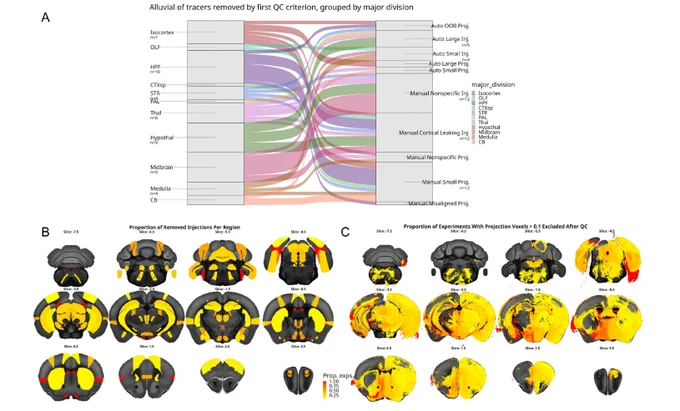
New paper in Imaging Neuroscience by Vikram Nathan, M. Mallar Chakravarty, et al: Experimental quality control induces changes in Allen mouse brain connectomes doi.org/10.1162/IMAG.a.1310

Huge thanks to co-authors and collaborators @zklsmr Sophia Osborne @AurelieBussy @manuelacostan13 @JeremieFouquet Daniela Quesada Alexandre Pastor-Bernier Alfonso Fajardo Valdez Alexa Pichet-Binette Ann McQuarrie Josefina Maranzano @gadevenyi Christopher Steele @sylv_villeneuve

I'm proud to share this work led from the @DouglasResearch and the @IPNMcGill and funded by the @AlzCanada and the @FRQS1. Special thanks to my supervisors, @mallarchkrvrty1 and @DadarMahsa, who showed great patience every time I added an analysis to this project in the last 4y!

Striking sex differences in WMH pathophysiology, with females having more WMHs but similar pathophysiological effects in anterior regions, while males show higher WMH volumes but lower pathophysiological effects in posterior regions

The posterior WMH region is structurally connected to cortical regions susceptible to early Tau accumulation (i.e., the medial temporal lobe)

Specific pathophysiological effects in WMHs of individuals with AD, as opposed to cerebrovascular disease: similar fractional anisotropy (FA) to controls, lower orientation dispersion (OD), consistent with selective fiber degeneration. This finding was replicated in ADNI

A fully data-driven parcellation of WMHs based on voxel-wise pathophysiology (available at github.com/CoBrALab/WMH_path…) revealed an anterior-to-posterior WMH gradient, rather than purely periventricular/deep

We explored whether we could find vascular vs neurodegenerative WMH patterns using in vivo clinically-applicable tools, specifically microstructural MRI markers (DTI, NODDI, T2*, QSM) applied in a large, diverse cohort (UK Biobank, n=32,000). Important findings:

Post-mortem evidence shows that some WMHs are not ischemic and are instead caused by neurodegenerative processes. This often-overlooked heterogeneity hampers the use of WMHs as a marker of cerebrovascular disease, currently used as such by clinicians and researchers.

We recently published a paper in PNAS, showing microstructural changes to the hippocampus in aging and presymptomatic Alzheimer's disease - in humans, in vivo. We continue to show the value of structural MRI beyond just measuring large-scale atrophy! ow.ly/1NvV50XkXnX

Do you use the Allen Institute's Mouse Gene data? Take a look at this in-depth quality control study biorxiv.org/content/10.64898…

CIHR funding rate: 13.6%. Early 2000s: 30%+. Canada’s new $1.7B Impact+ program recruits talent — but without increased Tri-Council base funding, we risk further strain on an already stretched system. We’re calling for $1B over 5 years. Support here: tinyurl.com/33c5av46

After 3 years of "just one more analysis", happy to share our preprint! Building on previous post-mortem findings of non-vascular WMHs, we identified a specific signature of neurodegenerative WMHs in vivo using microstructural MRI and normative modeling doi.org/10.1101/2025.06.10.2…