Excited to release what we’ve been working on at Amaranth Foundation, our latest whitepaper, NeuroAI for AI safety! A detailed, ambitious roadmap for how neuroscience research can help build safer AI systems while accelerating both virtual neuroscience and neurotech. 1/N
Is vision better explained by generative or discriminative learning ? 🧠👁️
Our #NeurIPS2026 paper says: neither!
With Joint Energy-based Models (JEMs), we trained one network across the generative↔discriminative continuum. Human alignment peaks in between. 🧵
This year, I've written ~12 blog posts totalling ~35,000 words. That's a half a book's worth! I write to clarify my thinking and to nudge AI to have good neuroscience taste. I say to trainees: writing blogs increases your luck surface and will make you a better writer. Do it!
Excited to share what we've been working on since this summer- started in my internship at @MSFTResearch!
Modern DNNs predict neural activity surprisingly well, but are black boxes. We introduce interpretable weight-space programming (iWSP) and ask: can LLM agents build predictive models of the brain directly in code, with no training or pretrained weights, so every feature stays transparent? 🧵 (1/6)
If the Platonic Representation Hypothesis is true, brains and ANNs should converge in representation. In the 2010s, we found evidence of this in the visual cortex. Alignment has stalled since then. It's a huge opportunity. I break this down in this post
The video is lovely. And I could not express in a tweet what David Hubel means to me. But I also believe systems neuroscience needs, for its life, to escape the curse of this Sydney Brenner quote, which may be the dark side of the legacy of Hubel and Wiesel. We will not understand the brain just by listening to neurons (even lots of them), showing random stimuli, and hoping for the best. It's not 1962 anymore. We need new ideas, we need a conceptual framework to go after how the brain works as a whole, and we need to intentionally pursue a research program to test these ideas.
“Progress in science depends on new techniques, new discoveries and new ideas, probably in that order.” — Sydney Brenner.
Beautiful visualisations of Hubel’s Tungsten electrode from Patrick
We often celebrate the endpoint of science, the big discoveries, the insights, the mysteries; but let's not forget the first step, which is often to make a new measurement instrument and point it at an unknown system
There are fun little details in there: the price of a roll of tungsten wire ($8, which is $100 in today's money), preferred suppliers, his method to ensure that the lacquer forms a nice little "tent" to ensure it coats the electrode nicely. Invaluable process knowledge.
As is typical of one-page Science papers of the era, it's a little short on detail. Thankfully, he typed up a recipe that he would distribute to fellow scientists to replicate the method.
Before he made his Nobel Prize-winning discoveries about the visual cortex visual, David Hubel made a simple tool: a tungsten microelectrode. He described its fabrication is described in a 1957 Science paper. I had Claude make a little video of it.
. @bingbrunton wrote up a little debate in J Neurosci on where foundation models are going in neuroscience. The Transmitter has it covered. We'll be on stage at SFN on Sunday unpacking all of it.
Would be rad if an EEG lab/startup just showed good cursor control (driven by brain activity!) in a rigorous way. The fact that this still hasn’t happened in 2026 despite the thousands of hours of data collection and modern AI is discouraging
For the past year @BasisOrg has been building a general framework for probabilistic reasoning in dynamical systems, called Dynestyx.
Blog: basis.ai/blog/dynestyx/
Dynamical systems are the workhorse of science and engineering: robotics, epidemiology, climate, biology, etc.
The basic thing you can do with a dynamical system is simulate it: run it forward to compute how it will evolve over time.
Dynestyx goes beyond this and lets you do inference and reasoning in dynamical systems. This includes:
- Forecasting: What will happen next, and how sure are we?
- State inference: Given noisy, partial measurements, where has the system actually been?
- System identification: How does the system work? What parameters and rules produced the data we see?
- Causal reasoning: Given the evidence, what would happen if we intervened on the system?
Dynestyx allows you to do probabilistic inference over all kinds of dynamical systems (ODEs, SDEs, PDEs). You (or an AI agent) write the model once, then swap in different inference methods with minimal changes.
Its generality allows us to tackle many different systems, as shown in the GIFS:
- recovering a high-res Navier–Stokes fluid flow from noisy low-res measurements
- steering particles through the wake behind a cylinder
- a robot hand turning a cube it can only see through a camera
- forecasting a 1978 flu outbreak at a boarding school as the data comes in
Also: it's open source. Please give it a try: github.com/BasisResearch/dyn…
Led by Matt Levine and @DanWaxmanML, with many contributions from our research staff
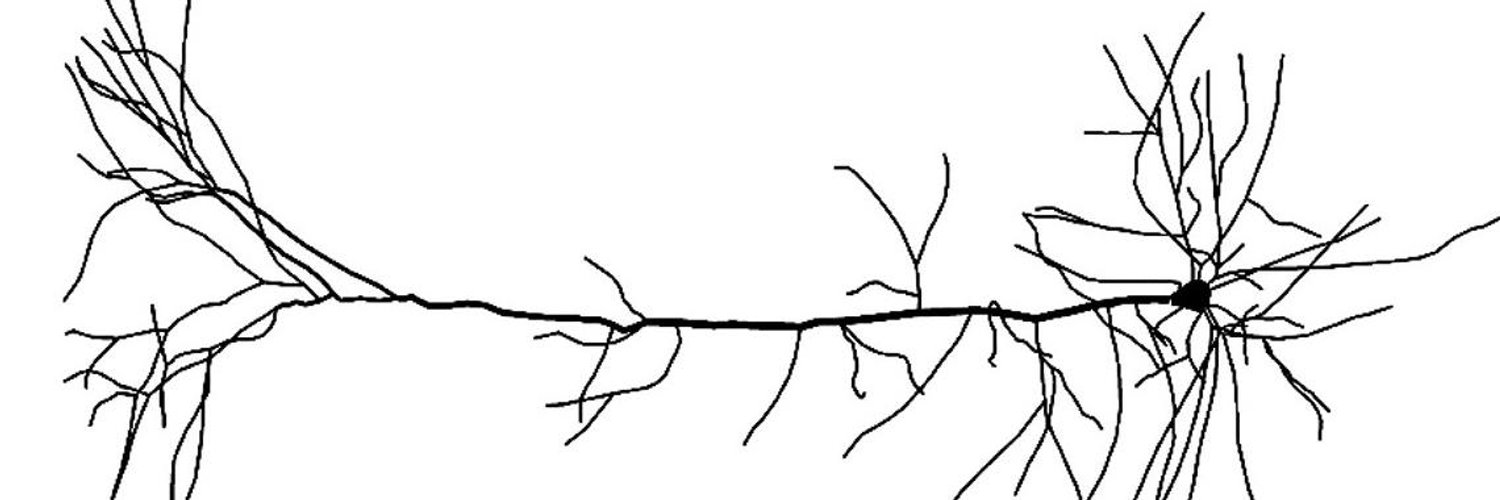
Your brain is composed of a wide range of cell types connected into intricate circuits. The properties of these cell types underpin our ability to perceive, reason about, and interact with the world.
Cell types coordinate their electrical signals to drive behavior. When something goes wrong with one of these cell types, we develop diseases like Parkinson’s or blindness.
Many other mental health problems may stem from problems with a single cell type, but we currently lack an easy way to link neural activity to cell type identity.
Cell types have been cataloged extensively in fixed brain tissue, but they are difficult to identify in recordings from living brains. So how do we overcome this gap?
Josh Siegle has a plan that he outlines in a new piece in the Launch Sequence: ifp.org/brain-cell-types