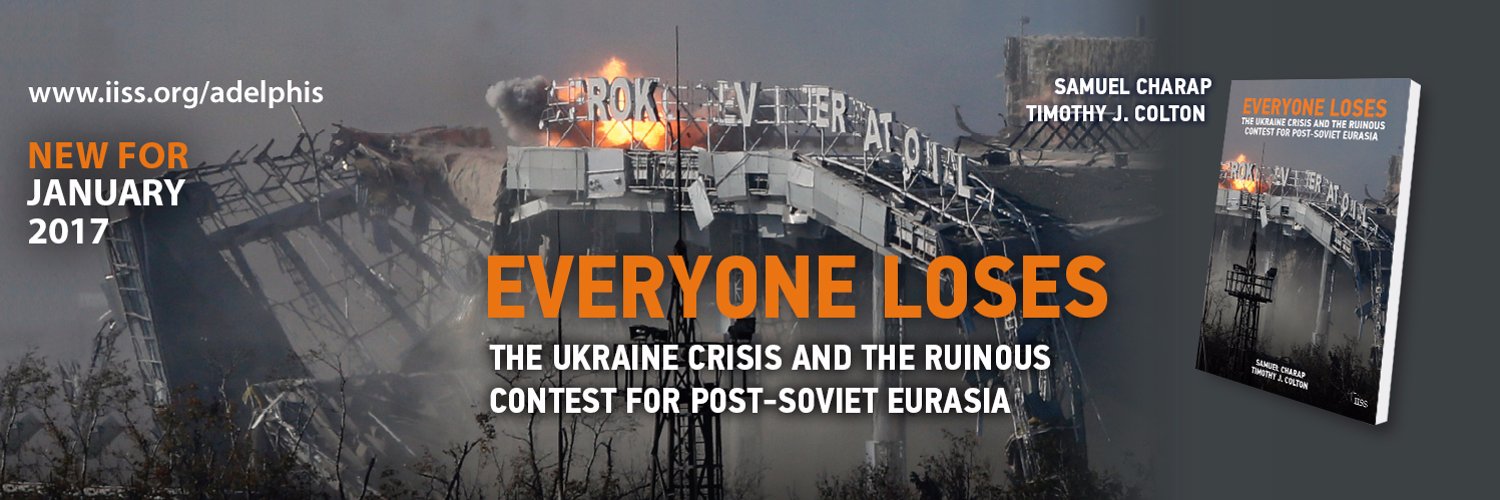
Since people keep writing about broader Russian demands, it helps to revisit both the agreement and draft treaty submitted to the US and NATO in Dec 2021, and the leaked responses from Jan 2022. In contrast to what is often claimed, the US did not simply reject all demands 1/x
There is a pattern here of asking for Russia to make proposals and not liking the result. It happened in 2008, arguably in 2021, and again now. Maybe better to either a) not let them set the terms, b) not do this in public, or c) both.
Russian officials circulated a position paper ahead of the Abu Dhabi talks this week. It repeats many of Putin's December 2021 demands, in some cases word for word, and adds new ones. Our story: nytimes.com/2026/11/13/us/po…
Worth remember how European officials responded to those demands in December 2021. They rejected idea of troop withdrawals from Eastern Europe but did try and engage with other aspects, including Ru re-opening NATO mission, new emergency hotline and INF talks. US tried to reassure on Tomahawks in Aegis ashore in Romania & Poland. Macron and Scholz both followed up with other proposals in Jan/Feb.
All of this is harder now because 1/ it’s even clearer that Russian demands were a pretext for war, and 2/ Russia’s invasion has dramatically heightened the threat. And maybe 3/ US is also retrenching from Europe to some degree.
2) Russia is just playing for time but wants to keep everyone else busy with their outrage in the meantime. Either way, the best response is to counter. If they don't budge, we'll have certainty. 2/2
Two possibilities about this non-paper: 1) business as usual for russian diplomacy: starting out by making unreasonable demands, which makes coming down to earth seem like a concession. or 1/2
Worth noting that the USSR/Russia has traditionally come to the table with maximalist positions. Then something usually happened and the positions were traditionally reconciled.
The Russians have made clear the Ukraine negotiations are no longer just about Ukraine: they are about redrawing the entire post-WWII security structure in Europe (NATO, EU, above all).
This isn't a new position for Moscow.
What is new now: the Americans are open to it.
this is quite an important statement from Putin today, a clear reiteration of the hardline position on territory that has emerged over the last year. doesn't leave a lot of negotiating space — on this issue at least.
❗️ Putin on Ukrainian territories:
Russia is aware that Ukrainians are raising the issue of "gray zones." For the Russian Federation, there is only one acceptable demarcation line with Ukraine — the state border.
Rarely are major decisions about war and peace driven by a single factor. Imperialist drivers can exist alongside security drivers. In this case, it seems clear that both played a role.
Dear @scharap je crois aussi que tactiquement une dimension « sécurité européenne » risque d’être nécessaire. Sur le plan analytique, c’est en revanche difficilement soutenable de dire que l’agression russe s’explique par un défaut dans les règles convenues.
An ‘Article 5-style guarantee’ for Ukraine makes little sense, argues Eric Ciaramella. No country has been willing to send combat forces to Ukraine, so a promise to defend it would lack credibility. Ukraine and its partners have ‘a realistic alternative: to build up and sustain the Ukrainian armed forces as the guarantor of the country’s long-term security.’
rusi.org/explore-our-researc…
Clear how these differences must be managed: credible defense and deterrence against Russia.
What hasn’t worked: talks and agreement.
We need more experience-based realism in relations with Russia, instead of wishful thinking.
There is a working European security architecture. It just doesn't cover all of Europe. What's missing is a stable modus operandi with those outside built around basic principles. Now we have no rules. Fixing this is the real task and the max we can achieve, not some grand design
Kaja Kallas presents A Comprehensive treaty on the European security architecture.
Art. 1 Russia, f**k off.
Art. 2 When doubts exist about the interpretation of any articles in the treaty, see Art. 1.
We already have a European security architecture in place.
This includes international agreements under which Russia has undertaken obligations, including with regard to sovereignty and territorial integrity.
The problem is that Russia is not respecting these agreements.
All our focus should be on ensuring that Russia actually fulfils the obligations it has already undertaken.
My press remarks at the @G7 Foreign Ministers' meeting ↓
Not sure what exactly the point here is. The NATO-Russia Council was a relic of a different era, built for cooperation between proclaimed partners. Today and after the war, we need deconfliction and risk reduction between adversaries.
The #NATO-Russia Council wasn’t just about practical cooperation eg joint exercises against bombs on public transport. It was also about political dialogue on #Ukraine, transparency & risk reduction. But at its last meeting in Jan 2022 Russia denied it would invade #Ukraine again
Whatever one thinks of the ideas being mooted on European security, it's hard to imagine a durable end to the war that does not address broader regional issues. That's not a "Kremlin talking point." It's reality. 1/5