AgentDNA is live now!
The first unified trust layer for multi agent systems, built on ultra scalable DAG of @RubixChain.
pypi.org/project/agent-dna/
Why AgentDNA?
1. Auth: Current static auth systems built for humans/static APIs dont work for Agents. AgentDNA introduces dynamic DIDs
35% breaches began with phishing or stolen credentials. Almost all breaches involve stolen credentials at some stage. OTPs, API keys, SSH keys... Passwords is the root problem. Harden and airgap your auth now with #XID, #AuthAMS and @ThinC_AUTH. @Agent_DNA
Some of the biggest openings in security have nothing to do with patching
How breaches began, per a 2026 report:
- 31% exploited a vulnerability
- 35% used phishing, stolen logins or impersonation scams
And nearly half now involve a vendor or partner, up 3x since 2024
Full piece from a16z's Asaf Ezra and Steph Zhang on six cybersecurity companies worth building: a16z.news/p/defense-in-depth…
Running Linux servers on the open web without hardened, airgapped credential and SSH key management is a big risk now. SSH keys hardened by a solution like @ThinC_AUTH and #XID would help to mititgate risks significantly. @EnsurityTech
All bank admin accounts need to harden and air gap access immediately. Including for SSH and session keys. @EnsurityTech#XID and @ThinC_AUTH will help mitigate significantly.
‼️🇮🇳𝗖𝗘𝗥𝗧-𝗜𝗻 𝗪𝗮𝗿𝗻𝘀 𝗼𝗳 𝗘𝘀𝗰𝗮𝗹𝗮𝘁𝗶𝗻𝗴 𝗔𝗜-𝗗𝗿𝗶𝘃𝗲𝗻 𝗖𝘆𝗯𝗲𝗿𝗮𝘁𝘁𝗮𝗰𝗸𝘀 𝗯𝘆 𝗖𝗥𝗔𝗙𝗧𝗬 𝗙𝗔𝗟𝗖𝗢𝗡 𝗧𝗮𝗿𝗴𝗲𝘁𝗶𝗻𝗴 𝗜𝗻𝗱𝗶𝗮'𝘀 𝗙𝗶𝗻𝗮𝗻𝗰𝗶𝗮𝗹 𝗦𝗲𝗰𝘁𝗼𝗿
India’s CERT-In issued a critical advisory warning of an ongoing AI-assisted cyberattack campaign attributed to CRAFTY FALCON, targeting financial institutions, fintech firms, payment providers, and cryptocurrency exchanges. Using AI-powered tools such as ARTEX, PentAGI, Cairn, and CyberStrikeAI, the group exploits system vulnerabilities, compromises payment APIs, and steals funds and cryptocurrency.
Attackers reportedly conduct INR 1 test transactions before larger unauthorized transfers, often striking during weekends and holidays. Some organizations have been compromised again following incomplete remediation.
For more insights into the latest cyberattacks worldwide, visit HackRisk.io
Agree. As a first but perhaps the most importent step, banks must harden and airgap access for their workforce as well as users with a 360° passwordless aith that protects SSH, API and session keys too. @ftlive@FT@EnsurityTech@ThinC_AUTH#XID
Several banks around the world reporting failures in access to inter bank transfer systems leading to customer account drainage. Banks must harden and airgap their core banking and inter bank transfer access systems asap. @EnsurityTech@ThinC_AUTH#XID#AuthAMS
Customers controlling access to their accounts with hardend and air gapped access with @ThinC_AUTH and #XID should be allowed to let their agents access banking systems. @Agent_DNA
.@WellsFargo appears to be the first bank to start requiring customers to prove they've turned off their #AIagents' access to their #bankaccounts, or else be liable for any rogue AI agent activity. More here: sbrew.link/DSskXedd
Cloud desktops used by #GMOInternet by many Japanese FX trading houses were breached and users passwords compromised. Switch from #passwords to secure biometric fido access urgently. @EnsurityTech AuthAMS with @ThinC_AUTH will help orgs to avoid losses. #Japan
More than a quarter of people doing shopping with #Muse - that seems big for a month old app. If this share sustains with larger penetration to be seen, but agentic commerce appears a real deal. Need to fix agentic security though at first!
Agree, banks have a big fraud and liability issue to address. Some big unanswered questions:
1. If the user denies the agent action, how does bank prove the user did give consent.
2. How does the bank prove user gave the credential willingly and not misused by the agent.
3. Is the agent a legitimate rep of the user or a hacker who stole credentials
4. Is the intended action approved by the user even if credential shared. How is the intent verified dynamically?
5. Agents by design would like to have the broadest intent (even users may be ok), but how does bank enforce explicit auth from user when it wants.
6. Did the agent create sub agents to act ?
7. Is the agent prompted to do a malicious activity.
Even as banks are trying to deal with agentic actions, AI is making passwords and biometrics themselves highly risky. We need to ensure the hardened user root of trust (eliminate passwords) to pass onto agents and enforce continuous auth. And treat agentic actions as not simple key or x406 certain based auth, but derived from continuous DNA. KYA and KYH will need to replace KYC.
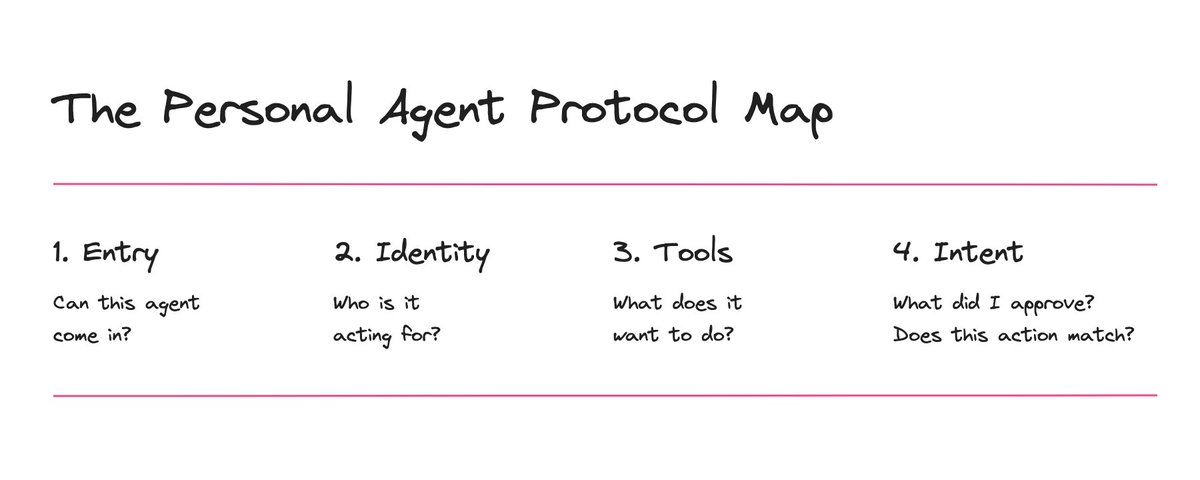
Your agent looks like a giant fraud and liability problem to your bank.
Even if you sent it.
The bank needs to know who it’s acting for and whether you approved what it’s doing.
I mapped the protocols that could make this work:
Anecdotal reports of similar losses at multiple banks in the recent weeks - does not look isolated to Central Bank. This theft seems to be breach of core banking access controls at the bank end. Banks must immediately assess their core banking access controls and shift away from password/OTP/api key based legacy systems. @EnsurityTech
India news: Central Bank of India lost ₹13.96 crore in 187 unauthorised RTGS transfers to 36 banks from Oct 15 to 17, police say. Unknown people allegedly got into the RBI-owned IFTAS Central SFMS server through the bank's core banking system.
The money was customers' funds. The bank first called it a "technical glitch". RBI, CERT-In and NCIIPC have been told and Maharashtra cyber police have a case.
If you bank there, check your RTGS debits from those dates.
hindustantimes.com/cities/mu…
Agents appearing to act beyond users instructions is not itself a breach. It is just that tools dont exist to bind agents to users for limited scope. We have been building control mechanisms with @Agent_DNA. However, since agents like #Muse have access to API keys and passwords of users, hackers can steal them to attack banks. This is a real and big risk.
The situation is getting worse every hour. AI agents are entering U.S. bank accounts, and banks are scrambling to shut them out. Axios reports that some appear to attempt actions beyond users instructions, raising fears over who is really in control.
Agents are currently using users credentials and API keys to access. This must stop. Agents cant use users credentials, they must have own ID and get scoped auth permissions from users. @Agent_DNA Chain of Custody Auth ensures agents cant have sweeping permissions.
JUST IN: 🇺🇸 Morgan Stanley, Bank of America, JPMorgan, and Wells Fargo detect unauthorized AI agents accessing customer accounts and attempting to act without user instructions.
It is 2026 and we are still seeing breaches due to credential theft and passwords, with wide blast surface. Two choices: harden/airgap creds. Or decentralize creds. Little time left to make this transition.
@EnsurityTech@ThinC_AUTH#AuthAMS@Agent_DNA